Quick Facts
First European to reach North America since the Vikings. Italian sailing for England.
Conversation Starters
Life Journey
Giovanni Caboto was born, probably in Genoa like Columbus, to a merchant family. Almost nothing certain is known of his early life, though later Venetian citizenship suggests his family moved to Venice when he was young.
Caboto received Venetian citizenship after the required fifteen years of residence. As a Venetian merchant, he traded in spices and luxury goods, traveling to the eastern Mediterranean and possibly as far as Mecca, learning the eastern routes.
Caboto moved to Valencia with harbor improvement proposals that failed to win support. Like Columbus, he was a Genoese navigator seeking patronage for western voyages, but Spain was already committed to Columbus's enterprise.
Caboto arrived in Bristol, England's second port and center of Atlantic fishing and exploration. Bristol merchants had sponsored voyages seeking the legendary Isle of Brasil, and Caboto offered them a route to Asia via the northwest.
King Henry VII granted Caboto letters patent authorizing voyages of discovery to lands 'unknown to Christians.' The patent gave Caboto and his sons rights to govern any lands discovered, with the crown claiming one-fifth of profits from trade.
Caboto's first attempted voyage turned back due to bad weather, disputes with his crew, and shortage of provisions. The failure was discouraging but provided experience for the successful voyage the following year.
Caboto sailed from Bristol with a single small ship, the Matthew, and about twenty crew. After a month at sea he reached land—probably Newfoundland or Cape Breton—claiming it for England as the first recorded European landing since the Vikings.
Caboto explored the coast for a month, noting abundant forests and teeming fishing grounds. He found evidence of human habitation but met no inhabitants. The rich cod fisheries he reported would become enormously valuable to England.
Caboto returned to Bristol having completed the first transatlantic round trip from England. Henry VII granted him a pension of twenty pounds yearly, and Caboto was celebrated as having discovered the route to Asia—the land of the Great Khan.
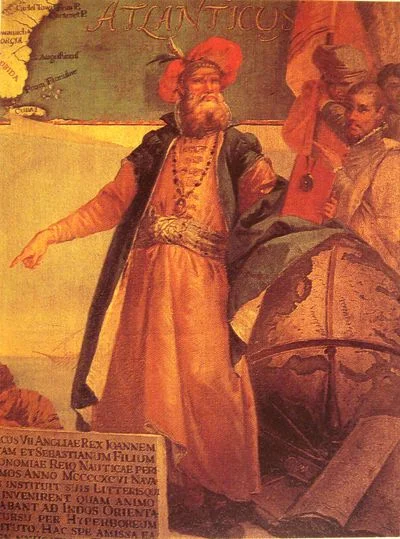
Caboto traveled to London where he was feted as a hero. He dressed in silk, was called 'the Great Admiral,' and ordinary people ran after him in the streets. Venetian diplomats reported with envy on their countryman's English success.
Caboto departed Bristol with a fleet of five ships carrying supplies for a year and trade goods for the anticipated Asian markets. One ship soon turned back damaged, but Caboto sailed on with the remaining four vessels.
Caboto and his fleet vanished without trace. Some evidence suggests one ship may have reached the Caribbean or South America, but Caboto himself was never seen again. His discovery nonetheless established England's claim to North America.