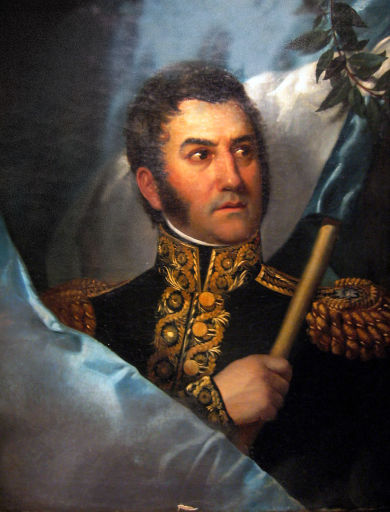
Quick Facts
Strategic liberator who led daring campaigns across the Andes, helping secure independence for Argentina, Chile, and Peru.
Conversation Starters
Life Journey
Born in Yapeyu, a frontier settlement in the Viceroyalty of the Rio de la Plata, to Spanish officer Juan de San Martin and Gregoria Matorras. The borderland setting exposed his family to imperial military life and Guarani mission culture.
His family relocated to Spain as his father sought posts in the Bourbon administration, placing Jose in a more formal imperial milieu. The move opened access to military schooling and the professional officer corps of the Spanish Crown.
He began military service in the Regiment of Murcia, learning drill, logistics, and battlefield discipline in a traditional European army. Early training emphasized engineering, musketry, and strict hierarchy that later shaped his command style.
As Spain entered war with Revolutionary France, he saw active service in hard campaigns along the Pyrenees. The conflict exposed him to modern mass warfare and the political shockwaves spreading across Europe after 1789.
He participated in operations tied to Spain's naval struggle with Britain during the Revolutionary era, gaining experience beyond land warfare. The period highlighted the importance of sea power and commerce raiding in imperial strategy.
During Napoleon's invasion, he fought with Spanish forces in the brutal Peninsular War, where guerrilla tactics and coalition warfare became decisive. The collapse of royal authority sharpened his thinking about legitimacy and independence movements.
He left the Spanish army and connected with Spanish American revolutionaries in London, where independence networks debated strategy and diplomacy. These circles helped him pivot from imperial officer to liberation commander with a continental vision.
He reached Buenos Aires as the revolutionary government sought experienced officers after the May Revolution destabilized the viceroyalty. Bringing European training, he quickly gained trust among patriot leaders while navigating factional politics.
He organized the Regiment of Mounted Grenadiers, drilling an elite cavalry unit with strict discipline and merit-based promotion. The corps became a professional nucleus for the patriot army and later a symbol of Argentine military tradition.
At San Lorenzo he led a swift cavalry attack that disrupted a Spanish royalist landing and protected riverine supply routes. The victory boosted patriot morale and showcased his preference for surprise, speed, and tightly trained troops.
Stationed in Mendoza, he organized Cuyo into a strategic rear area, mobilizing local resources, workshops, and intelligence. With support from citizens and allies like Bernardo O'Higgins, he prepared a trans-Andean campaign to outflank Peru.
After the Congress of Tucuman declared independence, he pressed for a coordinated plan linking Argentina, Chile, and Peru. He expanded training, stockpiled arms, and organized mule trains, making Mendoza an arsenal for liberation.
He executed the audacious Andes crossing through multiple passes, using deception, careful timing, and disciplined logistics to keep men and animals moving. The maneuver surprised royalists and remains one of history's most demanding military marches.
At Chacabuco his forces broke royalist defenses, opening the road to Santiago and restoring the patriot government. He declined personal power and supported O'Higgins as Supreme Director, prioritizing unity over ambition.
Following setbacks and renewed royalist pressure, he helped rally forces and won decisively at Maipu near Santiago. The victory consolidated Chilean independence and provided the secure base needed for a seaborne expedition to Peru.
With Chilean backing and naval support associated with Admiral Thomas Cochrane, he sailed north to strike the royalist stronghold in Peru. The expedition combined diplomacy and pressure, aiming to avoid a ruinous frontal war in the highlands.
He entered Lima and proclaimed Peruvian independence, then assumed the title Protector to stabilize the new state. His administration promoted institutions, attempted gradual reforms, and sought legitimacy amid competing elites and royalist resistance.
In Guayaquil he conferred with Simon Bolivar about strategy and authority over the final campaigns against royalists. Soon after, he resigned his protectorate and stepped aside, choosing to prevent civil conflict among independence leaders.
After his wife Remedios de Escalada died and factional strife intensified, he departed with his daughter Mercedes for Europe. Exile reflected both grief and a deliberate refusal to become a partisan caudillo in the new republics.
He spent his later years largely outside public politics, living quietly while observing events from afar. He died in Boulogne-sur-Mer, leaving a legacy as a continental strategist whose restraint matched his battlefield achievements.