Quick Facts
A radical poet-saint who challenged religious divisions, teaching devotion to a formless divine through everyday, piercing verse.
Conversation Starters
Life Journey
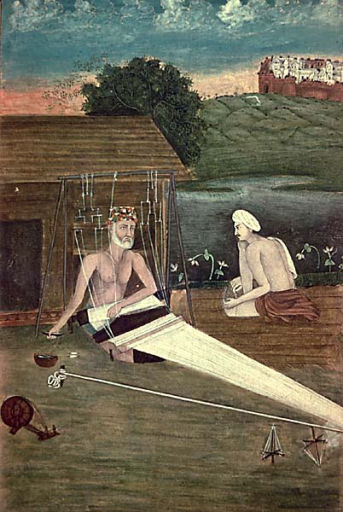
Kabir is traditionally associated with Varanasi, a major pilgrimage city on the Ganges in northern India. Later stories place his upbringing among julaha weavers, shaping his vivid cloth-and-loom imagery and egalitarian outlook.
Growing up in a city dense with temples, Sufi shrines, and marketplaces, Kabir absorbed multiple spiritual vocabularies. This mixed environment later fueled his insistence that truth outruns sectarian labels and inherited identities.
Kabir is remembered as earning his living through weaving, a respected but socially bounded craft in late medieval North India. The discipline of spinning and warping became teaching tools in his poems about attention, desire, and inner unity.
Kabir's voice aligns with the Sant tradition, which emphasized direct experience of the divine over priestly mediation. In a period of intense religious ferment, he helped popularize a vernacular spirituality accessible to artisans and householders.
He refined a sharp, compressed idiom—especially doha couplets—suited to memorization and oral circulation. The verses used everyday speech and startling reversals to confront hypocrisy, pride, and empty display in spiritual life.
Kabir's poetry repeatedly attacked caste arrogance and the idea that birth grants spiritual privilege. By addressing artisans, laborers, and marginalized listeners, he widened the moral audience of Bhakti beyond elite temple-centered circles.
He mocked mechanical rites, pilgrimages, and legalistic piety when they replaced compassion and self-knowledge. Using blunt humor, Kabir challenged Brahmin pundits and Muslim clerics alike, insisting that inner transformation matters most.
Kabir emphasized a God beyond images and sectarian names, often called the nirgun (formless) reality. His verses urged listeners to seek the divine within breath and conscience rather than in outward symbols and disputation.
Oral performance and itinerant singing helped Kabir's songs cross lines of caste, occupation, and religious affiliation. He became a shared reference point for householders and ascetics who valued direct experience over inherited status.
Later tradition portrays Kabir facing harassment for his uncompromising speech in a politically and religiously charged city. Whether literal or legendary, these episodes reflect how unsettling his anti-ritual, anti-caste message was to elites.
Kabir's couplets traveled with weavers, merchants, and pilgrims, circulating far beyond the Ganges plain. The portability of dohas made them easy to quote in debate, devotion, and daily counsel across diverse regions.
Kabir's verses later entered Sikh scripture, reflecting shared concerns with hypocrisy, ritualism, and inner devotion. In the Punjab, communities associated with the Sikh Gurus preserved and sang his compositions in congregational settings.
His later remembered teachings dwell on mortality, the danger of ego, and the urgency of love as a spiritual practice. Kabir framed the body as a temporary house, urging listeners to awaken before time and habit harden.
Many traditions link Kabir's final years to Maghar, a town later celebrated for his memory and followers. The move symbolizes his rejection of superstition tied to auspicious places, insisting liberation is not controlled by geography.
Kabir's death is surrounded by stories of dispute between Hindu and Muslim followers over last rites. The legends—whatever their historicity—capture how his life blurred boundaries and left multiple communities claiming kinship.
After his lifetime, organized groups known as the Kabir Panth developed to preserve and interpret his teachings. They helped stabilize oral repertoires, create pilgrimage sites, and transmit an anti-caste, devotional ethic across generations.
Collections such as the Bijak and other regional anthologies gathered poems attributed to Kabir, mixing older oral layers with later accretions. Scribes and singers shaped his canon, reflecting how living traditions curate authoritative voices.