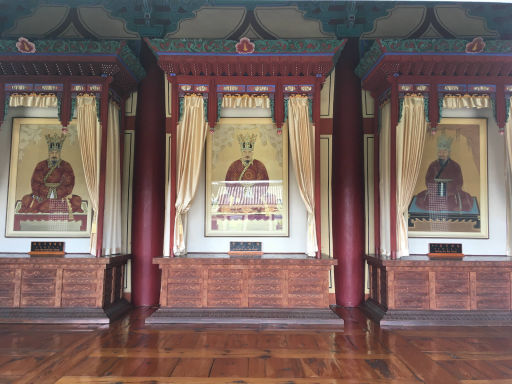
Quick Facts
A shrewd Silla royal who forged Tang alliances to unify Korea and reshape East Asian politics.
Conversation Starters
Life Journey
Kim Chunchu was born into Silla’s ruling Kim dynasty at Gyeongju, amid intense court rivalry under the bone-rank system. His royal lineage positioned him for high office, but succession politics made survival and alliances essential.
As a youth in the Silla court, he learned ritual governance, aristocratic etiquette, and military administration under senior nobles. Exposure to factional struggles around the throne sharpened his caution and negotiating skill.
Kim Chunchu rose through elite circles by cultivating ties with powerful families and commanders in Gyeongju. He aligned closely with rising military talent, including the young Kim Yusin, to balance entrenched court factions.
In 642, Baekje’s King Uija captured key Silla positions along the western frontier, humiliating the court and threatening Gyeongju’s security. The shock pushed Kim Chunchu toward an external alliance strategy beyond peninsula diplomacy.
Kim Chunchu traveled to Goguryeo to request joint action against Baekje, but suspicion and competing interests blocked agreement. The rebuff convinced him that only a major continental partner like Tang could tilt the balance.
He went to Chang'an to negotiate directly with Emperor Taizong of Tang, presenting Silla as a reliable partner against Baekje and Goguryeo. He emphasized strategic ports and intelligence, framing Silla as Tang’s gateway to the peninsula.
At Chang'an, he cultivated relationships with Tang ministers and military planners, learning how Tang organized campaigns and logistics. By aligning Silla’s requests with Tang geopolitical aims, he strengthened the case for sustained support.
Kim Chunchu returned to Gyeongju bringing renewed confidence that Tang would intervene if Silla coordinated planning and tribute relations. His reports shifted court debate from short-term raids to long-term coalition warfare and state mobilization.
Amid internal turmoil, he supported Queen Seondeok’s government alongside allies such as Kim Yusin, suppressing destabilizing aristocratic plots. The episode elevated him as a dependable crisis manager and a credible successor candidate.
After Queen Jindeok’s death, Kim Chunchu became King Muyeol, marking a decisive shift in Silla leadership toward unification by coalition warfare. He consolidated authority through court appointments and closer coordination with the Hwarang-led military elite.
King Muyeol elevated Kim Yusin as the central commander for Silla’s major campaigns, tying royal strategy to proven battlefield leadership. Their partnership synchronized court diplomacy with mobilization of regional forces and supply networks.
Muyeol strengthened ties with Tang by coordinating envoys, intelligence, and timetables for a joint invasion of Baekje. He presented Silla’s territorial aims as compatible with Tang’s ambition to reshape the peninsula’s political order.
In 660, Silla armies under Kim Yusin advanced while Tang’s navy and troops, led by Su Dingfang, struck Baekje in coordinated operations. Muyeol’s diplomacy enabled a two-front assault that overwhelmed Baekje’s defensive capacity.
The Baekje capital at Sabi (near modern Buyeo) collapsed, and King Uija surrendered as Tang and Silla forces tightened control. Muyeol gained a major strategic victory, though it also increased Tang influence in newly conquered territory.
Following Baekje’s collapse, Muyeol confronted the complexities of administering captured regions while Tang established its own commanderies. He relied on trusted Silla officials to secure loyalty and limit rival claims over fortresses and ports.
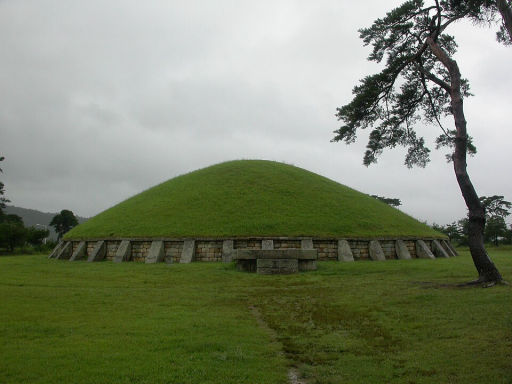
King Muyeol died in 661 in Gyeongju after setting the diplomatic and military framework for peninsula unification. His son, King Munmu, inherited the alliance and the looming challenge of defeating Goguryeo and later resisting Tang overreach.