Quick Facts
Deaf schoolteacher-turned-visionary who mathematically proved rockets could reach space and imagined humanity’s cosmic future.
Conversation Starters
Life Journey
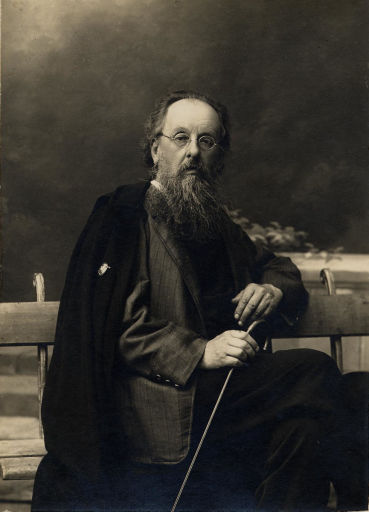
Konstantin Eduardovich Tsiolkovsky was born into a modest family in Izhevskoye, in the Russian Empire’s Ryazan region. His upbringing in rural Russia shaped his self-reliance and lifelong fascination with nature and mechanics.
After a severe childhood illness, he became largely deaf, cutting him off from ordinary schooling and social life. The disability pushed him toward solitary study, meticulous note-taking, and an intense inner life of ideas.
He moved to Moscow and educated himself in reading rooms, especially the Chertkov Library, studying mathematics, physics, and mechanics. He lived frugally and treated learning as a disciplined routine rather than a hobby.
When family finances tightened, he left Moscow and returned to provincial life, continuing his studies independently. He began drafting technical ideas and scientific sketches that hinted at future work on flight and propulsion.
He earned qualifications to teach and entered the Russian school system, bringing rigorous mathematics into small-town classrooms. Teaching provided stability while he pursued theoretical research during evenings and winters.
He married Varvara Sokolova and built a household while maintaining demanding teaching duties. Domestic life coexisted with solitary research, as he wrote manuscripts by lamplight and tested ideas with homemade apparatus.
He wrote philosophical-scientific essays linking human progress to expansion beyond Earth, influenced by Russian cosmism. These texts mixed engineering reasoning with ethical optimism about education, cooperation, and technological uplift.
Transferred to Kaluga, he taught at schools and gained a reputation for strict, clear instruction despite his deafness. Kaluga became his lifelong base, where he produced most of his pioneering aerospace theory.
He published studies on air resistance and flight, arguing for metal airships and improved aerodynamic shapes. The work showcased his mathematical approach and introduced him to wider scientific circles in Russia.
He constructed a small wind tunnel to test models and refine aerodynamic calculations with empirical measurements. Working with limited resources, he demonstrated that careful experimentation could be done outside major academies.
In the journal "Nauchnoe Obozrenie," he published "Exploration of Outer Space by Means of Reaction Devices," deriving what became the Tsiolkovsky rocket equation. He argued for liquid propellants and staged rockets to reach orbit.
He wrote accessible articles and letters pressing engineers and officials to take reaction propulsion seriously. Though often dismissed as speculative, his persistence kept astronautics on the Russian scientific agenda.
The Russian Revolution brought shortages, political uncertainty, and institutional upheaval that affected teachers and researchers alike. He continued writing through instability, focusing on long-term scientific aims beyond immediate turmoil.
The new Soviet authorities granted him a personal pension, recognizing him as a pioneering thinker of rocketry and aviation. The support reduced financial pressure and allowed more time for manuscripts and theoretical refinements.
He expanded his rocket analyses, explaining how staging and high exhaust velocity could overcome Earth’s gravity. His calculations anticipated later engineering tradeoffs that designers like Sergey Korolev would face decades later.
He described orbital stations, closed-cycle life support, and long-duration habitation as stepping stones for interplanetary travel. These writings blended engineering proposals with a sweeping belief in humanity’s cosmic destiny.
As groups interested in rocketry formed in the USSR, he was celebrated as a foundational theorist and national scientific figure. Younger enthusiasts cited his equation and staging ideas as a roadmap for experimental progress.
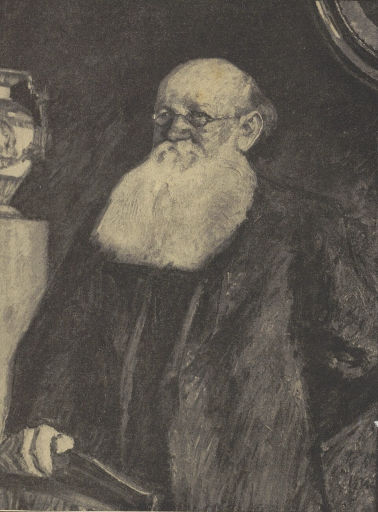
He died in Kaluga, leaving behind papers that shaped modern astronautics and Soviet space ambition. His combination of strict mathematics and expansive imagination helped define what spaceflight could realistically become.