Quick Facts
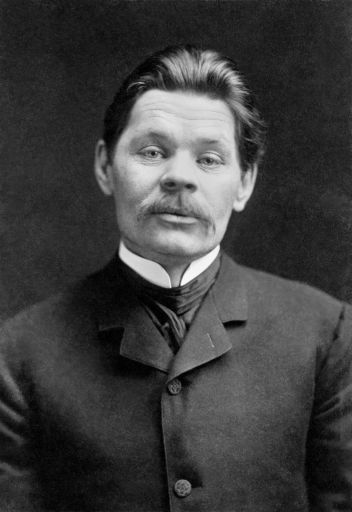
A self-taught Russian writer who transformed harsh childhood into revolutionary literature and influential Soviet cultural authority.
Conversation Starters
Life Journey
Born as Alexei Maximovich Peshkov in Nizhny Novgorod, Russian Empire, into a working-class family. Early family instability and poverty in the Volga region later became the raw material for his autobiographical writing.
After the death of his father, Maxim Savvateyevich Peshkov, the boy’s life became marked by financial insecurity. The household’s hardships and dependence on relatives shaped his lifelong attention to the humiliations of poverty.
His mother, Varvara Vasilyevna, died when he was still a child, leaving him largely in the care of his grandparents. The strictness of his grandfather and the warmth of his grandmother became enduring moral contrasts in his memoirs.
With formal schooling cut short, he worked in shops and kitchens, learning the brutal rhythms of labor early. These experiences later informed his empathy for the downtrodden and his vivid depiction of street life and exploitation.
He traveled to Kazan hoping to study, but poverty forced him into odd jobs while he read voraciously. In Kazan he encountered populist and Marxist ideas in informal circles, sharpening his political consciousness.
Overwhelmed by hunger, illness, and precarious work, he attempted suicide and survived, an episode he later recounted with stark honesty. The experience intensified his resolve to write about despair and human endurance without sentimentality.
He spent years traveling through towns and ports, working as a dockhand, baker’s assistant, and laborer. The journeys exposed him to Russia’s multiethnic underclass and gave him a storyteller’s archive of voices and types.
His story 'Makar Chudra' appeared in a Tiflis newspaper, marking his literary breakthrough. He adopted the name Maxim Gorky—'the bitter one'—to signal a tough, unsparing realism about Russia’s social wounds.
A major collection of his stories was published and rapidly gained wide readership, turning him into a literary sensation. Critics and readers recognized a new voice for the poor, steeped in street speech and moral urgency.
He was elected an honorary member of the Imperial Academy of Sciences, a sign of elite recognition. Tsar Nicholas II annulled the election due to Gorky’s radical reputation, provoking protest from writers like Leo Tolstoy and Anton Chekhov.
His play 'The Lower Depths' premiered at the Moscow Art Theatre under Konstantin Stanislavski and Vladimir Nemirovich-Danchenko. The bleak, compassionate portrait of society’s outcasts became an international theatrical landmark.
During the upheavals of 1905, he supported revolutionary causes and was arrested by Tsarist authorities. International pressure from prominent intellectuals helped secure his release, enhancing his status as a symbol of dissent.
He left Russia and spent time abroad, including the United States, fundraising and speaking for revolutionary movements. In this period he wrote 'Mother,' crafting a politically charged narrative of working-class awakening.
He returned to Russia after a broad amnesty and resumed writing and editorial activity. His public role grew as he supported writers, promoted education, and positioned literature as a tool for social transformation.
After the Bolshevik seizure of power, he wrote sharp critiques of political violence and authoritarian habits. Though he knew Vladimir Lenin, he warned that cultural life and human dignity could be crushed by revolutionary fanaticism.
Amid the 1921 famine and growing state pressure, he departed Russia, officially for health reasons. He settled in Europe while continuing to correspond with Soviet leaders and advocate for writers and humanitarian relief.
He returned to the Soviet Union to major official acclaim, with his fame used to legitimize Soviet cultural policy. His presence signaled a new era in which literary institutions were increasingly centralized and politically directed.
The Soviet government renamed his hometown Nizhny Novgorod as 'Gorky,' reflecting his iconic cultural stature. The gesture underscored how the state elevated him as a model writer aligned with socialist ideals.
He played a central role at the First Congress of Soviet Writers, helping define Socialist Realism as the official aesthetic. The congress strengthened the Union of Soviet Writers, tying literary careers tightly to party discipline and patronage.
He died in Moscow after a period of illness, with his death later surrounded by speculation in the tense atmosphere of the Stalin era. A grand state funeral reinforced his canonization as a foundational figure of Soviet literature.