Quick Facts
A restrained Ottoman sultan who reigned through constitutional turmoil, Balkan losses, and World War I collapse.
Conversation Starters
Life Journey
Mehmed Reshad was born into the Ottoman dynasty in the imperial milieu of Constantinople. He was a son of Sultan Abdulmejid I, raised amid Tanzimat-era reforms and intense palace protocol.
He received a courtly education that emphasized Ottoman Turkish literature, Islamic studies, and dynastic etiquette. Tutors introduced him to poetry and administration while the empire modernized under reformist statesmen.
After Abdulmejid I died, the throne passed to Abdulaziz, reshaping palace alliances and the princes' prospects. Reshad’s position remained junior, reinforcing a life of caution and deference within the dynasty.
The deposition of Abdulaziz and the brief reign of Murad V preceded Abdulhamid II’s accession and the 1876 constitution. Reshad watched as constitutional promises were soon curtailed amid war and political crisis.
In 1878, Abdulhamid II suspended the parliament and ruled through a centralized autocracy and surveillance. Reshad remained a largely secluded prince, cultivating literary interests while avoiding court intrigue.
By the 1890s he was known for piety, patience, and a taste for poetry rather than factional politics. This quiet profile made him less threatening to Abdulhamid II’s regime, even as opposition networks grew.
The Committee of Union and Progress forced the restoration of the 1876 constitution and elections in 1908. Reshad observed a dramatic shift from palace autocracy to parliamentary politics backed by military officers.
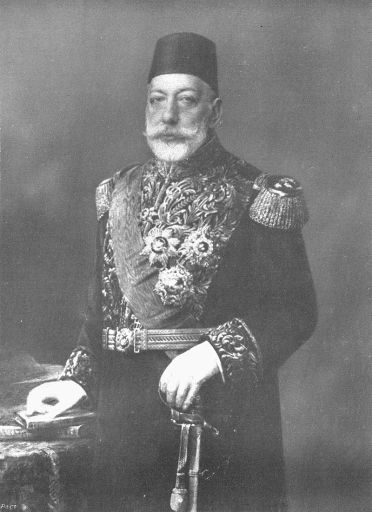
After the 31 March Incident and Abdulhamid II’s deposition, Reshad became Sultan Mehmed V. His reign began under a constitutional framework where real power increasingly lay with ministers and the CUP leadership.
Constitutional amendments strengthened parliament and reduced the sultan’s prerogatives, formalizing a more ceremonial monarchy. Mehmed V sought stability by cooperating with governments shaped by the CUP and army.
Italy attacked Ottoman Libya in 1911, exposing naval weakness and forcing a difficult war far from the capital. The conflict strained finances and morale, while young officers gained prominence in irregular defense efforts.
The Balkan League’s assault in 1912 shattered Ottoman control in much of Europe, bringing refugees and political upheaval. Mehmed V became a symbol of continuity as armies retreated toward the gates of Constantinople.
The 1913 coup consolidated power for CUP leaders including Enver Pasha, Talaat Pasha, and Cemal Pasha. Mehmed V’s role narrowed further, while the state pursued centralization and military reorganization.
Ottoman leaders moved toward the Central Powers, culminating in hostilities that expanded after naval actions in late 1914. Mehmed V presided over mobilization and wartime governance largely directed by the CUP triumvirate.
As Caliph, Mehmed V issued a proclamation of jihad aimed at encouraging loyalty among Muslim subjects and undermining Entente empires. The call was amplified by Ottoman religious authorities, with mixed impact beyond imperial borders.
Allied forces attacked the Dardanelles in 1915, and Ottoman defenses held in the brutal Gallipoli Campaign. Commanders such as Liman von Sanders and Mustafa Kemal gained renown as Istanbul avoided immediate occupation.
Fighting extended across the Caucasus, Mesopotamia, and Arabia, while shortages and conscription pressed civilians hard. Mehmed V remained a unifying figurehead as wartime decisions were driven by the cabinet and military command.
By 1917, casualties, inflation, and supply collapse eroded confidence in victory despite temporary advances. The palace and government struggled to maintain legitimacy as provinces destabilized and international pressures intensified.
Mehmed V died in July 1918 as the Ottoman war effort approached collapse and leadership factions maneuvered for survival. He was succeeded by Mehmed VI, who soon faced the Armistice of Mudros and occupation threats.