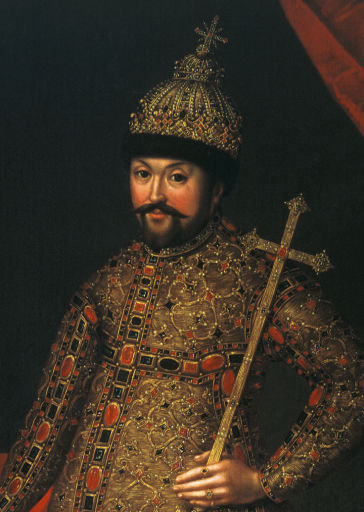
Quick Facts
A cautious, devout young tsar who stabilized Russia after the Time of Troubles and founded the Romanov dynasty.
Conversation Starters
Life Journey
Born at the height of Muscovy's elite politics, he was the son of Fyodor Nikitich Romanov and Xenia Shestova. His family’s close ties to the Rurikid court later made him a compromise candidate during national crisis.
Tsar Boris Godunov moved against rival boyar clans, and the Romanovs were targeted as potential claimants. His father was forced into monastic life as Filaret, while the family’s status and security sharply declined.
Xenia Shestova was compelled to take vows as the nun Martha, a humiliating blow that reshaped Michael’s childhood. The family’s confinement and reduced influence reflected the volatility preceding the Time of Troubles.
As political pressure mounted, the Romanovs lived under restrictions far from the center of power and court patronage. This early experience of insecurity later reinforced Michael’s preference for cautious, consensus-driven rule.
Foreign intervention and rival claimants destabilized Russia after Tsar Vasili Shuisky’s fall, with Polish forces influencing Moscow politics. The chaos made a broadly acceptable, Orthodox-linked candidate urgently necessary for national survival.
A volunteer army led by Kuzma Minin and Prince Dmitry Pozharsky forced the Polish garrison to surrender, ending a humiliating occupation. Their victory enabled a national assembly to choose a new tsar to restore legitimacy.
Delegates of the Zemsky Sobor selected Michael as a unifying figure tied to the old dynasty yet untainted by recent factional violence. Envoys traveled to the Ipatiev Monastery, persuading him and his mother to accept the throne.
After acceptance, Michael traveled under guard toward a war-torn capital still recovering from siege and famine. His arrival signaled a return of central authority, while loyal boyars and church leaders organized a fragile administration.
He was crowned in the Kremlin’s Dormition Cathedral with Orthodox rites that emphasized divine legitimacy and continuity. The ceremony publicly ended the interregnum and began the Romanov dynasty amid ongoing border wars.
Michael relied on experienced boyars and clerics to rebuild taxation, service obligations, and local administration devastated by conflict. The court worked to reassert control over provinces and to restore grain routes and garrisons.
The Treaty of Stolbovo concluded fighting with Sweden and secured peace at the cost of access to the Baltic coastline. Though painful, it let the government redirect resources toward internal recovery and the Polish-Lithuanian front.
After renewed campaigning and pressure near Moscow, Russia agreed to the Truce of Deulino with the Polish-Lithuanian Commonwealth. The deal ceded Smolensk and other lands temporarily, buying time for rebuilding institutions and armies.
Michael’s father returned from captivity and was installed as Patriarch Filaret, dominating state affairs alongside his son. Filaret strengthened central administration, tightened fiscal collection, and promoted church authority in governance.
The government expanded record-keeping and reinforced the service nobility system to ensure military readiness and tax flows. Recovering towns received charters and oversight, aiming to revive trade after years of devastation and depopulation.
He married Eudoxia Streshneva, a match that strengthened court stability and ensured dynastic continuity. The union produced heirs, including the future Tsar Alexei, easing fears of renewed succession crisis.
After Sigismund III Vasa’s death, Russia launched the Smolensk War seeking to recover lost territories and prestige. Campaigns strained finances and exposed logistical weaknesses, but also spurred modernization efforts in military organization.
Filaret’s death removed the dominant co-ruler whose authority had shaped early Romanov policy and court factions. Michael, often cautious and health-limited, relied more on advisers but maintained the dynasty’s legitimacy and continuity.
The Peace of Polyanovka ended hostilities, confirming existing borders while forcing Russia to abandon immediate claims to Smolensk. It stabilized the western frontier and allowed the court to refocus on consolidation and succession planning.
After decades of cautious recovery, he died leaving a more stable treasury, restored administration, and a secure line of succession. His son Alexei inherited a strengthened monarchy poised for further centralization and expansion.