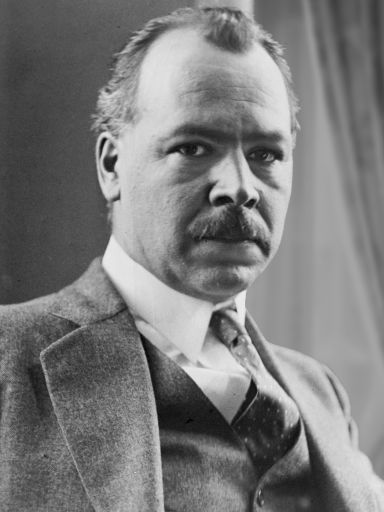
Quick Facts
Visionary Russian botanist who mapped crop origins and built a vast seed bank, defying politics to protect biodiversity.
Conversation Starters
Life Journey
Born in Moscow in the Russian Empire, he grew up amid rapid industrial change and political unrest. Family support and strong schooling helped spark his early fascination with plants and practical agriculture.
He began formal training at the Moscow Agricultural Institute, studying botany, agronomy, and plant pathology. The institute connected him to field research and the urgent problem of crop failure in Russia.
Working with Russian agronomists and plant pathologists, he investigated how crops resist fungal diseases and pests. These studies pushed him toward genetics as an explanation for inherited resistance in plants.
He traveled to leading laboratories to learn modern genetics and plant science, including work associated with William Bateson in Britain. The experience strengthened his commitment to Mendelian methods and rigorous experimentation.
Amid World War I, he conducted fieldwork in Persia to study crop diversity and disease resistance in harsh environments. He collected seeds and observations that later shaped his ideas about geographic patterns in heredity.
The February and October Revolutions upended Russian institutions, yet he continued research and teaching through shortages and uncertainty. He argued that scientific breeding and seed diversity were essential to feed a fragile state.
He took a leading academic post and organized breeding and pathology studies aimed at improving grain yields. The work linked genetics to practical farming, aligning science with postwar recovery and food security goals.
He proposed that related species show parallel sets of hereditary variations, helping breeders predict useful traits across crops. The concept became a powerful organizing principle for comparative genetics and selection work.
He helped transform plant research institutes into coordinated centers for collecting and preserving global crop diversity. In Leningrad, systematic seed storage and cataloging laid groundwork for one of the world’s great gene banks.
Synthesizing expedition data, he argued that agriculture began in specific geographic regions with exceptional diversity. This framework guided future collecting, conservation, and breeding by pointing to hotspots like the Andes and Ethiopia.
He and his teams gathered wheat, legumes, and fruit varieties across Mediterranean farming landscapes and research stations. These samples enriched Soviet breeding programs and supported his mapping of crop diversity by region.
As collectivization reshaped agriculture, he argued that resilient varieties and genetic diversity mattered more than slogans. He directed collecting missions to secure seeds before local landraces disappeared under rapid policy change.
He defended Mendelian genetics and experimental breeding while Trofim Lysenko gained political support for anti-genetic ideas. Scientific debate increasingly turned dangerous as ideology began to decide what counted as “truth.”
At the Vavilov Institute (VIR), he oversaw researchers, seed storage, and breeding collaborations across the USSR. The institute became a global hub for crop genetics, even as the Great Terror threatened independent scientists.
With arrests spreading through academia, his international contacts and insistence on genetics drew scrutiny. Allies disappeared from institutes, and pressure mounted to endorse Lysenko’s claims despite contradictory evidence.
He was arrested during fieldwork and accused of sabotage and espionage, charges common in Stalin’s security campaigns. Interrogations and imprisonment removed him from science as Lysenkoist policies tightened control over biology.
During the Nazi siege, his colleagues at VIR protected thousands of seed accessions, refusing to eat the edible collections despite starvation. Their sacrifice ensured the survival of irreplaceable genetic diversity he had assembled.
He died in Soviet custody after prolonged imprisonment, weakened by malnutrition and harsh conditions. His scientific vision endured through the collections and theories that later shaped global conservation and plant breeding.