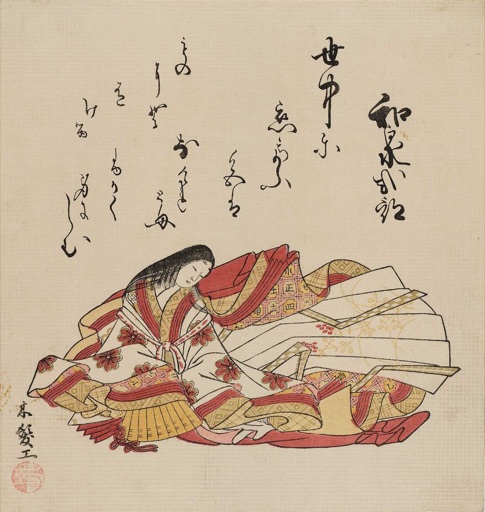
Quick Facts
A legendary Heian court poet famed for intense love lyrics, dazzling beauty, and enduring aura of mystery.
Conversation Starters
Life Journey
Komachi is traditionally placed in the early ninth century, linked to the Ono lineage associated with court service and learning. Her exact birthplace is uncertain, but later tradition connects her to the Kyoto-centered aristocratic world that shaped waka culture.
As a young noblewoman, she would have mastered etiquette, calligraphy, and poetic exchange used in romance and diplomacy. Heian salons prized quick improvisation, and her reputation suggests early recognition among aristocratic circles in the capital.
Komachi became known in gatherings where waka served as refined conversation and social currency among courtiers. Poetic reputation could elevate status, and her verses circulated through handwritten copies and competitive exchanges among elite households.
Her poems developed a distinctive intensity, using pivot words and layered imagery to capture longing, jealousy, and regret. In a culture of understatement, her voice stood out for psychological candor and sharp, memorable turns of phrase.
Heian romance often unfolded through poem-messages delivered by attendants, and Komachi’s name became linked to brilliant exchanges. Later anecdotes connect her with prominent courtiers, reflecting how poetic skill and love affairs intertwined at court.
Medieval criticism, especially Ki no Tsurayuki’s literary framework, elevated her among the exemplary early waka masters. Inclusion with the Rokkasen signaled canonical authority, ensuring her poems were copied, taught, and evaluated for generations.
As court taste shifted toward codifying precedent, her verses gained value as models of passionate diction and elegant technique. Scribes and courtiers preserved favored poems in private collections that later fed into official compilation projects.
Later sources often place her near famed contemporaries such as Ariwara no Narihira, creating a constellation of romantic and poetic celebrity. Whether historically precise or not, the pairing reflects how audiences imagined the period’s finest voices.
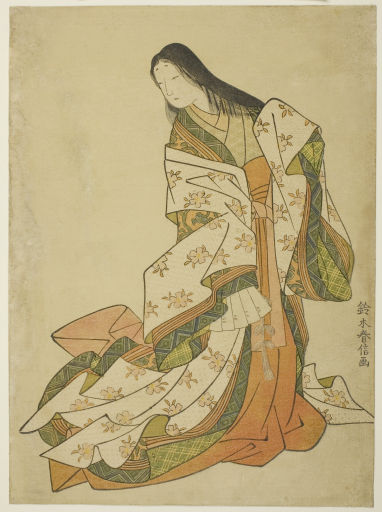
As her fame spread, narratives emphasized striking beauty alongside verbal brilliance, blending biography with literary archetype. Court society often mythologized poets, and Komachi’s image began to function as a symbol within broader aesthetic discourse.
The Kokin Wakashu, commissioned by Emperor Daigo and shaped by Ki no Tsurayuki and other compilers, later included her poems as exemplary. This placement fixed her voice inside Japan’s most influential waka canon and court educational practice.
Readers highlighted the tension in her work between desire and the fleeting nature of beauty and affection, echoing Buddhist-inflected Heian sensibilities. Her imagery of fading blossoms and passing seasons became touchstones for later moral reflection.
Medieval tales recast Komachi as a figure confronting old age and abandonment, contrasting earlier glamour with stark transience. These stories, while not reliable biography, show how audiences used her persona to dramatize mujō, impermanence.
Anecdotal literature portrayed her as testing suitors, wielding razor wit, or regretting past attachments, depending on the moral. Such tales circulated beyond the palace, turning an elite poet into a widely recognized cultural reference point.
Over time, religious and performing arts communities reimagined her story to explore attachment, karma, and the decay of worldly allure. This process laid groundwork for later Noh plays centered on “Komachi” themes of memory and longing.
Her death is unrecorded, but tradition places it in the early tenth century, after which her identity expanded far beyond historical trace. Canonical poems preserved her voice, while stories and drama turned her into a timeless emblem of passion and impermanence.