Quick Facts
Free will" Pelagius: challenged sin, rocked early Church.
Conversation Starters
Life Journey
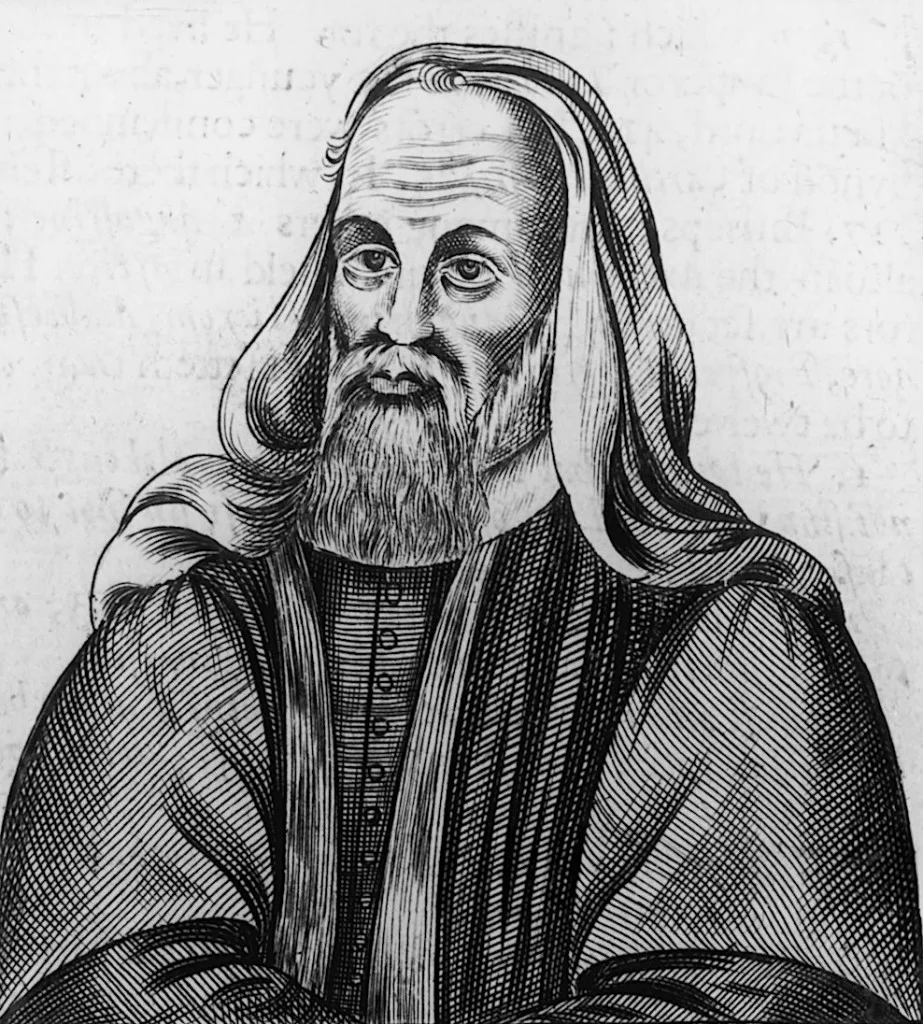
Pelagius was born in Roman Britain, likely to a prosperous family. His name, meaning 'of the sea,' may be a Latinization of a Celtic name. He received an excellent education and became fluent in both Latin and Greek.
Pelagius traveled to Rome, the center of the Western Christian world. He established himself as a respected teacher and spiritual director, attracting followers among the Roman aristocracy with his emphasis on moral rigor.
Pelagius gained prominence as a lay monk and moral teacher in Rome. He was known for his ascetic lifestyle and his insistence that Christians could and should live sinless lives through the exercise of free will.
Pelagius developed his distinctive theological position emphasizing human free will and moral responsibility. He rejected the idea that humans were helplessly bound by original sin, arguing that God's grace enabled but did not compel righteous living.
Pelagius composed influential commentaries on the letters of Saint Paul. These works presented his interpretation of grace and free will, arguing that Paul's teachings supported human moral capability rather than total dependence on divine intervention.
Pelagius became increasingly critical of Augustine of Hippo's teachings on original sin and predestination. He was particularly troubled by Augustine's prayer 'Grant what you command, and command what you will,' which he saw as undermining human moral effort.
Pelagius's teachings attracted a devoted following among Roman aristocrats, including the wealthy widow Demetrias and the lawyer Celestius. His emphasis on moral perfectibility appealed to those seeking rigorous spiritual discipline.
When Alaric's Visigoths sacked Rome, Pelagius fled to North Africa along with many Roman refugees. This brought him into closer contact with Augustine's sphere of influence and intensified the theological conflict between them.
Pelagius traveled to Palestine, where he continued teaching and writing. He found a more receptive audience in the Eastern Church, which was less focused on the questions of grace and free will that dominated Western theology.
Pelagius was brought before a synod at Diospolis to answer charges of heresy. He successfully defended himself by clarifying his positions and distancing himself from more extreme statements by his followers, and was acquitted.
Despite his acquittal in Palestine, African church councils at Carthage and Mileve condemned Pelagianism. Augustine led the campaign against Pelagius, arguing that his teachings denied the necessity of divine grace for salvation.
Pope Innocent I sided with the African bishops and condemned Pelagius and his teachings. However, Innocent died shortly after, and his successor Zosimus initially took a more favorable view of Pelagius.
Under pressure from the African bishops and the Roman Emperor Honorius, Pope Zosimus reversed his position and formally condemned Pelagius and Celestius. Pelagianism was declared a heresy throughout the Western Church.
Emperor Honorius issued an edict banishing Pelagius and his followers from Rome. The combination of ecclesiastical condemnation and imperial enforcement effectively ended Pelagius's public career in the Western Church.
Pelagius disappeared from the historical record after 418, and his fate is unknown. He may have died in Palestine or Egypt. Though condemned as a heretic, his questions about grace, free will, and human nature continued to influence Christian theology for centuries.