Quick Facts
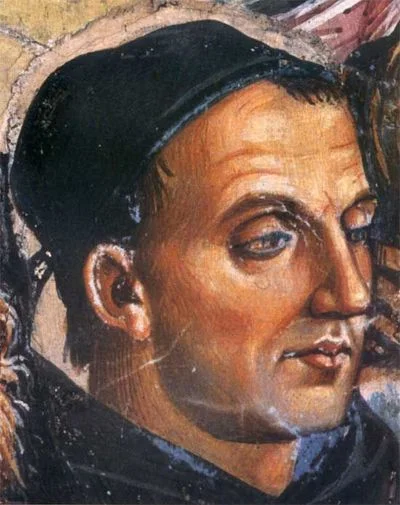
Blessed Angelico. Dominican friar whose frescoes made heaven visible on earth.
Conversation Starters
Life Journey
Guido di Pietro, later known as Fra Angelico, was born in Tuscany, destined to become one of the most influential painters of the Early Italian Renaissance.
Young Guido began his artistic training in Florence, learning the techniques of illumination and panel painting that would form the foundation of his sacred art.
Guido entered the Dominican Order at San Domenico in Fiesole, taking the religious name Fra Giovanni, later called Angelico for his angelic paintings.
Fra Angelico established his artistic workshop at the Dominican convent of Fiesole, beginning his career as a painter of religious works for the Order.
Fra Angelico's first documented paintings appeared, showing the distinctive blend of late Gothic elegance and emerging Renaissance naturalism that would define his style.
Fra Angelico painted his renowned Annunciation panel, demonstrating his mastery of light, color, and spiritual expression that earned him the title 'Angelic Brother'.
Fra Angelico began his masterwork cycle of frescoes at the newly rebuilt San Marco convent in Florence, commissioned by Cosimo de' Medici.
Fra Angelico completed the intimate cell frescoes at San Marco, painting contemplative scenes in each monk's cell to aid their meditation and prayer.
Fra Angelico completed the magnificent San Marco altarpiece, a revolutionary work that influenced generations of Renaissance painters with its spatial innovation.
Pope Eugene IV summoned Fra Angelico to Rome, recognizing him as the greatest religious painter of the age and commissioning work for the Vatican.
Fra Angelico painted frescoes in the Chapel of San Brizio at Orvieto Cathedral, work later completed by Luca Signorelli, depicting the Last Judgment.
Fra Angelico painted the private chapel of Pope Nicholas V in the Vatican, creating exquisite frescoes of the lives of Saints Stephen and Lawrence.
Fra Angelico was appointed prior of San Domenico in Fiesole, balancing his administrative duties with continued painting, though he returned to Rome.
Fra Angelico returned to Rome to continue working for the papal court, spending his final years creating religious art in service of the Church.
Fra Angelico died in Rome and was buried in the church of Santa Maria sopra Minerva. Beatified in 1982, he is patron saint of Catholic artists.