Quick Facts
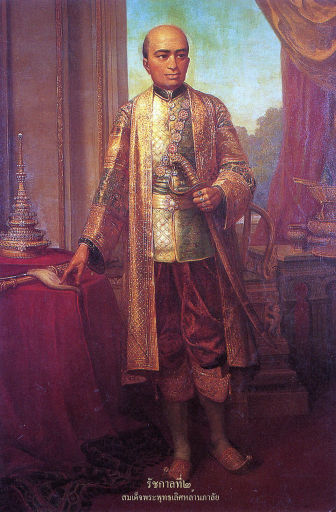
A poet-king of early Bangkok Siam who strengthened culture, revived arts, and guided diplomacy through regional turbulence.
Conversation Starters
Life Journey
Born as Chim (later Prince Isarasundhorn) in a year of crisis, when Ayutthaya fell to Burmese forces and Siam fractured. His family’s survival and later rise were shaped by wartime migrations and rebuilding efforts centered on the Chao Phraya basin.
When Rama I founded the Chakri dynasty and established Bangkok as the capital, the young prince was drawn into a rapidly formalizing royal court. He began learning statecraft, ritual, and classical arts that would later define his cultural reign.
As the kingdom stabilized, he took on practical responsibilities within the palace and administration under Rama I’s guidance. Court protocol, patronage networks, and military readiness were still being rebuilt after decades of warfare and upheaval.
He developed a reputation for refined taste and literary skill, composing and refining verses aligned with Thai classical meters. Court theater and dance-drama traditions were strengthened as the new capital sought legitimacy through culture and religion.
He backed efforts to restore temples damaged by earlier wars and to reinforce the Sangha’s role in public life. These projects tied royal authority to Buddhist merit-making and helped standardize ritual practice in the young Bangkok kingdom.
He encouraged skilled artisans—painters, carvers, musicians, and dancers—to work under royal sponsorship in Bangkok. By rebuilding artistic institutions, the court promoted a shared aesthetic that distinguished Rattanakosin culture from the ruins of Ayutthaya.
Court productions drew on the Ramakien tradition, blending epic narrative with Thai dance-drama forms and music ensembles. His interest helped codify repertoire and performance standards, making royal theater a tool of education and prestige.
Siam navigated a complex region shaped by Burmese pressure, Vietnamese ambition, and shifting tributary relationships. He supported pragmatic diplomacy and trade management, balancing court tradition with the economic needs of a port-centered capital.
After Rama I’s death, he became the second monarch of the Chakri dynasty, inheriting a state still consolidating institutions. He sought legitimacy not only through military readiness but through cultural brilliance, Buddhism, and orderly court administration.
He expanded royal sponsorship for poets, playwrights, and musicians, treating cultural production as a pillar of governance. Bangkok’s court became a center where elite education and artistic excellence reinforced dynastic authority and social hierarchy.
He emphasized public rituals, donations, and temple repair as visible expressions of righteous kingship. These acts connected the monarchy to Buddhist moral order while also beautifying Bangkok with restored shrines, murals, and ceremonial spaces.
Trade with China remained vital, and the court carefully regulated commercial networks and diplomatic forms tied to Chinese tributary practice. His reign kept revenue flowing while maintaining ceremonial respect that underpinned regional recognition of Siam’s rulers.
Royal workshops and literati circles worked to preserve poems, dramas, and court manuals that defined elite knowledge. In a period of rebuilding memory after Ayutthaya’s fall, this cultural archiving helped standardize what later generations called Thai classical tradition.
As princes and noble families gained influence, he navigated palace politics to keep administration functional and rituals orderly. His choices shaped the environment in which eventual succession would be decided, reflecting both tradition and real power dynamics.
British and other Western traders expanded influence after the Napoleonic era, increasing pressure on regional ports and treaties. Siam monitored these developments carefully, seeking to protect autonomy while benefiting from controlled commerce and maritime contacts.
He died in Bangkok after years of patronage that left enduring marks on Thai literature, theater, and temple culture. The throne passed to Rama III, and court artists continued to draw on standards and repertoires associated with Rama II’s era.