Quick Facts
A crusading warrior-king famed for battlefield brilliance, chivalric legend, and costly rule over a fractious Angevin empire.
Conversation Starters
Life Journey
Born to Henry II of England and Eleanor of Aquitaine, Richard entered a court spanning England, Normandy, and southern France. His childhood was shaped by the politics of the vast Angevin Empire and the ambitions of his powerful mother.
Eleanor of Aquitaine installed Richard as her heir in Aquitaine, tying him early to Poitiers and the cultured courts of the south. The appointment thrust him into managing turbulent nobles and learning the realities of frontier lordship.
Richard was formally invested as Duke of Aquitaine and Count of Poitou in a ceremony attended by major regional lords. The ritual affirmed Plantagenet authority but also highlighted how conditional loyalty could be in the Limousin and Gascony.
Richard sided with his brothers Henry the Young King and Geoffrey in rebellion against their father, encouraged by baronial grievances and dynastic rivalries. The uprising was suppressed, but it revealed how fragile Angevin unity could be under Henry II.
Facing repeated noble revolts, Richard led sieges and punitive expeditions to enforce ducal control across Aquitaine. Chroniclers noted both his tactical flair and severity, as castles were reduced and rebel families compelled to submit.
When Henry the Young King died during another bout of civil strife, Richard became Henry II’s foremost adult son and a key heir. The succession question sharpened tensions with John and with Philip II of France, who sought to fracture Angevin power.
After news of Jerusalem’s fall to Saladin, Richard publicly took the cross, committing to a major expedition to the Holy Land. The decision bound him into a wider European coalition and demanded massive financing from Aquitaine and England.
Richard allied with Philip II of France against his father, forcing Henry II into humiliating concessions at the end of his reign. Henry died soon after, leaving Richard to inherit a war-tested empire and unresolved continental rivalries.
Richard was crowned at Westminster Abbey amid elaborate ceremony that projected Plantagenet legitimacy and crusading purpose. Anti-Jewish violence erupted in London around the coronation period, exposing tensions Richard’s government struggled to contain.
Richard sailed from Marseille and reached Messina, where he clashed with local power and compelled concessions over his sister Joan’s dowry. His presence signaled that the crusade was also a stage for European diplomacy and Angevin prestige.
After storms scattered his fleet, Richard seized Cyprus from Isaac Komnenos, turning the island into a vital supply base for the crusade. He married Berengaria of Navarre at Limassol, a politically useful match that linked him to Iberian alliances.
Richard arrived at the siege of Acre and helped force the city’s surrender alongside Philip II and other crusader leaders. Disputes over banners, prisoners, and leadership quickly poisoned cooperation, foreshadowing a fractured campaign.
Marching south from Acre, Richard kept disciplined formations under constant harassment before launching a decisive counterattack at Arsuf. The victory boosted crusader morale and secured coastal positions, though Jerusalem remained strategically elusive.
After hard campaigning and political strain among the crusaders, Richard negotiated the Treaty of Jaffa with Saladin. The agreement left Jerusalem under Muslim control but guaranteed access for Latin pilgrims and preserved a fragile coastal kingdom.
Traveling incognito through central Europe, Richard was seized by Duke Leopold V of Austria, whom he had offended at Acre. His capture became an international crisis, drawing in Emperor Henry VI and triggering an enormous ransom demand.
Imprisoned under imperial authority, Richard became a bargaining chip in European power politics while England raised funds through taxation and church contributions. The episode elevated Chancellor Hubert Walter and tested the loyalty of John and Philip II.
Richard was freed after the vast ransom was assembled and returned to reassert royal authority against John’s intrigues. He staged a second coronation-like ceremony to emphasize legitimacy, then quickly refocused on war in Normandy and Anjou.
To counter Philip II’s advances, Richard built the formidable Chateau Gaillard overlooking the Seine, showcasing innovative military architecture. The project consumed vast resources but embodied his strategy of aggressive defense for the continental heartland.
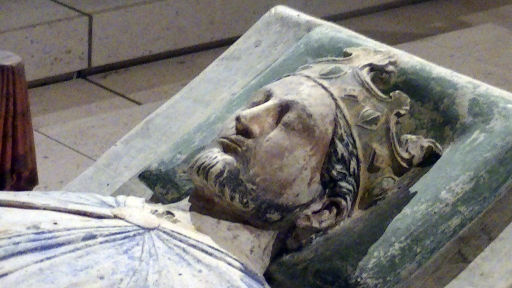
While suppressing a local revolt, Richard besieged Chalus-Chabrol and was struck by a crossbow bolt fired from the walls. Infection set in, and he died after making arrangements for succession, leaving John to inherit a precarious realm.