Quick Facts
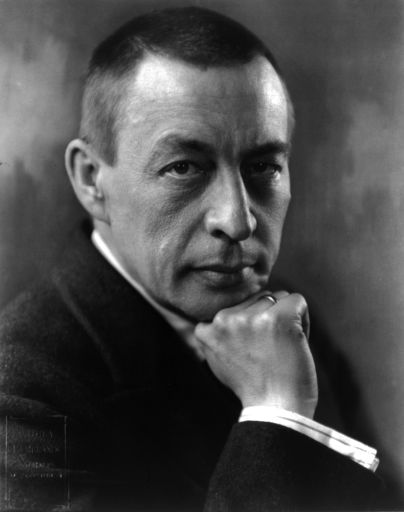
Towering virtuoso-composer whose lush harmonies and melancholic melodies bridged late Romantic Russia and American concert life.
Conversation Starters
Life Journey
Born on an estate near Novgorod to an aristocratic family whose fortunes were declining. Early exposure to piano and church music formed the emotional palette later heard in his choral and orchestral writing.
Moved to the imperial capital and enrolled at the Saint Petersburg Conservatory for formal musical training. Family instability and frequent relocations disrupted his studies, foreshadowing later struggles with confidence and routine.
Relocated to Moscow and studied under the demanding pedagogue Nikolai Zverev, living in his household with other gifted students. The strict regimen sharpened his technique and endurance, essential for his later virtuoso career.
Entered the Moscow Conservatory’s upper classes, studying composition with Sergei Taneyev and Anton Arensky. Immersed in Tchaikovsky’s legacy and Russian musical nationalism, he refined a personal, lyric Romantic voice.
Completed his piano degree at the Moscow Conservatory with distinction after demanding examinations. His formidable reach and clarity at the keyboard drew attention in Moscow’s competitive musical circles.
Graduated in composition by completing the opera 'Aleko,' which was staged at the Bolshoi Theatre as a student triumph. The success announced him as a major new Russian talent, winning influential support and commissions.
Developed contact with Pyotr Ilyich Tchaikovsky, whose encouragement carried enormous weight for a young composer. Tchaikovsky’s death soon after deepened Rachmaninoff’s sense of artistic inheritance and loss.
The premiere of Symphony No. 1, conducted by Alexander Glazunov, was poorly received and reportedly under-rehearsed. Devastating reviews triggered a prolonged creative crisis that left him unable to compose for years.
Sought psychotherapy and hypnotic suggestion from Dr. Nikolai Dahl in Moscow during a severe depression. The treatment restored his working focus, becoming a turning point that directly enabled his next major concerto.
Finished and premiered Piano Concerto No. 2, dedicating it to Dr. Dahl in gratitude for his recovery. Its sweeping melodies and dramatic architecture made it an instant favorite, securing international recognition.
Married his cousin Natalia Satina after overcoming family resistance and church restrictions. Their partnership provided stability and a home base as his duties expanded across composing, performing, and conducting.
Accepted a conducting post at the Bolshoi Theatre, leading major operatic and symphonic performances. The intense schedule broadened his orchestral command but strained his time for composition and family life.
Traveled to Western Europe and conducted concerts in Paris, introducing audiences to his music alongside Russian repertory. These appearances expanded his reputation beyond Russia and increased invitations for tours.
Visited the United States for a major tour and premiered Piano Concerto No. 3 with the New York Symphony under Walter Damrosch. The concerto’s fearsome difficulty and lyric intensity later made it a pianist’s landmark.
Wrote the sacred choral work 'All-Night Vigil,' drawing on Russian Orthodox chant and rich, dark sonorities. Premiered in wartime Russia, it became one of the era’s most revered achievements in a cappella writing.
Departed Russia with his family amid the upheaval of the 1917 Revolution, losing estates and much of his property. Exile forced him to prioritize performing to support his household, sharply reducing composing time.
Arrived in America and built a demanding career as a concert pianist, frequently appearing in major halls and with leading orchestras. His recordings and recitals established a distinctively unsentimental, rhythmically firm style.
Finished the 'Variations on a Theme of Corelli,' reflecting a leaner, more modern harmonic language. Though he sometimes cut variations in performance, the work shows his late-career precision and structural discipline.
Wrote the 'Rhapsody on a Theme of Paganini' for piano and orchestra, premiered with the Philadelphia Orchestra under Leopold Stokowski. Its famous 18th variation became widely beloved, blending virtuosity with aching lyricism.
In declining health, he continued performing through a strenuous final season, driven by professionalism and financial responsibility. He died at his home in Beverly Hills, mourned worldwide as a last giant of Romanticism.