Quick Facts
Pioneered luminous full-color ukiyo-e prints, reshaping Edo-period aesthetics with lyrical scenes of love, fashion, and seasons.
Conversation Starters
Life Journey
Suzuki Harunobu was born in early 18th-century Japan during the Tokugawa shogunate, when Edo urban culture powered a booming print market. His exact birthplace and family background remain uncertain, reflecting sparse records for many ukiyo-e artists.
As a teenager, Harunobu likely studied drawing and design within workshop networks linked to ukiyo-e publishing in Edo. He learned how drawings were translated into carved blocks by professional artisans, aligning his style with commercial production realities.
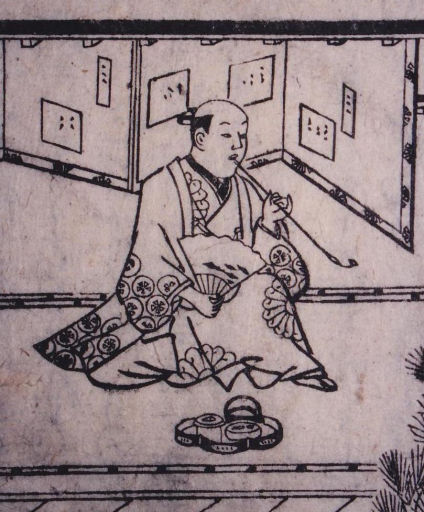
Before full-color printing became standard, Harunobu worked in sumizuri-e and benizuri-e formats, where limited pigments were brushed or printed. These early works helped him master clear linework and delicate compositions suited to later color complexity.
Harunobu’s career depended on collaboration with publishers, block carvers, and printers who financed and manufactured editions. Through these networks in Edo’s book-and-print districts, he gained opportunities to experiment with new visual effects and paper qualities.
Harunobu became associated with haikai communities where poets, patrons, and artists exchanged themes and seasonal references. The refined wit and allusion of these circles shaped his preference for intimate narratives, classical motifs, and elegant word-image interplay.
In the early 1760s, printmakers pushed beyond limited palettes by coordinating multiple blocks and pigments with tighter registration. Harunobu’s designs suited this technical leap, emphasizing subtle gradations, patterned textiles, and controlled negative space.
Around 1764–1765, Harunobu helped popularize nishiki-e, the “brocade picture” method using many carved blocks for rich, aligned color. The innovation transformed ukiyo-e into a vivid mass medium, and his designs became a model for competitors in Edo.
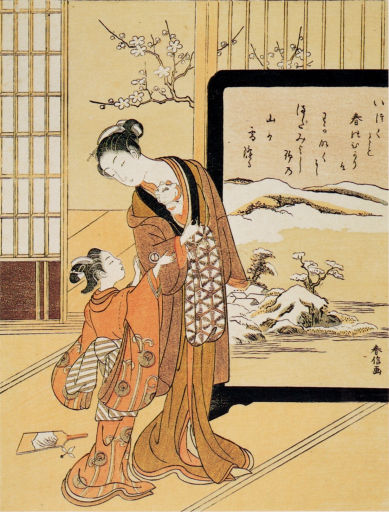
Harunobu’s celebrated images of young women and couples highlighted contemporary hairstyles, kimono patterns, and gestures drawn from everyday city life. His slender proportions and gentle expressions offered a fresh ideal of beauty that strongly influenced later artists.
He developed series that paired romantic vignettes with seasonal cues such as blossoms, snow, and moonlight, echoing poetic conventions. These prints invited viewers to read emotion through weather, clothing, and architecture rather than explicit narrative text.
Harunobu adopted spatial tricks seen in illustrated books, including angled interiors, screens, and layered thresholds. By placing figures within carefully staged rooms and gardens, he created a quiet theatricality that made private moments feel newly accessible.
Many designs referenced courtly tales, waka poetry, and famous places, then translated them into recognizable Edo settings. This blend of high-cultural allusion and everyday fashion helped bridge elite taste and merchant-class consumption in the print market.
His mature prints showcased sophisticated palettes—soft pinks, pale greens, and muted blues—balanced against crisp black keylines. Printers used multiple blocks to render complex kimono patterns, turning clothing into a central storytelling device.
As nishiki-e spread rapidly, other artists adopted Harunobu’s figure types, intimate framing, and seasonal symbolism. His success also encouraged publishers to invest in costly multi-block production, accelerating artistic competition across Edo’s print shops.
In his final years, Harunobu continued producing witty scenes of courtship, games, and domestic rituals that mirrored Edo’s pleasure quarters culture. The images often carried gentle satire, yet maintained his signature tenderness and refined composition.
Harunobu died in 1770, leaving behind a body of work that defined the early golden age of full-color ukiyo-e. Though his life was brief, his technical and aesthetic innovations shaped how Japanese prints were designed, printed, and collected.
After his death, collectors and publishers continued to value Harunobu’s compositions, and later artists echoed his visual vocabulary. The enduring appetite for nishiki-e ensured that his approach to color, pattern, and intimacy remained a benchmark in Edo.