Quick Facts
Brilliant Vietnamese commander who outwitted Mongol invasions, forging national unity through strategy, discipline, and moral leadership.
Conversation Starters
Life Journey
Born as Trần Quốc Tuấn into the ruling Trần family as the dynasty strengthened control over Đại Việt. His upbringing unfolded amid court politics in the Red River Delta, where military talent and loyalty were prized.
Dynastic disputes and forced marriages within the Trần court created long-lasting rivalries among princes. These tensions, remembered in later chronicles, sharpened his caution toward factionalism and his focus on national survival.
As a young noble, he gained influence at court through competence and reputation for discipline. Senior officials and princes increasingly viewed him as a natural commander in anticipation of northern threats.
Mongol forces under Uriyangkhadai surged into Đại Việt, briefly taking Thăng Long and forcing a strategic withdrawal. The experience taught Vietnamese leaders the value of mobility, supply denial, and coordinated counterattacks.
After the invaders pulled back, the Trần court reorganized frontier intelligence and strengthened riverine logistics. He emerged as a key planner for future resistance, emphasizing unity among princes and local militias.
He refined plans combining fortified waterways, ambush tactics, and scorched-earth measures to exhaust stronger armies. These ideas drew on Đại Việt’s geography of rivers and marshes, preparing for Yuan demands and renewed war.
Kublai Khan’s Yuan dynasty crushed the Southern Song, freeing enormous resources for campaigns in Southeast Asia. In Thăng Long, officials debated diplomacy and resistance while he urged readiness for an inevitable invasion.
The Trần leadership entrusted him with major authority to coordinate armies, fleets, and provincial forces. He worked closely with Trần Nhân Tông and Trần Thánh Tông to unify command and curb internal rivalry.
Tradition credits him with rallying officers through a forceful call to loyalty and sacrifice, often associated with "Hịch tướng sĩ". The message framed resistance as a moral duty, urging training, vigilance, and unity against Yuan power.
Yuan forces led by Prince Toghan and general Sogetu advanced, compelling the Trần court to abandon Thăng Long to avoid encirclement. He coordinated retreats, disrupted supplies, and preserved core forces for a decisive counterstrike.
Vietnamese forces regrouped and struck Yuan detachments, while southern columns faced mounting losses and disease. The campaign culminated in Yuan withdrawal, confirming his strategy of endurance, terrain advantage, and concentrated counterattacks.
Expecting renewed attacks, he strengthened coastal watch, river fortifications, and food depots while planning to target enemy supply fleets. Coordination with regional commanders improved, turning waterways into killing zones for heavy ships.
Toghan returned with armies and a large naval train, aiming to force submission and open routes toward Champa. He avoided a pitched battle, instead probing for weaknesses and preparing ambushes against overloaded supply vessels.
He lured Yuan ships into the Bạch Đằng River at favorable tides and attacked as vessels struck submerged stakes and mudflats. Vietnamese forces annihilated key fleets, forcing Toghan’s retreat and ending Yuan ambitions in Đại Việt.
After victory, the Trần state restored administration, repaired defenses, and honored commanders while keeping watch for Yuan reprisals. His prestige helped reinforce central authority and promoted a narrative of unity over personal ambition.
As senior statesman, he counseled the court on military preparedness and internal cohesion as leadership transitioned. His experience shaped training, recruitment, and the strategic view that independence depended on disciplined institutions.
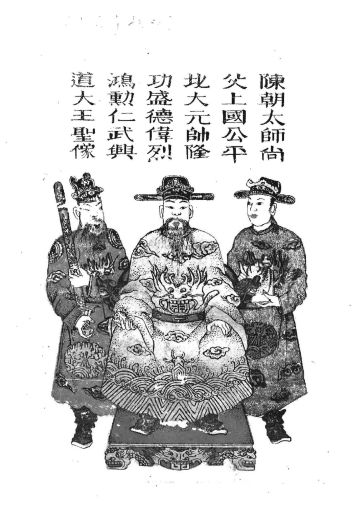
He died after a life identified with Đại Việt’s survival against the Yuan, leaving an enduring model of generalship and civic virtue. Over time he was widely revered in temples and popular belief as Đức Thánh Trần, a protective spirit.