Quick Facts
Influential Islamic scholar, reformer, and founder of the Sokoto Caliphate whose religious writings and educational reforms transformed West African society and established one of history's largest Islamic states.
Conversation Starters
Life Journey
Usman dan Fodio was born into a family of Fulani Islamic scholars in Maratta, in the Hausa kingdom of Gobir. His birth name was Usuman bi Foduye, and he came from a long lineage of religious teachers and scholars.
Started his formal Islamic education under the guidance of his father Muhammad Fodiye and other family scholars. He showed exceptional aptitude for memorizing the Quran and understanding Islamic jurisprudence from an early age.
Traveled extensively to study under renowned Islamic scholars across the Sahel region. He mastered Arabic grammar, Islamic law, theology, and Sufi mysticism, becoming deeply influenced by the Qadiriyya Sufi order.
Established himself as a teacher and preacher in Degel, attracting students and followers from across the region. His teachings emphasized returning to pure Islamic practice and criticized the syncretic religious practices of the Hausa rulers.
Married and began raising a family while continuing his scholarly work. His household became a center of learning, with his daughter Nana Asma'u later becoming a renowned scholar and poet in her own right.
His community of followers, known as the Jama'a, grew significantly. He established a model Islamic community that attracted both men and women seeking religious education and reform.
Tensions escalated with the Sultan of Gobir over the growing influence of his movement and his criticism of un-Islamic practices. Despite pressures, Usman refused to compromise his reformist teachings.
Composed one of his most important works, 'Ihya al-Sunna wa Ikhmad al-Bid'a' (Revival of the Sunna and Destruction of Innovation), outlining his vision for Islamic reform and criticizing religious innovations.
The new Sultan of Gobir, Yunfa, increasingly hostile to Usman's movement, began restricting his activities and persecuting his followers. This marked the beginning of open conflict between the reformers and the Hausa establishment.
Following the Prophet Muhammad's example, Usman led his followers in a hijra (migration) from Degel to Gudu, escaping persecution. This event marked the formal break with Gobir and the beginning of armed resistance.
His followers proclaimed him Amir al-Mu'minin (Commander of the Faithful), giving religious legitimacy to the jihad against the Hausa rulers. This title established him as both spiritual and temporal leader of the movement.
Declared jihad against the Hausa kingdoms, beginning a revolutionary war that would transform the political landscape of West Africa. The movement attracted not only Fulani but also Hausa commoners seeking reform.
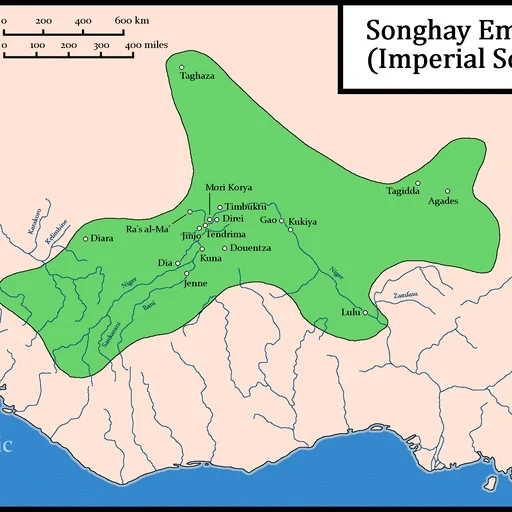
With the conquest of the major Hausa states complete, the Sokoto Caliphate was formally established as a confederation of emirates. It became the largest state in Africa south of the Sahara and one of the largest Islamic states in history.
Divided administrative responsibilities between his brother Abdullahi (western emirates) and his son Muhammad Bello (eastern emirates), while retaining spiritual leadership. This structure ensured the caliphate's stability.
Continued his prolific writing, producing works on Islamic jurisprudence, Sufism, governance, and women's education. His writings in Arabic, Fulfulde, and Hausa reached a wide audience and shaped Islamic thought in the region.
Withdrew increasingly from administrative duties to focus on worship, writing, and teaching. He left governance largely to his son Muhammad Bello while concentrating on spiritual matters in his final years.
Passed away in Sokoto after a brief illness. His tomb became a site of pilgrimage, and his legacy continued through the Sokoto Caliphate, which endured until British colonization in 1903. His writings remain influential in West African Islam.