En bref
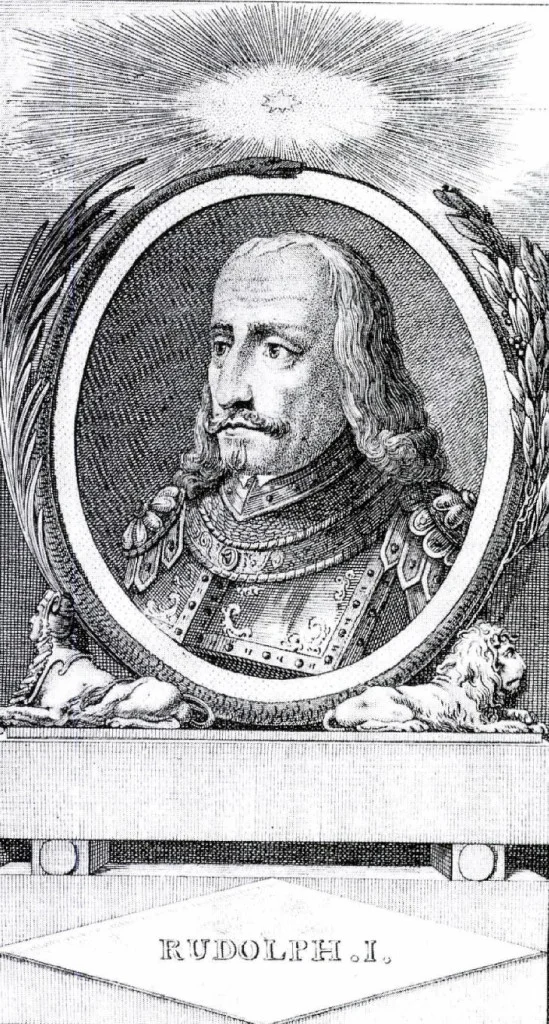
Fonda une dynastie. Comte devenu empereur qui fit des Habsbourg des souverains pendant 600 ans.
Sujets de conversation
Parcours de vie
Rudolf was born to Count Albert IV of Habsburg and Hedwig of Kyburg. The Habsburgs were then a minor noble family with lands in what is now Switzerland.
Young Rudolf was educated in warfare, governance, and the traditions of his family. He learned the skills that would make him a formidable military commander.
Rudolf married Gertrude of Hohenberg, beginning a union that would produce numerous children and strengthen the Habsburg position through strategic alliances.
Rudolf inherited the Habsburg lands upon his father's death. He began the systematic expansion that would transform his family from minor counts to European monarchs.
After Gertrude's death, Rudolf married Anna of Hohenberg, continuing to build alliances through marriage that would benefit Habsburg ambitions.
Rudolf acquired the County of Laufenburg, further expanding Habsburg territorial holdings in the region of modern Switzerland.
Rudolf skillfully extended Habsburg influence into Swabia through a combination of military pressure, diplomacy, and strategic marriages.
During the chaotic Great Interregnum, Rudolf positioned himself as a capable administrator and peacekeeper, building support among the German princes.
Rudolf was elected King of the Romans by the prince-electors, ending the Great Interregnum. This unexpected election transformed the Habsburgs from minor counts to imperial rulers.
Rudolf was crowned at Aachen Cathedral, the traditional coronation site of German kings. He immediately began reasserting royal authority throughout the empire.
Rudolf led a successful campaign against King Ottokar II of Bohemia, who refused to acknowledge Rudolf's authority and surrender imperial fiefs.
Rudolf defeated and killed Ottokar II at the Battle of Marchfeld. This decisive victory gave the Habsburgs control of Austria and established their imperial power.
Rudolf formally received Austria and Styria as imperial fiefs. This acquisition transformed the Habsburgs into one of Europe's most powerful dynasties.
Rudolf granted Austria and Styria to his sons Albert and Rudolf at the Diet of Augsburg, establishing the Habsburg hereditary rule over these territories.
Rudolf implemented significant administrative reforms, strengthening royal authority and establishing more efficient governance throughout the empire.
Rudolf successfully suppressed a rebellion in Swabia, demonstrating his continued military capability even in his later years.
Rudolf led his final military campaigns in Burgundy, attempting to extend imperial authority over the region before his health declined.
Rudolf I died at Speyer and was buried in the cathedral there. He founded the Habsburg dynasty as rulers of Austria, which would dominate Europe for over six centuries.