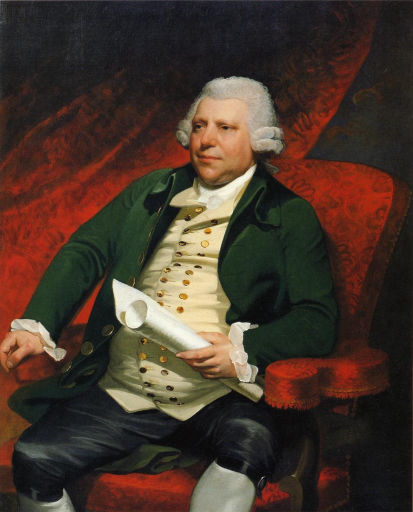
A self-made entrepreneur who mechanized cotton spinning, built factory systems, and helped ignite Britain’s Industrial Revolution.
会話のきっかけ
人生の歩み
Born to a-class family in Preston, Lancashire, a region already bustling with textile trades. Limited schooling meant he relied on practical skills and local networks, shaping his later self-made reputation.
As a teenager he entered barbering, a craft that demanded steady hands, customer trust, and careful routine. The trade also exposed him to commercial habits—credit, suppliers, and managing a small service business.
He traveled through Lancashire as a barber and wig maker, learning how scattered spinners and weavers depended on reliable yarn. These journeys gave him firsthand insight into bottlenecks in textile production and opportunities for mechanization.
By his early twenties he was operating independently, negotiating with customers and materials suppliers. Building credit and reputation in tough local markets later helped him attract partners and financing for machinery ventures.
He shifted focus toward cotton spinning technologies as demand for cotton cloth surged in Britain. Industrial competition in Lancashire pushed innovators to seek powered solutions that could outpace hand spinners and cottage output.
He formed a partnership with John Smalley, and worked closely with clockmaker John Kay to build precise rotating mechanisms. Kay’s mechanical skill complemented Arkwright’s drive to scale production and secure patent protection.
He obtained a landmark patent for a spinning system that used rollers to draw out cotton and produce stronger, more consistent yarn. The design was suited to continuous power, setting the stage for water-powered mills and mass production.
With partners including Jedediah Strutt and Samuel Need, he established Cromford Mill on the River Derwent. The site integrated machines, water power, and disciplined labor routines, becoming a model for the emerging factory system.
To stabilize a reliable workforce, the Cromford enterprise developed housing and strict timekeeping practices around the mill. This created an industrial community where daily life increasingly followed the rhythms of machinery and shift schedules.
He patented further improvements that addressed earlier stages of cotton processing, especially carding and preparation. These patents aimed to control the full production chain, reducing dependence on dispersed cottage labor and subcontractors.
As mills multiplied, his methods demonstrated how capital, power, and organization could transform textiles into a high-volume industry. Arkwright’s name became synonymous with profitable mechanization, attracting imitators and fierce rivals.
Competitors claimed his patents were too broad and contested the originality of key mechanisms in court. The litigation reflected how valuable control of spinning technology had become in Lancashire and the Midlands’ fast-expanding markets.
He oversaw larger networks of production and financing that linked mills, suppliers, and distribution channels. This scale required managerial systems—overseers, accounting, and standardized processes—that went beyond traditional craft organization.
In a pivotal legal defeat, key patents were effectively set aside, opening the door for broader adoption of similar spinning methods. Even so, the factory model he popularized continued spreading because its productivity advantages were decisive.
He was knighted, a rare honor for a manufacturer, signaling how industrial wealth was reshaping British social hierarchies. The title recognized his role in turning cotton into a strategic national industry during rapid economic change.
By the end of his life, his mills and business interests had generated an exceptional fortune for someone from modest origins. His success illustrated the new Industrial Revolution pathway from mechanical innovation to vast capital accumulation.
He died leaving a legacy of mechanized spinning and factory organization that influenced Britain, Europe, and later the United States. Cromford’s methods of power-driven production and labor discipline became templates for industrial capitalism.