Quick Facts
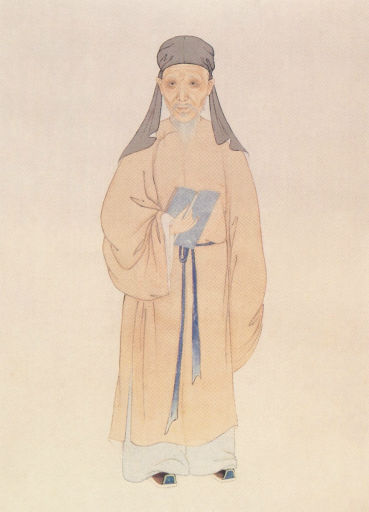
Scholar of Timbuktu, guardian of 1,600 books. Even when Moroccan invaders dragged him to Marrakesh in chains, they couldn't silence his pen.
Conversation Starters
Life Journey
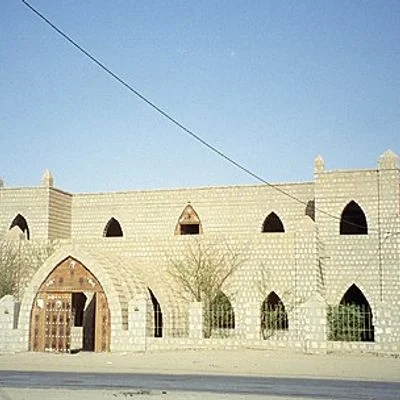
Ahmad Baba was born into a family of Sanhaja Berber scholars in Timbuktu, a major center of Islamic learning in West Africa. His family had produced generations of Islamic scholars.
Ahmad Baba began his formal education in Timbuktu, studying under several prominent scholars including his father and his grandfather, learning Islamic sciences, grammar, and rhetoric.
Having mastered the traditional Islamic sciences, Ahmad Baba began teaching at the Sankore Mosque, attracting students from across West Africa.
Ahmad Baba published his first significant scholarly work, establishing his reputation as a leading intellectual and jurist in the Songhai Empire.
Ahmad Baba married and began his family life while continuing his scholarly pursuits, balancing domestic responsibilities with his teaching and writing.
The Songhai Empire fell to the Moroccan invasion led by Judar Pasha. This marked the beginning of a turbulent period for Ahmad Baba and the scholarly community of Timbuktu.
Despite the political instability following the Moroccan conquest, Ahmad Baba continued his scholarly work, teaching and writing on Islamic jurisprudence.
Ahmad Baba authored 'Mi'raj al-Su'ud' (The Ladder of Ascent), a groundbreaking legal treatise defending the rights of enslaved Africans and arguing against unjust enslavement based on race.
Ahmad Baba published 'Tuhfat al-Murid', a work on Islamic mysticism and spiritual development that gained wide readership across the Islamic world.
Ahmad Baba was appointed as the chief qadi (judge) of Timbuktu, a position of great responsibility in the administration of Islamic law in the region.
Ahmad Baba openly criticized the Moroccan pashas for their oppressive policies, particularly their disrespect for scholars and Islamic learning.
Ahmad Baba was forcibly exiled to Marrakesh by the Moroccan authorities, along with his family and library. His vast collection of manuscripts was lost during the journey.
While in exile, Ahmad Baba continued his scholarly work, publishing this treatise on the merits of knowledge and action in Islam.
After nearly a decade in exile, Ahmad Baba was finally permitted to return to his beloved Timbuktu, where he resumed his teaching and scholarly activities.
Ahmad Baba established a new madrasa (Islamic school) in Timbuktu, working to restore the city's reputation as a center of Islamic learning after years of disruption.
Ahmad Baba died in Timbuktu, leaving behind a legacy of over 40 scholarly works and a reputation as one of the greatest African scholars of the Islamic world.