Quick Facts
Duke Farnese: Parma's power player, Renaissance cardinal, Italian politics master.
Conversation Starters
Life Journey
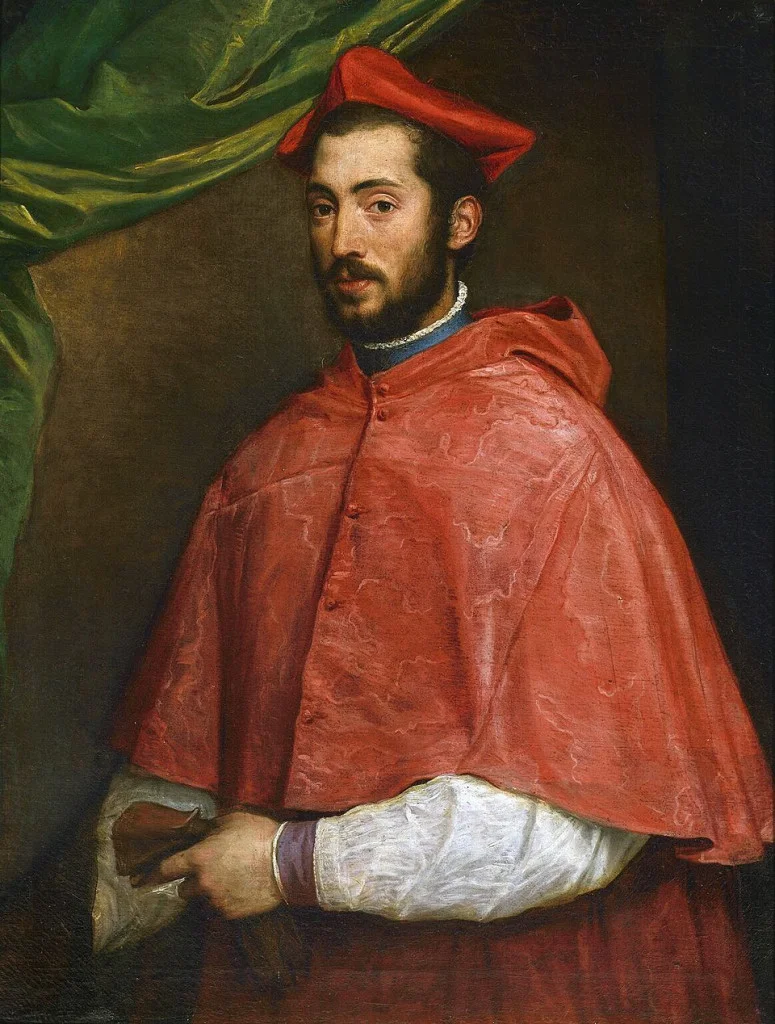
Alessandro Farnese was born into the powerful Farnese family, grandson of Pope Paul III. His birth into papal nobility would shape his destiny as one of the most influential cardinals of the Renaissance.
Young Alessandro began his education under the finest humanist tutors in Rome. His grandfather, Cardinal Alessandro Farnese (future Pope Paul III), ensured he received training befitting future ecclesiastical leadership.
When his grandfather became Pope Paul III, Alessandro was elevated to Cardinal Deacon at just 14 years old. This began his meteoric rise within the Church hierarchy.
Cardinal Farnese began participating in diplomatic missions on behalf of his grandfather Pope Paul III, establishing relationships with European courts that would serve him throughout his career.
Farnese was appointed Archbishop of Avignon, adding to his growing collection of ecclesiastical benefices. This position brought substantial income and increased his influence in French affairs.
Cardinal Farnese became a major patron of Michelangelo, commissioning him to complete the cornice of the Palazzo Farnese and other artistic projects. This patronage cemented his reputation as a Renaissance art patron.
Farnese was appointed Vice-Chancellor of the Holy Roman Church, one of the most powerful positions in the papal curia, giving him immense influence over Church administration.
Cardinal Farnese played a significant role in supporting and financing the Council of Trent, the landmark ecumenical council that defined Catholic doctrine in response to the Protestant Reformation.
Farnese assumed the position of Governor of the Papal States, making him responsible for the temporal administration of papal territories in central Italy.
Cardinal Farnese oversaw the completion of the magnificent Palazzo Farnese in Rome, designed by Michelangelo and considered one of the finest Renaissance palaces in the city.
Farnese worked to defend papal interests during a period of political turbulence in Italy, using his diplomatic skills and family connections to maintain the Church's influence.
Cardinal Farnese served as a mediator in various European conflicts, leveraging his vast network of contacts across Catholic courts to promote peace and papal interests.
Farnese funded the construction of cultural institutions including the famous Farnese Theatre in Parma, demonstrating his commitment to arts patronage and family prestige.
After decades of service, Cardinal Farnese began to retire from active political engagement, though he remained an influential figure in Roman society and Church affairs.
As one of the longest-serving cardinals, Farnese became an elder statesman of the Church, his advice sought by popes and princes alike on matters of diplomacy and governance.
Cardinal Alessandro Farnese died in Rome at age 69, leaving behind a legacy as one of the greatest Renaissance patrons and most powerful cardinals of the 16th century. His art collection and palace remain monuments to his taste and influence.