Quick Facts
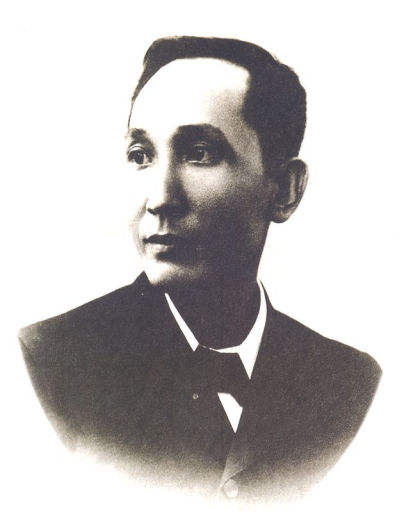
A brilliant Filipino revolutionary thinker whose legal mind shaped independence politics despite paralysis and exile.
Conversation Starters
Life Journey
Born into a modest family in Tanauan, Batangas, in the Spanish Philippines. His early life in a rural town shaped his empathy for peasants facing colonial taxes and local abuses.
As a teenager he left Batangas to study in Manila, pursuing education beyond what provincial schools offered. The capital exposed him to reformist ideas and the realities of Spanish colonial administration.
He studied at Colegio de San Juan de Letran, sharpening his discipline and rhetorical skills in a rigorous Catholic academic setting. These years helped prepare him for legal studies and public argumentation.
At the University of Santo Tomas, he pursued law while navigating a colonial education system dominated by Spanish and clerical authorities. He developed a reputation for sharp reasoning and principled views on rights.
He completed his legal training and was admitted to the bar, joining a small class of Filipino professionals in Manila. His practice and writing connected legal reform to broader demands for political dignity.
He became paralyzed, likely from poliomyelitis, and relied on crutches and later a wheelchair. Rather than retreat, he redirected his energy into political analysis and counsel, earning respect for endurance.
After the Katipunan-led uprising began, Spanish authorities arrested many suspected reformists and intellectuals, including Mabini. He was detained despite limited direct involvement, reflecting colonial fear of educated dissent.
Freed amid Spain’s weakening grip during the Spanish–American War, he aligned with the revolutionary government. His legal mind quickly made him a key adviser, even as illness limited his mobility.
He worked closely with Emilio Aguinaldo, arguing that independence required disciplined institutions, not just battlefield victories. His counsel emphasized constitutional legitimacy and restraint to gain both unity and international respect.
He took a leading executive role in the First Philippine Republic, often described as prime minister and foreign affairs head. He pushed for accountable governance, civil rights, and a coherent diplomacy as war loomed.
As conflict with the United States intensified, he advocated for a principled republic and warned against unchecked military power. His memoranda urged discipline among officials to prevent corruption and loss of public trust.
Clashes with rival factions and disagreements over authority led to his resignation from top office. Even out of the cabinet, he remained a moral compass, insisting that leadership must answer to law and citizens.
American troops captured him while he was moving with revolutionary elements during the war’s chaotic phase. His arrest removed a key civilian strategist, and U.S. authorities monitored his influence closely.
He was deported to Guam after refusing to swear allegiance to the United States, choosing principle over personal safety. In exile he wrote extensively, analyzing the revolution’s failures and the meaning of sovereignty.
Allowed to return from Guam, he came back to a country undergoing U.S. colonial reorganization and political pacification. He continued writing and speaking cautiously, balancing survival with criticism of domination.
He died in Manila during a cholera outbreak that swept crowded communities with limited sanitation. His death ended a life of intense public service, but his writings endured as a standard for civic virtue.