Quick Facts
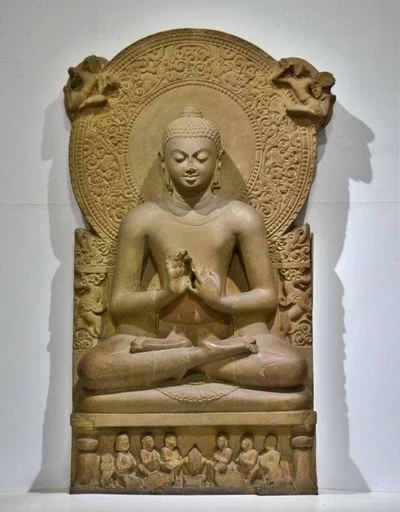
Siddhartha Gautama. Found enlightenment under the Bodhi tree and lit a path for billions.
Conversation Starters
Life Journey
Prince Siddhartha Gautama was born to King Suddhodana and Queen Maya of the Shakya clan. A seer prophesied he would become either a great king or a great spiritual teacher, prompting his father to shelter him from suffering.
Queen Maya died seven days after giving birth. Siddhartha was raised by his aunt Mahapajapati Gotami, who became his foster mother and later the first Buddhist nun.
Young Siddhartha received princely education in arts, sciences, and martial skills. He excelled in all disciplines but showed unusual contemplative tendencies, often found meditating under a rose-apple tree.
Siddhartha married Princess Yasodhara, his cousin, after winning her hand through an archery contest. His father arranged the marriage hoping to bind him to palace life and prevent him from leaving.
King Suddhodana built three palaces for Siddhartha, one for each season, filled with every pleasure. The prince lived in complete luxury, deliberately shielded from any sight of aging, illness, or death.
Yasodhara gave birth to their son Rahula. Instead of joy, Siddhartha felt the child as another bond to worldly life. The name Rahula means 'fetter' or 'obstacle,' reflecting his conflicted feelings.
Venturing outside the palace, Siddhartha encountered an old man, a sick person, a corpse, and a wandering ascetic. These four sights revealed the reality of suffering and the possibility of spiritual seeking, transforming his worldview forever.
Siddhartha secretly left the palace at night, abandoning his wife, newborn son, and princely life. He cut off his hair, exchanged his royal robes for simple garments, and began his quest for enlightenment.
Siddhartha sought out the most renowned meditation teachers of his time, including Alara Kalama and Uddaka Ramaputta. He quickly mastered their techniques but found they did not lead to liberation from suffering.
Siddhartha practiced severe austerities with five companions, reducing his food to almost nothing and mortifying his body. After six years, near death from starvation, he realized extreme asceticism was not the path to enlightenment.
Accepting food from a village girl named Sujata, Siddhartha regained his strength and abandoned extreme practices. He discovered the Middle Way between indulgence and severe asceticism as the proper path to spiritual realization.
Sitting beneath a pipal tree, Siddhartha vowed not to rise until achieving enlightenment. After conquering the temptations of Mara, he attained perfect awakening at dawn, becoming the Buddhaโthe Awakened One.
The Buddha delivered his first teaching to his five former companions at Deer Park. He taught the Four Noble Truths and the Eightfold Path, setting in motion the Wheel of Dharma and establishing Buddhism.
The Buddha established the Sangha, the community of monks and nuns. His followers included former princes, merchants, and outcasts alike, demonstrating that enlightenment was available to all regardless of caste or status.
The Buddha returned to his hometown, where his father, wife, and son became followers. His son Rahula was ordained as a novice monk, and many Shakya clan members joined the Sangha.
The Buddha established the order of nuns, with his foster mother Mahapajapati Gotami becoming the first fully ordained bhikkhuni. This revolutionary act made Buddhism one of the first major religions to include women in religious orders.
The Buddha survived attempts on his life by his jealous cousin Devadatta, including being pushed off a cliff and attacked by a maddened elephant. He responded with compassion rather than anger, demonstrating his teachings.
After forty-five years of teaching, the Buddha passed into final Nirvana between two sal trees. His last words urged disciples to work out their salvation with diligence, as all conditioned things are impermanent.