Quick Facts
The last Achaemenid king, he fought Alexander the Great and saw Persia collapse amid betrayal and flight.
Conversation Starters
Life Journey
Born as Artashata (Codomannus) within the Achaemenid nobility, he grew up amid satrapal rivalries and palace intrigue. The empire stretched from Anatolia to Central Asia, requiring constant military readiness and diplomacy.
As a young noble, he reportedly gained notice for bravery during campaigns against the Cadusii near the Caspian region. Court circles valued such battlefield reputation, and it helped place him among trusted royal commanders.
He moved within imperial administration where satraps, royal kin, and eunuch officials competed for influence. This period exposed him to the fragility of succession and the importance of loyal provincial power-brokers.
After Artaxerxes III died, the powerful courtier Bagoas controlled the throne by installing and removing kings. The rapid turnovers signaled deep instability, making the empire vulnerable to external threats from Macedon.
Selected as a compromise candidate, he became “King of Kings” amid a court dominated by Bagoas and nervous satraps. He asserted independence by forcing Bagoas to drink poison, ending the kingmaker’s control of Persia.
He worked to secure loyalty from major satraps and restore confidence after years of coups and assassinations. Messages and levies flowed from provinces to the royal center as he prepared for conflict with rising Macedon.
Alexander the Great crossed into Asia Minor, and Persian commanders tried to stop him at the Granicus with mixed success. The invasion forced Darius to shift from internal consolidation to empire-wide mobilization and strategy.
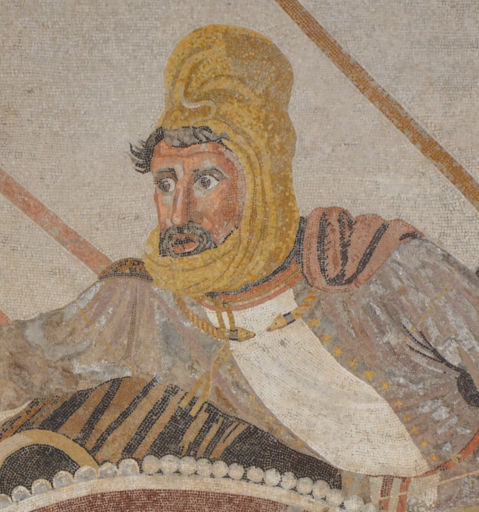
Darius met Alexander near Issus but fought in constricted terrain that blunted Persia’s numerical advantages. In the rout, his camp and family were captured, and he fled to regroup, a blow to royal prestige across the empire.
He offered ransom, territory concessions, and marriage ties in attempts to secure peace and the return of his relatives. Alexander rejected the terms, using the captured royal household to project legitimacy and pressure Persian allies.
Darius drew troops from Media, Bactria, and other eastern regions, assembling cavalry, infantry, and allied contingents. The scale of recruitment reflected Persia’s vast resources, yet coordinating languages, commanders, and supplies was difficult.
On the plains near Gaugamela, Darius chose open ground and deployed scythed chariots and massed cavalry. Alexander’s disciplined maneuvers broke the Persian center, and Darius withdrew as his line collapsed under coordinated Macedonian attacks.
After Gaugamela, Babylon opened its gates to Alexander, depriving Darius of a key administrative and economic hub. The surrender encouraged other cities and satraps to defect, accelerating the disintegration of centralized Persian control.
He withdrew to Ecbatana, seeking to reorganize forces and protect the imperial treasury and remaining royal authority. Satraps debated whether resistance was feasible, and cracks widened as commanders weighed self-preservation against loyalty.
Bessus, satrap of Bactria, and other nobles arrested Darius during the flight east, hoping to bargain with Alexander or claim the throne. The seizure showed how quickly imperial cohesion could collapse when defeat made loyalty costly.
While being moved toward Bactria, Darius was mortally wounded by his captors as Alexander’s forces closed in. Alexander later honored him as a fallen rival and pursued Bessus, framing the conquest as punishment for regicide.