Quick Facts
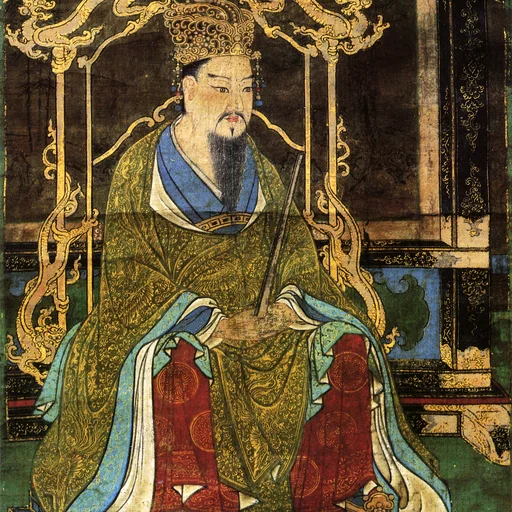
Transformative emperor who moved Japan's capital to Heian-kyō (Kyoto), inaugurating the Heian period and shaping Japanese culture, politics, and urban planning for over a millennium.
Conversation Starters
Life Journey
Born as Prince Yamabe to Prince Shirakabe (later Emperor Kōnin) and Takano no Niigasa, a woman of Korean descent. His mother's foreign ancestry would later become a sensitive political issue.
Prince Shirakabe ascended the throne as Emperor Kōnin at the advanced age of 62. This unexpected succession placed Prince Yamabe closer to the throne, though not yet designated heir.
Designated crown prince after his elder half-brother Prince Osabe was disgraced and removed from succession. The circumstances surrounding this change remained controversial and politically charged.
Ascended to the Chrysanthemum Throne as Emperor Kanmu following his father's abdication. At 44, he was mature and already possessed clear visions for reforming the government and reducing Buddhist influence.
Began comprehensive administrative reforms to strengthen imperial authority. He streamlined bureaucracy, reduced the power of Buddhist temples, and reasserted the emperor's direct control over government affairs.
Relocated the capital from Nara to Nagaoka-kyō, breaking free from the powerful Nara Buddhist establishment. This move aimed to create a fresh start away from temple influence and court intrigue.
His trusted advisor Fujiwara no Tanetsugu was assassinated during construction supervision. The emperor's brother Prince Sawara was implicated and exiled, dying during the journey—a tragedy that would haunt the emperor.
Launched military campaigns against the Emishi people in northern Japan. These campaigns aimed to expand imperial control and secure the northern frontier, though progress proved difficult and costly.
Moved the capital again to Heian-kyō, the 'Capital of Peace and Tranquility.' This carefully planned city would serve as Japan's capital for over a thousand years and gave its name to the Heian period.
Organized the government structure in the new capital. He created a balanced system that maintained imperial authority while accommodating the growing influence of the Fujiwara clan.
Appointed Sakanoue no Tamuramaro as Sei-i Taishōgun (Barbarian-Subduing Generalissimo) to lead the Emishi campaigns. This title would later become the basis for the shogunate system.
Achieved significant victories against the Emishi under Tamuramaro's command. The northern frontier was largely secured, though complete subjugation would take several more decades.
Implemented reforms to regulate Buddhist institutions. He restricted the number of monks, controlled temple properties, and limited Buddhist interference in political affairs while maintaining state support.
Accepted advice to halt the costly Emishi campaigns and major construction projects. The decision came after decades of military expenditure had strained the treasury and exhausted the populace.
Abdicated in favor of his son, who became Emperor Heizei. Though in declining health, Kanmu remained influential until his final days, having fundamentally transformed Japan.
Died shortly after his abdication at age 69. He left behind a transformed Japan with a new capital that would endure as the cultural and political center for over a millennium.