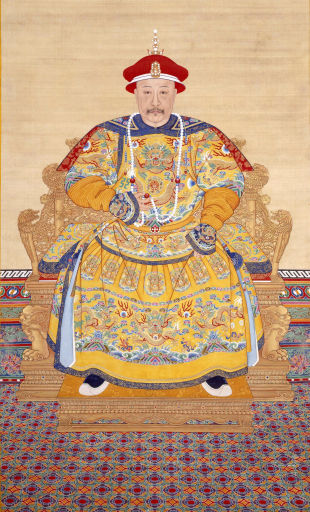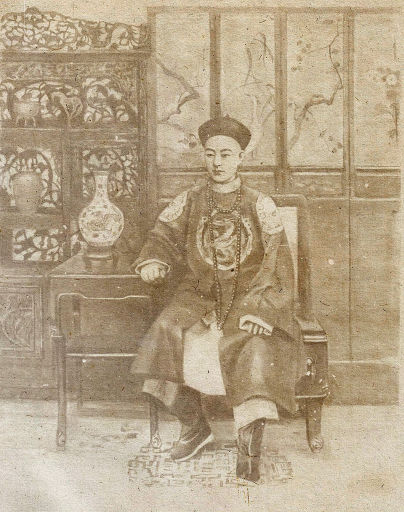
Quick Facts
A reform-minded Qing monarch whose bold Hundred Days’ Reform collided with court conservatism and foreign pressures.
Conversation Starters
Life Journey
Born Zaitian to Prince Chun (Yixuan) and Yehenara Wanzhen, he entered the Aisin Gioro imperial lineage. His early life unfolded in Beijing amid Qing court factionalism after the Taiping era and foreign encroachments.
After the Tongzhi Emperor died without an heir, Empress Dowager Cixi orchestrated Zaitian’s selection as successor to secure her political position. The choice bypassed strict generational rules, highlighting the court’s reliance on regency politics.
He was enthroned as emperor and the reign title 'Guangxu' was adopted, symbolizing 'glorious succession.' Real authority remained with Empress Dowager Cixi, who governed through the Grand Council and palace networks in the Forbidden City.
Palace tutors drilled him in Confucian classics, dynastic history, and ritual governance to mold an orthodox ruler. The regimen emphasized moral rectitude and precedent, even as treaty-port China confronted new Western military and economic realities.
With Empress Dowager Ci'an dead, Cixi’s dominance over court decision-making became even more complete. Guangxu grew up under her watchful control, learning that imperial will could be constrained by powerful palace patrons and officials.
Cixi arranged his marriage to her niece, later known as Empress Xiaodingjing, tightening Yehenara influence at court. The union was widely described as politically motivated, leaving Guangxu personally isolated within the palace household system.
In a formal ceremony, Cixi announced retirement and Guangxu began issuing edicts in his own name. Yet key personnel and finances remained under her influence, and the emperor’s authority was still mediated by conservative court institutions.
War with Japan erupted over influence in Korea, exposing weaknesses in Qing military organization and command. Court debates over the Beiyang Fleet and regional armies revealed how fragmented authority had become under late Qing governance.
The Treaty of Shimonoseki forced China to cede Taiwan and pay a huge indemnity, shocking officials and educated elites. The humiliation energized reformist voices, convincing Guangxu that institutional modernization was urgently needed to survive.
Scholars such as Kang Youwei organized petitions urging sweeping reforms after the war, channeling examination candidates’ anger into politics. Guangxu quietly took interest in these proposals, seeing them as a path to strengthen state capacity.
Guided by reformers including Kang Youwei and Liang Qichao, Guangxu issued rapid edicts to modernize education, administration, and the economy. He sought a stronger bureaucracy and new schools, challenging entrenched interests tied to old systems.
Conservative forces rallied around Cixi, who staged a coup, nullified key edicts, and purged reform networks. The 'Six Gentlemen' reformers were executed, while Kang and Liang fled, marking a dramatic rupture in late Qing politics.
Guangxu was confined to the Yingtai pavilion in Zhongnanhai, separated from independent advisers and closely watched by palace guards. He remained emperor in name but was prevented from directing policy, deepening his personal and political isolation.
The Boxer movement surged and foreign armies entered Beijing after the siege of legations, exposing Qing vulnerability. Cixi fled with the court, while Guangxu’s captivity continued, underscoring how little control he had over crisis decisions.
After the Boxer Protocol imposed harsh indemnities and concessions, the court returned to Beijing to rebuild authority. Even as 'New Policies' reforms began, Guangxu remained sidelined, unable to lead the modernization he once championed.
The court pursued reforms in military training, education, and administration, partly echoing Guangxu’s earlier agenda but under Cixi’s control. Provincial initiatives and new schools expanded, yet the emperor’s role stayed ceremonial and tightly restricted.
The centuries-old civil service examinations were abolished, redirecting elite recruitment toward modern schools and new curricula. The decision signaled a decisive institutional break, though Guangxu’s personal influence on the policy remained limited in confinement.
Guangxu died in Beijing after prolonged isolation, with later investigations suggesting arsenic poisoning amid intense succession anxieties. Cixi died the next day, and the child Puyi was selected as emperor, leaving the dynasty on a precarious path.