Quick Facts
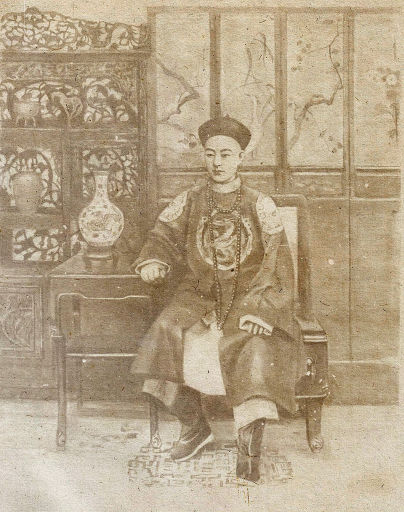
A child monarch toppled by revolution, later a puppet ruler and ordinary citizen amid China’s turbulent modern transformation.
Conversation Starters
Life Journey
Born Aisin-Gioro Puyi to Prince Chun (Zaifeng) and Youlan, he entered a court already shaken by reform and foreign pressure. His birth tied him to a dynasty struggling to survive after the Boxer aftermath and rapid modernization debates.
After the Guangxu Emperor and Empress Dowager Cixi died in quick succession, the toddler Puyi was selected as successor to secure Aisin-Gioro continuity. He was taken from his family into palace life, surrounded by eunuchs and rigid ritual authority.
He was enthroned as the Xuantong Emperor, a symbol of Qing legitimacy rather than an active ruler. Regents and senior officials managed state affairs as revolutionary ideas spread, while he grew up behind palace walls with limited contact with the outside world.
The Wuchang Uprising triggered province-by-province secessions, leaving the Qing court increasingly isolated and reliant on figures like Yuan Shikai. Inside the Forbidden City, the child emperor’s status remained ceremonial as the empire’s collapse became unavoidable.
The abdication edict, negotiated amid revolution and Yuan Shikai’s rising power, ended the Qing dynasty and the imperial system. Under the Articles of Favorable Treatment, he retained titles, a stipend, and residence in the Forbidden City despite the new Republic.
Warlord Zhang Xun attempted to restore Puyi to the throne, placing him again at the center of national politics. The restoration quickly failed after republican forces responded, revealing how fragile and symbolic his claim had become in the warlord era.
He employed the Scottish scholar Reginald Johnston, who introduced Western education, etiquette, and a broader view of the world beyond palace protocol. Lessons and conversations reshaped his self-image, while also highlighting the gulf between imperial nostalgia and republican reality.
He married Gobulo Wanrong as empress in a lavish rite meant to preserve dynastic dignity despite political eclipse. The marriage unfolded under intense constraint and scrutiny, as palace life and personal incompatibilities contributed to growing strain and isolation.
During Feng Yuxiang’s Beijing Coup, the new authorities revoked the special arrangements that allowed him to remain in the palace. Forced to leave the Forbidden City, he sought protection and leverage in a China fractured by rival militarists and foreign influence.
He moved into the Japanese-controlled sphere in Tianjin, living under surveillance and patronage that offered security but narrowed autonomy. Japanese officials and advisers cultivated his imperial identity as a tool, while he navigated exile, court remnants, and intrigue.
After the Mukden Incident, Japan occupied Manchuria and began building a new client state, presenting Puyi as a potential legitimizing figure. The prospect of returning to rule appealed to imperial loyalists, even as it bound him to Japanese military objectives.
He was installed as Chief Executive of Manchukuo, a state created under Japanese control to consolidate occupation and resources. Though presented as restoration, real power lay with the Kwantung Army and Japanese advisers who directed policy and security.
He was proclaimed emperor under the reign title Kangde, with ceremonies designed to mimic Qing grandeur and confer legitimacy. Behind the pageantry, Japanese officials controlled appointments and strategy, leaving him frustrated by limited authority and constant monitoring.
When the Soviet Union invaded Manchuria in August 1945, Manchukuo rapidly disintegrated and Puyi attempted to flee. He was captured by Soviet forces and removed from the region, becoming a high-value political prisoner amid postwar reckonings.
He testified at the International Military Tribunal for the Far East, describing the mechanisms of Japanese control and his constrained role. The testimony placed his choices under global scrutiny and framed him as both collaborator and instrument of occupation politics.
He was returned to the new People’s Republic of China and sent to the Fushun War Criminals Management Centre for “reform through labor.” There he underwent political study and self-criticism, as the state sought to remake him from monarch into citizen.
He received amnesty during a national program that publicized successful “reform,” signaling the regime’s confidence and propaganda aims. Settling in Beijing, he worked modest jobs and adjusted to daily life without titles, attendants, or court protections.
He married Li Shuxian, a hospital worker, in a union that contrasted sharply with his earlier imperial and Manchukuo-era marriages. Their household emphasized practicality and companionship, reflecting his effort to live as a normal person in socialist Beijing.
His memoir, often associated with the title 'From Emperor to Citizen,' was published in an official context that highlighted political transformation. It recounted palace life, Manchukuo, and imprisonment, shaping public memory of the last emperor for decades.
He died in Beijing after serious illness, as the Cultural Revolution intensified political campaigns and social upheaval. His death closed a life spanning dynasty, republic, occupation, and revolution, leaving a legacy debated between tragedy, agency, and symbolism.