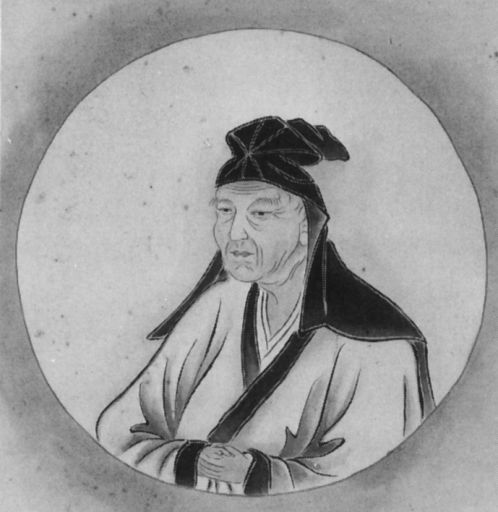
Quick Facts
Shaped Tokugawa Japan’s intellectual life by fusing Zhu Xi Neo-Confucian ethics with statecraft, education, and history.
Conversation Starters
Life Journey
Born in Kyoto as Japan was emerging from decades of civil war and shifting alliances. The collapse of old institutions and the rise of warrior rule shaped his later conviction that moral learning must support political order.
As a child in Kyoto, he studied Chinese classics and literary composition in an environment rich with court, temple, and merchant culture. The capital’s libraries and teachers exposed him to Confucian, Buddhist, and historical texts.
He trained in the intellectual circles associated with Zen temples, where Chinese learning and disciplined study were highly prized. This experience gave him rigorous reading habits while also prompting doubts about Buddhist metaphysics he later criticized.
Tokugawa Ieyasu’s victory at the Battle of Sekigahara reshaped the country’s power structure and opened a new era of centralized rule. The event convinced him that stable governance required a shared moral language, not force alone.
He turned decisively toward the Cheng-Zhu tradition, treating Zhu Xi’s commentaries as tools for ethics and statecraft. By grounding politics in ritual propriety and hierarchy, he sought a framework suited to Tokugawa consolidation.
He was recruited to serve the Tokugawa house, translating classical learning into guidance on governance and ceremony. His counsel helped define how Confucian ideals could legitimize a warrior government ruling in the shogun’s name.
In Edo he lectured on the Four Books and Five Classics, emphasizing loyalty, filial piety, and proper conduct. These lessons offered bureaucratic discipline for samurai transitioning from battlefield roles to offices and castle administration.
Working near the shogunal center, he promoted Neo-Confucian norms as a public ethic for rulers and subjects. He framed social ranks and duties as natural and beneficial, reinforcing peace after generations of war.
As the shogunate tightened controls on Christianity, he supported policies that defended social cohesion and ritual orthodoxy. He portrayed foreign religion as a disruptive loyalty competing with lord, family, and established institutions.
The defeat of the Toyotomi at the Siege of Osaka ended major military opposition to Tokugawa rule. He read the moment as an opportunity to replace coercion with education, ritual, and historically grounded legitimacy.
He built a durable teaching institution in Edo, gathering students from samurai families and scholarly networks. The school’s curriculum centered on Zhu Xi learning, linking personal cultivation to competence in government service.
With leadership passing from Tokugawa Hidetada to Tokugawa Iemitsu, he emphasized continuity through correct ceremony and education. His guidance helped embed Confucian-style norms within the shogunate’s public culture and administration.
He produced writings and commentarial materials that made classical ethics accessible for officials and students. By clarifying key passages and examples, he aimed to create a common vocabulary for law, governance, and daily conduct.
He articulated a social vision in which ruler-subject, parent-child, and lord-retainer relations ensured stability. These teachings resonated with bakufu policies that organized domains, required service, and regulated movement across Japan.
He positioned the Hayashi household as a hereditary center of learning that served the shogunate’s needs. By training successors and preserving texts, he ensured that scholarship would remain institutional rather than dependent on one person.
He treated history as moral evidence, selecting episodes meant to reward virtue and warn against disorder. His approach encouraged the bakufu to see record-keeping and precedent as tools for disciplined, long-term governance.
In his later years, he trained disciples who spread Cheng-Zhu scholarship into domains and official schools. Their lectures and manuals helped standardize elite education, linking local administration back to Edo’s ideological center.
He died in Edo after decades of shaping the shogunate’s educational and ideological foundations. His legacy endured through the Hayashi academy and the broader Edo Neo-Confucian tradition that influenced policy, ritual, and historiography.