Quick Facts
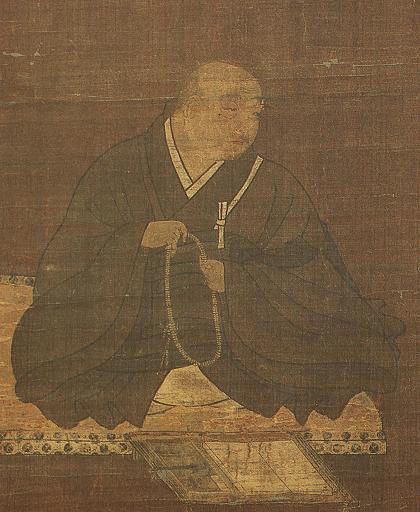
A compassionate Japanese Buddhist reformer who popularized Pure Land faith through simple, accessible devotion to Amida Buddha.
Conversation Starters
Life Journey
Born as Seishimaru in Mimasaka Province as the Heian court’s authority weakened and new warrior elites rose. His early years unfolded amid growing insecurity that shaped later interest in salvation accessible to all.
After his father’s death, the boy was placed under Buddhist guardianship rather than trained for a warrior future. The loss impressed on him the fragility of life and the urgency of a dependable path to liberation.
He entered formal monastic training and began rigorous study of sutras, discipline, and ritual in established institutions. Early teachers guided him toward the Tendai scholastic world that dominated elite Buddhism.
He moved to Enryaku-ji on Mount Hiei, the powerful Tendai center overlooking Kyoto, to pursue intensive meditation and doctrinal study. The monastery’s political clout contrasted with his growing concern for ordinary people’s suffering.
As belief spread that the world had entered mappo, the ‘Latter Age of the Dharma,’ he investigated which practices were truly effective. He compared commentaries and ritual systems, seeking a method that did not depend on rare monastic abilities.
He studied the Chinese Pure Land master Shandao, whose commentaries emphasized reliance on Amitabha’s vow rather than self-powered austerities. This scholarship provided a clear framework for a faith-centered practice open to lay followers.
He began openly teaching exclusive nembutsu—reciting ‘Namu Amida Butsu’—as the most reliable practice for rebirth in the Pure Land. The message drew people beyond temple elites, including the poor, women, and social outcasts.
A distinct circle of disciples gathered around his teaching, meeting for instruction and devotional recitation. Kyoto’s vibrant but tense religious scene made the new movement both attractive to seekers and suspicious to established institutions.
Civil war between the Taira and Minamoto houses destabilized the country and intensified demand for spiritual assurance. His emphasis on Amida’s compassionate vow resonated as families faced displacement, famine, and violence across the capital region.
With the Minamoto victory and the rise of Kamakura governance, patronage and religious authority shifted away from the old court-centered order. His teachings continued to spread through sermons and disciple networks linking Kyoto and new warrior society.
Among those drawn to his school was Shinran, who studied closely under him and later founded Jodo Shinshu. The teacher-disciple relationship helped codify Pure Land ideas and ensured their transmission beyond one charismatic founder.
At the request of the statesman Kujo Kanezane, he composed the Senchakushu, arguing that Amida selected nembutsu as the decisive practice. The work grounded his movement in careful citation of sutras and Chinese masters, not mere enthusiasm.
Leaders associated with major institutions, including forces connected to Enryaku-ji, pressed authorities to curb the rapidly growing nembutsu movement. Critics claimed social disorder and doctrinal error, prompting increased surveillance and restrictions on preaching.
Following a crackdown tied to court politics, he was exiled and key disciples were punished, with some executed, in an effort to suppress the movement. Separated from the capital, he continued teaching nembutsu as a practice of hope rather than prestige.
He received a pardon and was permitted to leave exile, reflecting the limits of repression against a widespread devotional movement. Rejoining followers, he emphasized ethical conduct and sincerity to prevent misunderstandings of ‘easy practice.’
In his last years he clarified guidance for disciples, stressing reliance on Amida’s vow while discouraging arrogance and antinomian behavior. His community increasingly recognized itself as a distinct Pure Land school with shared liturgy and instruction.
He died in Kyoto surrounded by disciples who carried his practice into the Kamakura period’s new religious landscape. His teachings transformed Japanese Buddhism by making salvation-oriented devotion intelligible and emotionally powerful for common people.