Informações rápidas
Tres leis do movimento planetario. Astronomo que provou que os planetas orbitam em elipses.
Iniciadores de conversa
Jornada de vida
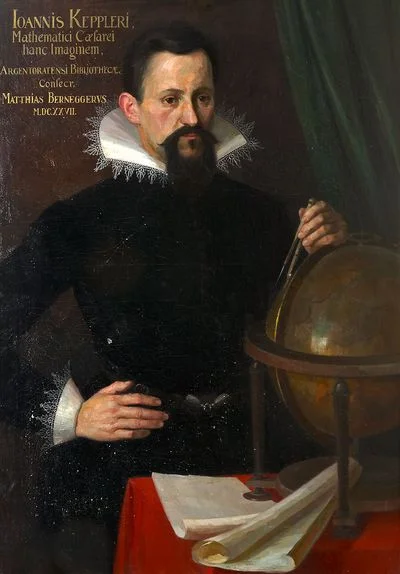
Johannes Kepler nasceu prematuramente em família protestante pobre.
Sofreu de varíola que deixou sua visão enfraquecida.
Entrou no seminário protestante em Adelberg.
Matriculou-se na Universidade de Tübingen para estudar teologia.
Kepler torna-se docente de matemática.
Publicou Mysterium Cosmographicum, defendendo heliocentrismo copernicano.
Casou-se com Barbara Muller, viúva rica.
Conheceu astrônomo Tycho Brahe em Praga e tornou-se seu assistente.
Após morte de Tycho, nomeado Matemático Imperial do Imperador Rodolfo II.
Observou e estudou uma supernova, agora conhecida como Supernova de Kepler.
Publicou Astronomia Nova contendo suas duas primeiras leis do movimento planetário.
Sua esposa Barbara e filho Friedrich morreram.
Casou-se com Susanna Reuttinger.
Sua mãe Katharina foi acusada de bruxaria.
Publicou Harmonices Mundi contendo sua terceira lei do movimento planetário.
Publicou as Tábuas Rudolfinas, tabelas planetárias precisas.
Kepler morreu enquanto viajava para cobrar dinheiro devido pelo imperador.
Newton usou as leis de Kepler para derivar a gravitação universal.