Quick Facts
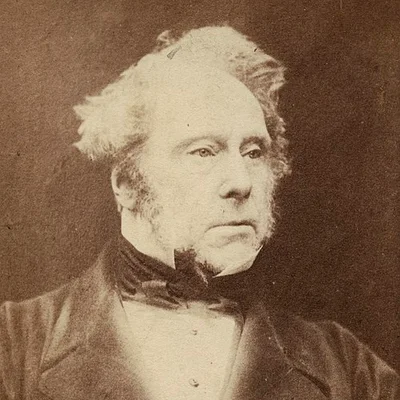
Dominant Victorian statesman who shaped British foreign policy through gunboat diplomacy, championing liberal nationalism while asserting imperial power across the globe.
Conversation Starters
Life Journey
Henry John Temple was born into the Anglo-Irish aristocracy as the son of the 2nd Viscount Palmerston. His family held estates in both Ireland and England, providing him with wealth and social connections that would prove invaluable in his political career.
Young Henry began his formal education under private tutors, studying classics, languages, and history. His early education laid the foundation for his later renowned oratory skills and intellectual sharpness in parliamentary debates.
Following his father's death, Henry inherited the title of 3rd Viscount Palmerston at just eleven years old. As an Irish peer, he could sit in the British House of Commons, which would become central to his political career.
Palmerston attended Harrow School, one of England's most prestigious boarding schools. Here he developed his characteristic confidence and made connections among the sons of the British aristocracy and political elite.
Entered St John's College, Cambridge, where he studied under the economist John Haileybury. His university years exposed him to Enlightenment ideas and refined his understanding of political economy and international relations.
Won election to the House of Commons as Tory MP for Newport, Isle of Wight. His maiden speech on Copenhagen impressed senior politicians and marked the beginning of his remarkable sixty-year parliamentary career.
At just twenty-five, Palmerston was appointed Secretary at War, a position he held for nearly twenty years. He modernized military administration and gained invaluable experience in government during the Napoleonic Wars.
Appointed Foreign Secretary under Earl Grey, Palmerston finally reached the position that would define his legacy. He immediately began shaping an assertive British foreign policy that would make him both famous and controversial across Europe.
Successfully negotiated the Treaty of London guaranteeing Belgian independence and neutrality. This diplomatic triumph demonstrated his ability to balance great power interests while supporting liberal nationalism in Europe.
Ordered military action against China to protect British trading interests after the destruction of opium stocks. The subsequent war and Treaty of Nanking opened Chinese ports and ceded Hong Kong to Britain.
Married Emily Lamb, Countess Cowper and sister of Lord Melbourne, after a long relationship. Emily proved a skilled political hostess and advisor, supporting Palmerston's career throughout their marriage until her death.
Delivered his famous Civis Romanus Sum speech defending gunboat diplomacy to protect a British subject in Greece. His five-hour oration established the principle that British citizens anywhere deserved the full protection of the Crown.
Dismissed as Foreign Secretary for unilaterally recognizing Louis Napoleon's coup in France without consulting the Queen or Cabinet. This temporary setback highlighted his independent approach to foreign policy.
Became Prime Minister at seventy-one during the Crimean War crisis. He energized the war effort, reformed the army, and led Britain to victory against Russia, cementing his reputation as a decisive wartime leader.
Oversaw the Treaty of Paris ending the Crimean War on favorable terms for Britain. The settlement checked Russian expansion and maintained the balance of power in Europe that Palmerston considered essential to British interests.
Prosecuted the Second Opium War after the Arrow Incident, resulting in further treaty ports and legalization of opium trade in China. Critics condemned his aggressive policy, but it expanded British commercial interests dramatically.
Returned as Prime Minister leading a Liberal government. His second ministry navigated the American Civil War, supported Italian unification, and maintained British prestige while avoiding major European conflicts.
Died just two days before his eighty-first birthday, still serving as Prime Minister. His last reported words were 'Die, my dear Doctor, that's the last thing I shall do!' He was buried in Westminster Abbey.