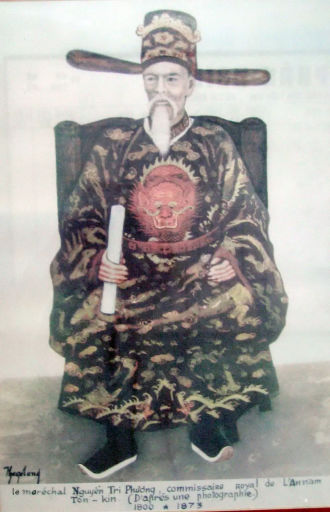
Quick Facts
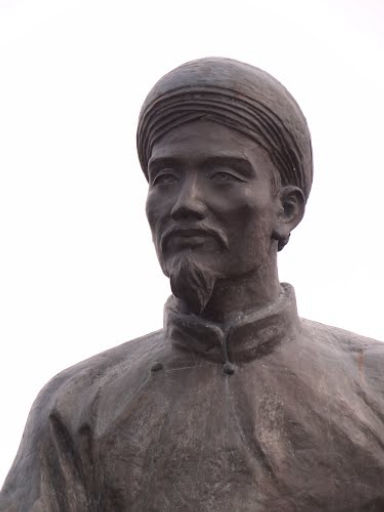
A steadfast Nguyen-dynasty commander who organized defenses against French invasion, becoming a symbol of loyal resistance.
Conversation Starters
Life Journey
Born into a Vietnamese family in Phong Dien, near Hue, as the Nguyen dynasty consolidated power after decades of civil war. He grew up amid Confucian schooling and a court-centered society that prized loyalty and service.
As a young man, he pursued Confucian studies and gained experience in local administrative work around the imperial capital region. This blend of scholarship and practical governance helped him advance within the Nguyen bureaucracy.
He rose through provincial posts as the Minh Mang court strengthened centralized control over officials and taxes. His reputation for strict discipline and careful logistics made him suitable for assignments in sensitive regions.
During the Le Van Khoi uprising that shook Gia Dinh, he was sent into a volatile southern theater where loyalty to Hue was contested. The crisis exposed the limits of Nguyen control and trained him in coordinating troops, supplies, and fort repairs.
He worked on defense and administration in regions where waterways and marshes shaped movement more than roads. By organizing boats, granaries, and militia patrols, he built the logistical habits later crucial against modern invaders.
As French warships demonstrated firepower along Vietnam's coast, he supported court efforts to improve defenses and tighten oversight of ports. The imbalance between cannon-equipped fleets and traditional fort guns became increasingly apparent.
When French and Spanish forces attacked Da Nang, he helped coordinate Vietnamese resistance and containment strategies under imperial command. The prolonged standoff showed both Vietnam's defensive resilience and its technological disadvantage.
After French forces seized the Gia Dinh citadel, he was tasked with rebuilding positions and organizing a tightening siege around the occupied zone. He relied on earthworks, trenches, and supply denial to offset French artillery and mobility.
He directed extensive defensive lines and fortified camps intended to constrain French movement beyond their strongholds. These works reflected a strategy of attrition, using terrain and manpower to compensate for weaker firearms and naval power.
The Treaty of Saigon forced the Nguyen court to cede southern provinces and pay indemnities, undermining years of defensive effort. He remained a loyal servant to Emperor Tu Duc while navigating court politics and the realities of colonial pressure.
He was moved between critical posts to restore order and improve security in a kingdom strained by war costs and factional debate. His assignments emphasized fort repair, training, and tighter provincial administration to prevent collapse.
French authorities expanded control over the Mekong region, eroding Nguyen sovereignty and disrupting tax and troop systems. The loss reinforced his belief in disciplined preparation, even as resources and strategic options dwindled.
In the later Tu Duc era, he was regarded as a veteran official whose experience against French tactics carried rare authority. He advocated stronger citadel defenses and clearer command lines while the court debated diplomacy versus resistance.
As French forces under Francis Garnier moved aggressively in Tonkin, he was ordered to hold Hanoi with limited modern weaponry. He organized troops and fortifications under intense pressure, trying to maintain order in a politically fragile region.
Hanoi's defenses were overwhelmed by French assault tactics and superior firepower, and he was taken captive. Wounded and refusing accommodation with the occupiers, he became a moral emblem of uncompromising loyalty to the Nguyen state.
He died shortly after capture, reportedly refusing sustenance and medical care as an act of protest and honor. His death was mourned by Vietnamese officials and later remembered as a defining gesture of resistance during early colonization.