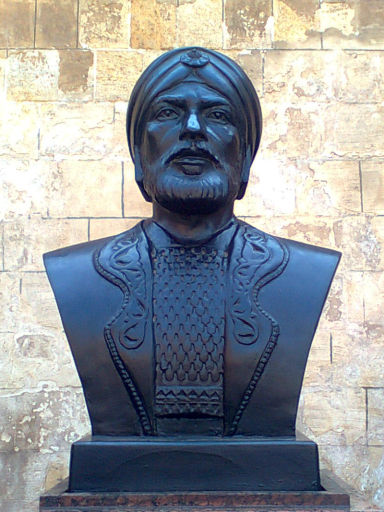
Quick Facts
A former slave who seized Egypt's throne and halted the Mongol advance at Ayn Jalut.
Conversation Starters
Life Journey
Born in Central Asia during the period of Chinggis Khan’s conquests, he likely came from a Kipchak Turkic milieu later tied to the Mamluk slave trade. Chroniclers record his early life as shaped by warfare and displacement across the steppe.
As Mongol pressure and regional wars upended Khwarazmian lands, he was taken captive and funneled into slave markets feeding elite military households. This forced migration set him on the path to the disciplined, upwardly mobile Mamluk system.
Purchased and brought to Egypt, he underwent rigorous training in horsemanship, archery, and military law typical of the mamluk barracks. His conversion and acculturation into Arabic-speaking court life began within the sultan’s military elite.
Serving under senior amirs, he proved reliable in field discipline and command of mounted troops, the Mamluks’ decisive arm. His standing grew in the competitive military hierarchy where patronage and battlefield performance determined advancement.
As Louis IX of France invaded, Egypt mobilized under the Ayyubid sultan al-Salih Ayyub and his mamluks. Qutuz gained experience in a high-stakes defensive war that tested Egypt’s logistics, leadership, and riverine warfare on the Nile Delta.
After al-Salih Ayyub’s death and the defeat of the Crusaders, mamluk factions asserted power and reshaped the state in Cairo. Qutuz survived court intrigue and factional violence by aligning with powerful commanders and proving useful to them.
During the reign of al-Mu'izz Aybak, he advanced among the leading amirs and absorbed the realities of governing a militarized court. He learned how iqta revenues, troop loyalty, and palace alliances could make or break a ruler in Cairo.
Following Aybak’s violent end and renewed factional rivalry, Qutuz positioned himself as a stabilizing commander among competing mamluk households. His ability to balance force and negotiation helped him survive a period of rapid coups and assassinations.
News of Hulagu’s sack of Baghdad and the killing of the Abbasid caliph sent shockwaves through Sunni lands and Egypt’s scholars. Qutuz treated the Mongol threat as existential, pushing for unity and preparation as Syria and Iraq unraveled.
As Mongol armies and their allies pressed through Aleppo and Damascus, Egypt faced strategic encirclement. Qutuz worked with leading amirs to muster cavalry, secure supplies, and steady morale while refugee accounts magnified fears of Mongol brutality.
With the Mongol danger at its peak, he removed the adolescent sultan al-Mansur Ali, arguing Egypt needed a war leader with authority. He became Sultan of Egypt and sought to rally rival amirs, including the formidable commander Baybars.
When Mongol emissaries delivered demands for submission on behalf of Hulagu’s forces, Qutuz rejected them as a challenge to Egypt’s sovereignty. By executing the envoys in Cairo, he made war inevitable and signaled resolve to wavering elites.
He led the Mamluk host out of Egypt, coordinating command roles with Baybars and other senior amirs to prevent factional sabotage in the field. The army advanced through Sinai toward Palestine, aiming to meet the Mongols before they reached Egypt.
At Ayn Jalut in the Jezreel Valley, his forces defeated the Mongol army led by Kitbuqa, using disciplined cavalry and coordinated counterattacks. The victory, aided by Baybars’ battlefield leadership, became a turning point securing Egypt and the Levant.
Following Ayn Jalut, Mamluk forces moved to consolidate authority in Syrian cities that had shifted under Mongol pressure. Qutuz worked to stabilize garrisons, punish collaborators selectively, and present Cairo as the new defender of Sunni order.
On the journey back, he was killed in a plot involving rival amirs, with Baybars emerging as the dominant successor. His death underscored how quickly military politics could overturn a ruler, even after a world-changing battlefield triumph.