Quick Facts
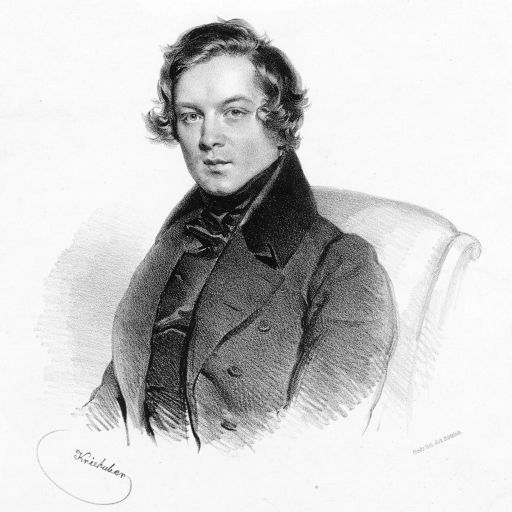
A visionary Romantic composer and critic whose lyrical imagination reshaped piano music amid profound mental turmoil.
Conversation Starters
Life Journey
Born into a bookish middle-class family in Zwickau, he grew up surrounded by literature and amateur music-making. His father, August Schumann, ran a publishing business that encouraged the boy’s early fascination with poetry and art.
August Schumann’s death removed a major supporter of his artistic ambitions and deepened family pressure toward a practical profession. The loss intensified his inward temperament and sharpened the literary sensibility that later fed his music criticism.
He enrolled in law at the University of Leipzig, but spent much of his time attending concerts and studying scores. Leipzig’s vibrant musical life offered a clearer calling than jurisprudence, drawing him steadily toward composition.
At the University of Heidelberg he continued nominal law studies while privately devoting himself to piano and composition. A formative trip to hear Niccolo Paganini heightened his belief that virtuosity and imagination could transform modern music.
He returned to Leipzig and persuaded his mother to let him abandon law for music. Under the strict pedagogy of piano teacher Friedrich Wieck, he trained intensely and met Wieck’s prodigy daughter, Clara, who soon became central to his life.
A debilitating injury to his right hand, likely from overpractice and mechanical finger devices, abruptly curtailed his ambitions as a concert pianist. Redirecting his energies, he turned decisively toward composing and writing about music’s future.
He helped establish the Neue Zeitschrift fur Musik, positioning it as a platform for progressive Romantic aesthetics. Writing under alter-egos like Florestan and Eusebius, he praised new voices and attacked empty virtuosity in public musical life.
Works such as Carnaval and the Symphonic Etudes showcased a poetic, fragmentary style shaped by literature and personal symbolism. In his criticism he championed Frederic Chopin and other innovators, helping define what “Romantic” could mean in sound.
He and Clara became secretly engaged as Friedrich Wieck fiercely opposed the match, fearing damage to her career. Their struggle moved into courts and letters, turning private love into a public contest over autonomy, art, and social respectability.
After a bitter legal battle, the couple obtained permission to marry despite Wieck’s objections. Their wedding marked the start of an intense artistic partnership, with Clara as performer, confidante, and the most important interpreter of his music.
In an astonishing burst of creativity he composed around 140 songs, including Dichterliebe and Frauenliebe und -leben. Drawing on poets like Heinrich Heine, he fused piano and voice into psychologically vivid miniatures that redefined German art song.
He expanded from piano and song into symphonic writing, finishing Symphony No. 1 in B-flat major, the 'Spring' Symphony. The work reflected Leipzig’s concert culture and his ambition to be recognized alongside established symphonists of the era.
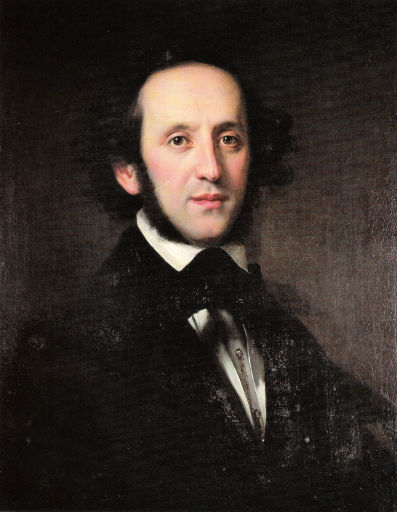
Felix Mendelssohn invited him to teach composition and score-reading at the newly founded Leipzig Conservatory. Although not always comfortable as a pedagogue, he gained institutional standing and deeper engagement with rigorous musical craft and analysis.
He traveled with Clara on a concert tour to Saint Petersburg and Moscow, where her performances were celebrated by aristocratic audiences. The strain of travel, noise, and professional insecurity worsened his anxiety, leading to a serious psychological collapse after returning.
Seeking stability, he undertook systematic counterpoint study, working through J. S. Bach with Clara’s support at the keyboard. This discipline fed major chamber works, including the Piano Quintet in E-flat, which helped elevate chamber music in the Romantic era.
He accepted the post of Municipal Music Director, responsible for choral societies and orchestral concerts in Dusseldorf. Administrative pressures and uneasy rehearsals exposed limitations in conducting, even as he composed significant late works and revisions.
The young Johannes Brahms visited the Schumann household and immediately impressed both Robert and Clara with his playing and compositions. Robert’s article 'Neue Bahnen' proclaimed Brahms a new leading talent, shaping European expectations and Brahms’s career trajectory.
Suffering hallucinations and crushing depression, he attempted suicide by jumping into the Rhine and was rescued by boatmen. He requested institutional care and was admitted to the private asylum at Endenich, where visits were restricted and his composing largely ceased.
After two years of decline, he died at the Endenich asylum with Clara finally able to see him near the end. His death left a powerful legacy of piano, song, and chamber music that Clara and friends like Brahms worked to preserve and disseminate.