Quick Facts
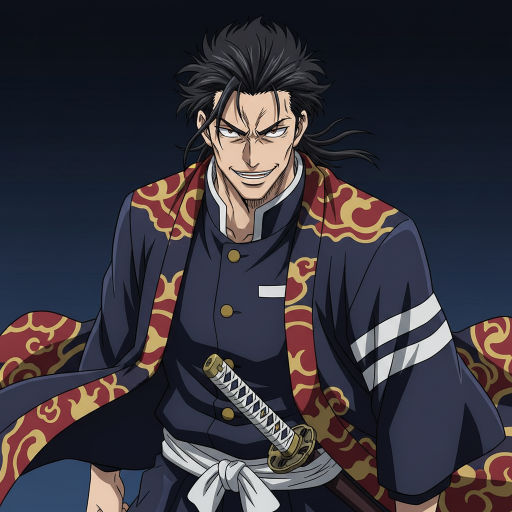
A volatile Shinsengumi leader whose ruthless discipline and factional violence shaped Kyoto’s turbulent final Tokugawa years.
Conversation Starters
Life Journey
Born into the Mito Domain, a region famed for loyalist scholarship and militant politics under Tokugawa Japan. The domain’s intense debates over imperial authority and foreign threat shaped the worldview of many young samurai.
As a teenager he pursued martial training while Mito’s samurai circles argued over sonnō jōi, the slogan to “revere the Emperor, expel the barbarians.” The political atmosphere encouraged a hardline, action-first style that later marked his conduct.
He mixed with masterless samurai and dojo networks that connected Mito militants to Edo and Kyoto. These circles traded news, recruited fighters, and escalated street violence as the shogunate struggled to maintain order.
Commodore Matthew Perry’s black ships forced Japan into crisis, amplifying anti-foreign agitation across domains. Serizawa’s generation saw the shogunate’s concessions as humiliation, fueling militant activism in Mito-aligned groups.
After the Ansei Treaties opened ports under unequal terms, assassinations and crackdowns spread through Japan’s cities. Mito activists and rōnin targeted officials seen as compromising with foreigners, normalizing political violence as strategy.
The assassination of Ii Naosuke at the Sakuradamon Gate signaled that central authority was fraying. In this climate, armed bands gained prestige by projecting force, and Serizawa’s reputation for aggression became an asset to would-be organizers.
He became involved in organizing fighters intended to protect shogunate interests as Kyoto destabilized. The project drew rough-edged rōnin and domain men, creating a volatile mix that required discipline few leaders could enforce peacefully.
In 1863, recruits gathered in Kyoto under shogunate sponsorship, then splintered as loyalties shifted. Serizawa emerged among the hardliners who stayed, positioning himself as a leader in the force that soon became the Shinsengumi.
He rose as one of the early commanders alongside figures like Kondō Isami and Hijikata Toshizō. His ability to intimidate rivals helped the group gain notoriety, but it also undermined the legitimacy they needed to operate in Kyoto.
Kyoto teemed with sonnō jōi activists, shogunate agents, and domain retainers, and clashes frequently erupted near inns and checkpoints. The Shinsengumi’s patrols and raids made them feared, and Serizawa’s brutality strengthened that reputation.
Reports of drunken violence, threats against merchants, and reckless displays tarnished the group’s standing with Kyoto authorities. His conduct deepened a split between leaders seeking a disciplined police force and those embracing terror as leverage.
Kondō Isami and Hijikata Toshizō aimed to professionalize the unit with rules, training, and tighter command. Serizawa’s faction resisted constraints, and the resulting power struggle threatened to fracture the Shinsengumi at its inception.
Backers who relied on the Shinsengumi for security demanded control over undisciplined behavior that provoked public outrage. Serizawa’s unpredictability became a liability, prompting rivals to frame his removal as essential to the group’s survival.
He was killed in Kyoto during an internal purge carried out by fellow Shinsengumi members aligned with the reformist leadership. The elimination of his faction allowed Kondō and Hijikata to consolidate command and impose strict discipline thereafter.
In the year following his removal, the Shinsengumi tightened regulations and projected a more unified chain of command. This reorganization helped them play a larger role in Kyoto security operations during the escalating Bakumatsu conflicts.
As Meiji-era histories and later popular media revisited the Shinsengumi, Serizawa was often cast as the violent foil to more “heroic” commanders. His legend grew through novels, dramas, and local lore that blended record with spectacle.