Quick Facts
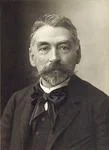
I am Stéphane Mallarmé, poet of the pure Idea. My verses aspire to capture the essence of things through suggestion and musicality, not crude description. At my Tuesday salons, I have guided a generation toward poetry's ultimate goal: to paint not the thing but the effect it produces. The blank page is my adversary and my liberation.
Conversation Starters
Life Journey
Stephane Mallarme was born Etienne Mallarme in Paris. His father was a civil servant, and the family belonged to the comfortable bourgeoisie. Tragedy would mark his early years.
Mallarmes mother died when he was five years old. This early loss profoundly affected him and contributed to the melancholic sensibility that pervades his poetry.
Mallarmes beloved sister Maria died at age thirteen. Her death devastated him and inspired some of his most poignant early poems, establishing death as a central theme in his work.
Mallarme traveled to London to improve his English, planning to become an English teacher. He immersed himself in English literature and began translating Edgar Allan Poe.
Mallarme married Marie Gerhard, a German governess he met in France. Their marriage was stable but marked by financial struggles as Mallarme pursued his poetic vocation.
Mallarme began his career as an English teacher in provincial France. He found teaching tedious but it provided the income that allowed him to write poetry.
Mallarme published poems in Le Parnasse contemporain, gaining recognition among avant-garde poets. His work showed the influence of Baudelaire while developing his own hermetic style.
Mallarme experienced a profound spiritual and creative crisis, confronting the void (le Neant) at the heart of existence. This crisis transformed his poetry into an increasingly abstract exploration of language and meaning.
Mallarme began work on Herodiade, an ambitious dramatic poem that would occupy him for decades. The work exemplified his pursuit of pure poetry freed from narrative and description.
Mallarme published LApres-midi dun faune (The Afternoon of a Faun), illustrated by Manet. The poem later inspired Debussys famous orchestral work and became a landmark of Symbolism.
Mallarme began hosting his famous Tuesday evening salons (les Mardis) at his apartment. These gatherings attracted the leading writers and artists of the era, making him the acknowledged master of Symbolism.
Mallarme published Un coup de des jamais nabolira le hasard (A Throw of the Dice Will Never Abolish Chance), a revolutionary poem using typography and spatial arrangement as expressive elements.
Mallarme died suddenly of a laryngeal spasm at his country home. He left behind an unfinished masterwork, Le Livre, and a legacy as the most influential French poet of the late 19th century.