Quick Facts
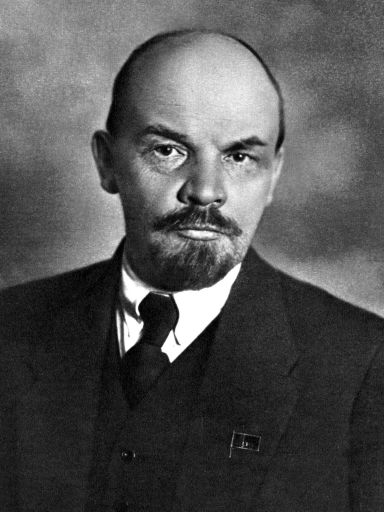
Revolutionary strategist who fused Marxist theory with ruthless organization, reshaping Russian politics and twentieth-century global ideology.
Conversation Starters
Life Journey
Born Vladimir Ilyich Ulyanov in Simbirsk on the Volga River in the Russian Empire. His father, Ilya Ulyanov, served in the imperial education system, and his mother, Maria Blank, emphasized languages and study.
His older brother Alexander Ulyanov was hanged for involvement in a conspiracy to assassinate Tsar Alexander III. The execution shocked the family in Simbirsk and deepened Lenin’s hostility to autocracy and political repression.
He entered Kazan Imperial University to study law but was expelled after participating in student protests. Under police supervision in Kazan, he immersed himself in radical literature and began moving toward Marxist politics.
He passed external examinations at Saint Petersburg University and received a law degree without regular attendance. Working briefly in legal practice, he studied political economy and built contacts among Russia’s emerging Marxist circles.
He helped create the League of Struggle for the Emancipation of the Working Class, linking agitators with factory workers. Tsarist police arrested him in Saint Petersburg, marking the start of imprisonment and long exile for his activism.
After prison, he was exiled to Shushenskoye in the Minusinsk district under imperial surveillance. He wrote extensively, developed political strategy, and corresponded with activists across Russia despite censorship and isolation.
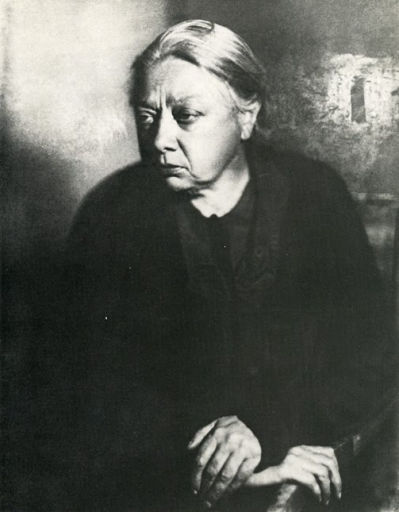
He married fellow revolutionary Nadezhda Krupskaya, who joined him in Siberian exile. Their partnership combined personal commitment with practical collaboration, including editing, correspondence, and sustained underground organizing efforts.
After exile ended, he traveled through Europe to build an émigré center for Russian Social Democrats. With figures like Georgi Plekhanov and Julius Martov, he launched Iskra to unify cadres and challenge police-fragmented circles.
He published What Is to Be Done?, arguing that revolutionary consciousness required a disciplined organization of professional activists. The pamphlet influenced debates within the Russian Social Democratic Labor Party and sharpened factional lines.
At the Second Congress of the Russian Social Democratic Labor Party, disputes over membership and leadership produced a lasting split. Lenin’s supporters became known as Bolsheviks, while Martov’s faction formed the Mensheviks.
He returned to Russia amid the 1905 Revolution and tried to expand Bolshevik influence in mass politics. Events like Bloody Sunday and strikes in major cities convinced him that workers’ councils could become a vehicle for power.
After the Tsarist regime suppressed revolutionary activity, he again operated largely from abroad. In European exile, he reorganized Bolshevik networks, raised funds, and debated tactics amid arrests and informers in Russia.
With Europe at war, he argued that the conflict was imperialist and should be opposed by socialists. From neutral Switzerland, he pressed for turning the war into revolutionary crisis, separating Bolsheviks from pro-war socialists.
After the February Revolution toppled Nicholas II, he returned via the sealed train arranged through Germany. In Petrograd he proclaimed the April Theses—"Peace, Land, Bread" and "All power to the Soviets"—against the Provisional Government.
Bolshevik forces and allied soviets overthrew the Provisional Government in the October Revolution. Lenin pushed the Central Committee toward insurrection, then became the leading figure in the new Soviet government’s first decrees.
He insisted on accepting harsh terms to end Russia’s participation in World War I and secure Bolshevik survival. The Treaty of Brest-Litovsk ceded vast territories to Germany, fueling fierce opposition and intensifying internal conflict.
He was shot and seriously wounded after leaving a meeting, in an attack attributed to Socialist Revolutionary Fanny Kaplan. The episode escalated state security measures as the Cheka expanded arrests during the early Red Terror period.
After War Communism and widespread unrest, including the Kronstadt rebellion, he backed the New Economic Policy. The NEP restored limited markets and small private enterprise while the state kept control of heavy industry and finance.
The Union of Soviet Socialist Republics was established, formalizing the new state’s federal structure. That year he suffered strokes that reduced his ability to govern, while power struggles intensified around Joseph Stalin and other leaders.
He died after prolonged illness at the Gorki estate near Moscow, ending a turbulent revolutionary career. Soviet authorities organized a massive public mourning ritual, and his body was preserved, shaping a lasting political cult of memory.