Quick Facts
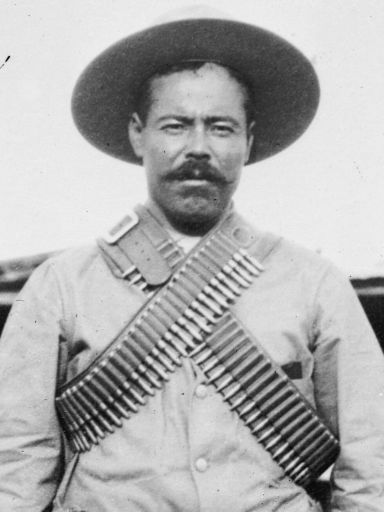
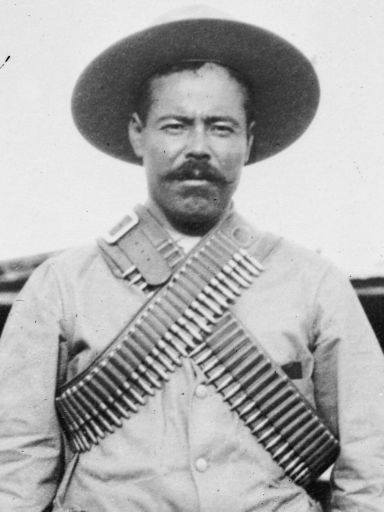
A daring Mexican revolutionary commander who mastered guerrilla warfare, reshaped northern politics, and became a global folk legend.
Conversation Starters
Life Journey
Born Doroteo Arango in La Coyotada, Durango, he grew up in deep rural poverty under Porfirio Diaz's Mexico. Like many peasant families, the Arangos faced debt peonage and harsh hacienda power structures.
After a violent conflict involving a local hacendado, the teenage Arango fled into the Sierra Madre to avoid arrest and retaliation. He survived through bandit networks, learning horsemanship, smuggling routes, and the realities of rural justice.
By the early 1900s he was widely known as Pancho Villa, operating in Chihuahua with a mobile band that mixed crime with local patronage. His reputation grew through daring raids, protection deals, and a persona that appealed to marginalized villagers.
When Francisco I. Madero called for uprising in 1910, Villa shifted from banditry to revolutionary warfare in northern Mexico. He fought alongside Pascual Orozco and other rebels, targeting federal garrisons and rail lines vital to the regime.
Rebel forces took Ciudad Juarez in a decisive campaign that undermined Porfirio Diaz and strengthened Madero's cause. Villa's aggressive style in street fighting and pursuit helped make the border city a symbol of revolutionary momentum.
During the Orozco rebellion, Villa fought for Madero's government and served under General Victoriano Huerta, who soon turned hostile to him. After a court-martial and imprisonment, Villa escaped custody and fled into the United States to regroup.
After Huerta's coup and Madero's murder during the Ten Tragic Days, Villa returned north to join the Constitutionalist fight. He aligned with Venustiano Carranza at first, presenting himself as a populist war leader against dictatorship.
Villa organized the Division of the North, combining cavalry mobility with captured artillery, trains, and disciplined logistics. Using railways as moving supply bases, he turned northern towns into recruitment and provisioning hubs for sustained campaigning.
At Torreon, Villa led a coordinated assault that overwhelmed federal defenses and secured a crucial industrial and rail center. The victory amplified his national prestige and accelerated Huerta's weakening, as foreign observers tracked the revolution closely.
Villa's forces stormed Zacatecas in one of the revolution's bloodiest battles, breaking a key federal army concentration. The defeat shattered Huerta's remaining credibility and helped force his resignation, while Villa emerged as the north's dominant commander.
Political tensions exploded after the Convention of Aguascalientes, where revolutionary factions argued over Mexico's future. Villa rejected Carranza's leadership, forming an alliance with Emiliano Zapata and pushing toward Mexico City to assert legitimacy.
Villa and Zapata entered the capital in a dramatic moment that suggested a popular revolutionary coalition. Yet governance proved elusive, and Carranza's forces under Alvaro Obregon maneuvered to reclaim political control and international recognition.
At Celaya, Obregon used trenches, machine guns, and barbed wire to blunt Villa's famed cavalry charges in World War I-style defense. The defeats crippled the Division of the North, forcing Villa into smaller guerrilla operations across Chihuahua.
Villa attacked Columbus, New Mexico, killing soldiers and civilians and seizing supplies, a rare cross-border strike in modern U.S. history. President Woodrow Wilson ordered the Punitive Expedition under General John J. Pershing, but Villa evaded capture.
Pershing's forces pushed deep into Chihuahua with trucks, aircraft, and thousands of troops, yet Villa relied on local support and terrain. Skirmishes and political complications, including tensions with Carranza's government, led the U.S. to withdraw.
After Carranza fell, interim president Adolfo de la Huerta negotiated Villa's surrender, seeking stability after a decade of war. Villa received the Canutillo hacienda near Parral, where he lived with former fighters under partial government surveillance.
Villa was shot dead in an ambush while riding in an automobile in Parral, amid lingering fears of his political influence. The killing reflected post-revolution power struggles, and rumors of official complicity persisted for decades in Mexican public memory.