Quick Facts
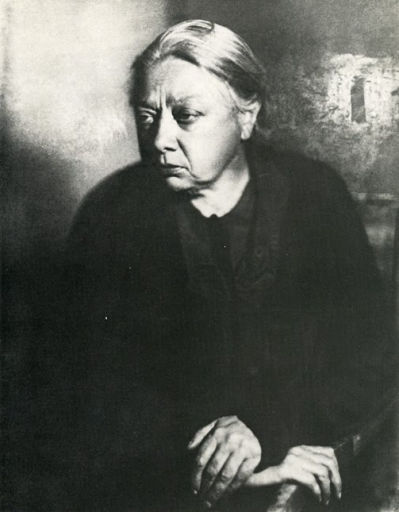
Revolutionary educator and disciplined organizer who shaped Soviet literacy, party culture, and Lenin’s political work across decades.
Conversation Starters
Life Journey
Born Nadezhda Konstantinovna Krupskaya to Konstantin Krupski and Elizaveta Krupskaya. Her family’s reduced means and ethical ideals shaped her early sympathy for social reform in imperial Russia.
Completed rigorous secondary education in Saint Petersburg, gaining strong training in languages and pedagogy. The political unrest after Alexander II’s assassination still lingered, feeding youth radicalism around her.
Worked as a teacher while running study circles for factory workers, blending literacy with discussion of social problems. These classrooms became recruiting grounds for Marxist ideas under tight tsarist surveillance.
Entered the city’s clandestine Marxist milieu and encountered Vladimir Ilyich Ulyanov (Lenin) through activist networks. Their partnership quickly combined political work, editing, and disciplined underground organization.
Assisted Bolshevik precursors in coordinating propaganda, worker contacts, and safe communications. The League’s agitation brought swift attention from the Okhrana, the imperial secret police.
Detained by tsarist authorities for involvement in illegal Marxist organizing and worker education. Interrogations and confinement tested her resolve while comrades outside tried to keep networks intact.
Sent to Shushenskoye in Siberia, where Lenin was also exiled, allowing closer political collaboration under police oversight. They married there, formalizing a partnership built on shared revolutionary purpose.
After exile, moved abroad to support the Russian Social Democratic movement in exile communities. She handled correspondence, logistics, and secret channels essential for coordinating activists inside Russia.
Contributed to Iskra (“The Spark”), the émigré paper linked to Lenin, Julius Martov, and other leading Social Democrats. Her organizational skills helped maintain distribution routes and secure communications to Russia.
Following the Russian Social Democratic Labor Party’s split, she stood with Lenin’s Bolsheviks emphasizing centralized discipline. She continued the unglamorous work of records, liaison, and cadre support that kept the faction cohesive.
Amid strikes, soviets, and repression, she helped Bolshevik efforts to reconnect with workers and rebuild shattered underground structures. The failed uprising hardened revolutionary strategies and expanded exile networks afterward.
As the Bolsheviks consolidated separate structures, she managed communications, fundraising, and coordination across borders. Police raids and informers made meticulous secrecy essential to party survival in these years.
With Europe at war, she and Lenin navigated restrictions, censorship, and the fracturing of socialist movements over wartime loyalties. Exile politics intensified as debates raged over internationalism and revolutionary defeatism.
After the fall of Nicholas II, she returned with Lenin to a volatile Petrograd filled with soldiers, workers, and competing parties. She supported Bolshevik organizational work as they pushed from opposition toward power.
Became a key official within Narkompros (the People’s Commissariat for Education), working alongside Anatoly Lunacharsky. She promoted mass literacy, workers’ clubs, and access to books as tools for building a new society.
Pushed for standardized cataloging, widespread rural libraries, and trained librarians to reach the former empire’s vast territories. Her approach treated libraries as civic infrastructure for education, propaganda, and self-improvement.
After Lenin died, she sought to preserve his legacy while facing fierce power struggles among Joseph Stalin, Leon Trotsky, and other leaders. Personal grief intersected with institutional battles over party memory and direction.
During the First Five-Year Plans, she remained influential in educational and library spheres amid massive social upheaval. Literacy drives and political schooling expanded, even as cultural life became more tightly controlled.
Died in Moscow after a long career spanning underground struggle, exile, revolution, and state administration. She was remembered for austere dedication to education, organization, and the Bolshevik cause she helped build.