Chumi
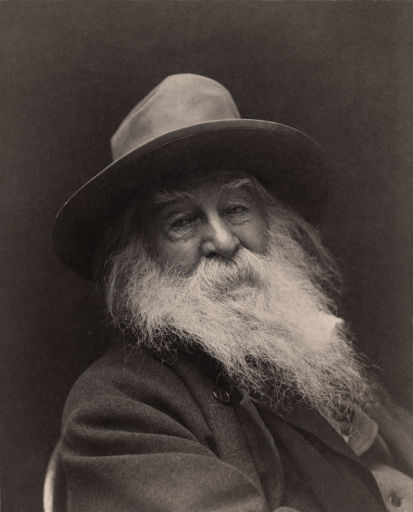
Walt Whitman

Walt Whitman

Poet

Start Chat

AI Personality

Quick Facts

Leaves of Grass
Pioneering free verse in American poetry
Civil War hospital service and writings

Life Journey

1819Born on Long Island to the Whitman family

Walt Whitman was born to Walter Whitman Sr. and Louisa Van Velsor Whitman in a farming community on Long Island. Growing up in a large, working family shaped his lifelong sympathy for laborers and ordinary Americans.

1823Family relocates to the bustling city of Brooklyn

The Whitmans moved to Brooklyn as New York’s port city expanded with immigration, commerce, and new political energy. The crowded streets, ferries, and dockyards later became vivid backdrops for his democratic poetic vision.

1830Leaves formal schooling and enters print-shop work

Whitman left school early to help support his family and apprenticed in printing, learning type, layout, and the rhythms of newspapers. The pressroom’s language and public arguments trained him to write for a broad audience.

1836Works as a teacher on Long Island

He taught in rural schools where resources were sparse and communities were tightly knit, sharpening his attention to everyday speech. The experience deepened his interest in education, civic life, and the dignity of common people.

1841Publishes early fiction and sketches in periodicals

Whitman placed stories and prose pieces in popular magazines, experimenting with sentiment, moral themes, and urban observation. These early publications helped him build a public voice before he fully turned to revolutionary poetry.

1846Becomes editor of the Brooklyn Daily Eagle

As editor, he covered politics, city life, and cultural debates while honing a bold, conversational style. His growing clashes over party lines and reform issues revealed an independent streak that later defined his art.

1848Moves to New Orleans and encounters slavery firsthand

Whitman traveled to New Orleans to work on a newspaper, witnessing slave markets and the racial order of the Deep South. The trip widened his sense of America’s contradictions and fueled his later moral urgency about freedom.

1850Returns to Brooklyn and turns toward poetry in earnest

Back in Brooklyn, he worked in printing and journalism while drafting poems that rejected conventional meters. He absorbed opera, street oratory, and the city’s human variety, forming the expansive cadence of his mature voice.

1855Publishes the first edition of Leaves of Grass

Whitman self-published a slim volume with a daring preface and twelve untitled poems, including what became "Song of Myself." Its free verse and sensual celebration of the body challenged American literary norms and social taboos.

1856Receives Ralph Waldo Emerson’s influential praise

Ralph Waldo Emerson wrote a private letter greeting Whitman at “the beginning of a great career,” validating the book’s ambition. Whitman publicized the praise, intensifying attention and controversy around his unconventional poems.

1860Boston publishers issue an expanded Leaves of Grass edition

Thayer and Eldridge brought out a much larger edition, adding the "Calamus" cluster and strengthening Whitman’s national profile. The looming Civil War soon disrupted the publishing venture, but the poems broadened his themes of intimacy and comradeship.

1862Goes to the war front to find his wounded brother George

After learning that George Washington Whitman was reported injured, Whitman traveled to Union hospitals and battle zones. The sights of suffering compelled him to remain, redirecting his life toward daily care for wounded soldiers.

1863Serves as a volunteer nurse in Washington hospitals

In hospitals such as Armory Square, he brought letters, food, and companionship to soldiers, recording names and last words for families. His practical compassion and careful notes became the emotional foundation for later war writings.

1865Writes major Lincoln elegies after the assassination

After Abraham Lincoln’s death, Whitman shaped national grief into poetry, including "O Captain! My Captain!" and later "When Lilacs Last in the Dooryard Bloom’d." He framed Lincoln as a symbol of Union and democratic sacrifice.

1865Dismissed from the Interior Department over moral objections

While working as a clerk, Whitman was fired after officials found Leaves of Grass and deemed it obscene. The incident exposed the era’s censorship pressures and pushed him to defend artistic freedom while relying on friends for support.

1866Secures steadier federal work at the Attorney General’s office

He obtained a clerkship in the Office of the Attorney General, which provided income as he continued revising Leaves of Grass. The routine of government work contrasted with his poetic quest to speak for the whole republic.

1867Publishes Drum-Taps, shaping a poetic record of the Civil War

Whitman released Drum-Taps, gathering poems that moved from martial enthusiasm to intimate scenes of hospitals and loss. The collection helped Americans process the war’s human cost through a voice both personal and national.

1873Suffers a stroke and relocates to Camden to live with family

A debilitating stroke weakened Whitman and ended much of his Washington routine, forcing him to seek care near relatives. In Camden he rebuilt his life slowly, continuing to write and supervise new editions despite chronic illness.

1881Issues a major new edition of Leaves of Grass amid censorship

A Boston publisher released an 1881 edition, but Massachusetts authorities threatened prosecution over sexual content and demanded changes. Whitman refused to bow fully, and the controversy ultimately increased sales and notoriety nationwide.

1892Dies after completing his final 'deathbed' edition

Whitman died after years of declining health, having overseen the 1891–1892 "deathbed edition" of Leaves of Grass as his definitive statement. He was buried in a tomb he designed, leaving an outsized legacy in American literature.

Chat