Quick Facts
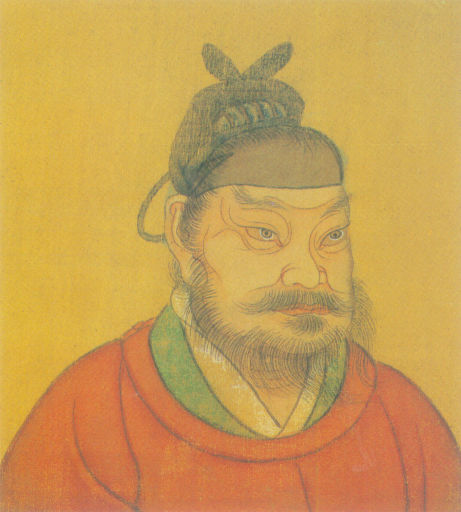
Beggar monk to emperor. Hongwu founded Ming and made China great again.
Conversation Starters
Life Journey
Zhu Yuanzhang was born into an impoverished peasant family during the Yuan Dynasty. Named Zhu Chongba at birth, his family struggled with poverty and frequent famines under Mongol rule.
A devastating famine and plague swept through China, killing Zhu Yuanzhang's parents and several siblings within weeks. Left orphaned and destitute, he faced the harsh reality of survival alone.
With no means of survival, Zhu Yuanzhang entered the Huangjue Temple as a novice monk. He received basic education in reading and writing, which would later prove invaluable to his rise.
When the temple could no longer support its monks due to famine, Zhu Yuanzhang spent three years as a wandering beggar-monk. This experience exposed him to the suffering of common people across China.
Responding to a letter from a childhood friend, Zhu Yuanzhang joined the Red Turban rebels fighting against Mongol rule. His intelligence and bravery quickly caught the attention of rebel leader Guo Zixing.
Guo Zixing gave his adopted daughter Ma Xiuying in marriage to Zhu Yuanzhang. She would become his trusted partner, legendary for her wisdom and compassion as Empress Ma.
After Guo Zixing's death, Zhu Yuanzhang emerged as a prominent military commander. He built his own army and attracted talented advisors including Liu Bowen and Song Lian.
Zhu Yuanzhang's forces captured the strategic city of Nanjing, which he renamed Yingtian. This became his capital and power base for future conquests, marking his transition from rebel to regional ruler.
Zhu Yuanzhang defeated and absorbed the forces of Xu Shouhui's Tianwan regime. This victory significantly expanded his territory and eliminated a major rival in the struggle for power.
In one of the largest naval battles in history, Zhu Yuanzhang decisively defeated Chen Youliang's massive fleet. This three-day battle eliminated his most powerful rival and secured control of the Yangtze.
After a prolonged siege of Suzhou, Zhu Yuanzhang captured and executed his rival Zhang Shicheng. This victory unified southern China under his control and prepared the way for the northern campaign.
Zhu Yuanzhang launched a massive military campaign to drive the Mongols from China. His generals Xu Da and Chang Yuchun led armies north to liberate the Chinese heartland from Yuan rule.
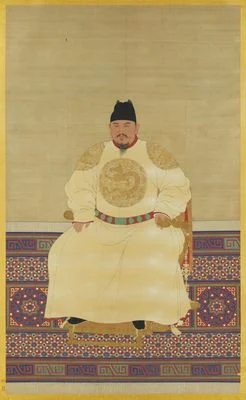
Zhu Yuanzhang proclaimed the establishment of the Ming Dynasty and took the reign name Hongwu, meaning 'Vastly Martial'. He became the first commoner in Chinese history to rise from peasant to emperor.
Ming forces captured the Yuan capital of Dadu (Beijing), forcing the Mongol emperor to flee to Mongolia. This ended nearly a century of Mongol rule and restored Chinese sovereignty.
Zhu Yuanzhang implemented major administrative reforms, creating the Grand Secretariat system. He centralized power by abolishing the chancellor position after the Hu Weiyong case.
The Hongwu Emperor promulgated the Da Ming Lü, a comprehensive legal code that would govern China for nearly three centuries. It established clear laws and harsh punishments for corruption.
After uncovering the alleged conspiracy of Chancellor Hu Weiyong, Zhu Yuanzhang abolished the position permanently. He concentrated all executive power directly under the emperor.
Ming armies launched major campaigns into Mongolia to eliminate remaining Yuan threats. General Lan Yu achieved decisive victories that secured the northern frontier for generations.
The death of his beloved eldest son and heir Zhu Biao devastated the aging emperor. This tragedy led to succession complications and the later Jingnan Campaign civil war.
Zhu Yuanzhang died after a thirty-year reign that transformed China. Despite controversial purges, he is remembered as a capable ruler who restored Chinese rule and created institutions lasting centuries.