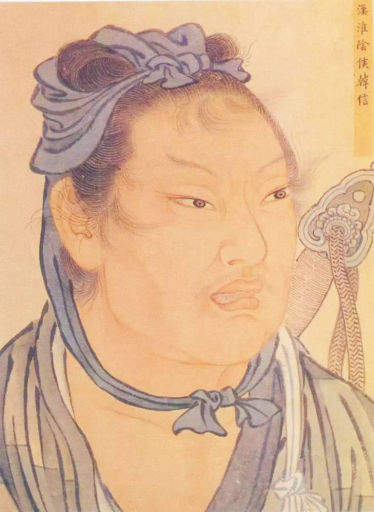
A brilliant yet ill-fated strategist who helped found the Han dynasty through daring maneuvers and psychological warfare.
대화 시작하기
인생 여정
Born in Huaiyin during the final decades of the Qin empire, he grew up amid conscription, famine, and local banditry. Family resources were scarce, shaping his hunger for advancement and a reputation for endurance.
As a teenager in Huaiyin, he sought knowledge of strategy and drill despite lacking patronage or steady income. Neighbors reportedly viewed him as proud yet poor, a contrast that later fed legends about his perseverance.
Local stories recall him accepting humiliation rather than risking death in a street confrontation, a choice later framed as tactical patience. The episode became a moral tale about postponing pride to preserve long-term opportunity.
When uprisings erupted after Chen Sheng and Wu Guang, he entered the swelling armies opposing Qin rule. He moved between commanders seeking recognition, learning how quickly allegiance and fortunes shifted in civil war.
He is traditionally said to have served under Xiang Yu’s powerful coalition, yet his talent went unnoticed among famous captains. The experience taught him that brilliance alone could not overcome rigid hierarchies and favoritism.
After the fall of Qin, he attached himself to Liu Bang, then King of Han, starting in low-ranking posts. His abilities were recognized by Xiao He, whose advocacy helped turn a neglected soldier into a key planner.
Legend holds that Chancellor Xiao He chased him at night to prevent his departure, then urged Liu Bang to elevate him. The appointment signaled a shift toward merit and gave Han Xin authority to shape major operations.
He helped organize a breakout from the mountainous Hanzhong base, managing supply lines and routes through difficult terrain. The move positioned Liu Bang to challenge Xiang Yu and contest control of the former Qin heartland.
Leading Han forces, he struck Wei with speed and feints, forcing capitulation and gaining access to key river corridors. The victory expanded Liu Bang’s strategic depth and showcased Han Xin’s knack for operational tempo.
At Jingxing, he used a daring formation and psychological pressure to draw Zhao into overconfidence, then struck their camp. The win elevated his fame and weakened northern resistance to Liu Bang’s growing coalition.
Campaigning east, he navigated shifting alliances, accepting surrenders while preparing for betrayal and counterattack. Taking Qi provided manpower and grain, tightening the encirclement around Xiang Yu’s remaining strongholds.
With major territories secured, he received the kingship of Qi, reflecting both achievement and the era’s need to reward generals. The elevation also stirred suspicion among Liu Bang’s circle, planting seeds of political risk.
In the final showdown, he coordinated with Liu Bang and other commanders to compress Xiang Yu’s forces and cut escape routes. The collapse of Chu power ended the Chu-Han Contention and cleared the way for the Han dynasty.
After victory, Liu Bang became Emperor Gaozu, and Han Xin’s campaigns were credited as foundational to unification. Yet the new imperial order favored central control, making semi-independent kings increasingly unacceptable.
Imperial policy began curbing powerful vassals, and Han Xin was reassigned and reduced in autonomy under closer scrutiny. The shift reflected Gaozu’s fear of rival warlords and the fragile balance of early Han governance.
Accusations and court intrigues led to another demotion, stripping him of a king’s army and political leverage. Though still honored in name, he became vulnerable to rivals and dependent on the emperor’s uncertain favor.
During campaigns against remaining warlords, the court treated prominent generals as potential threats to stability. Reports of contacts and disloyal talk were used to justify surveillance, deepening the rift with the imperial household.
Tradition states Empress Lu and Xiao He lured him into the palace under pretext, then condemned him as a traitor. He was executed in Chang'an, a grim example of how founding heroes could fall to consolidation politics.