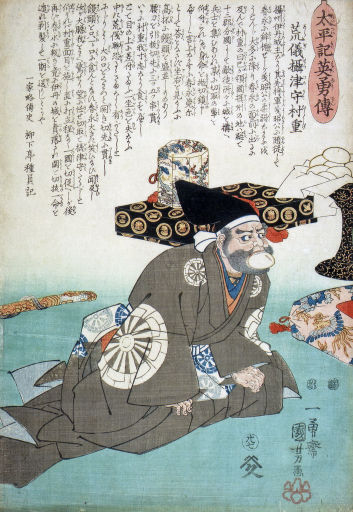
Informações rápidas
A daring Sengoku daimyo whose bold betrayals and shifting loyalties reshaped Oda Nobunaga’s western campaigns.
Iniciadores de conversa
Jornada de vida
Born amid constant warfare in central Japan, he grew up under shifting overlords and fragile alliances. The Araki family’s fortunes were tied to regional power struggles around Settsu and neighboring provinces.
As a youth he learned mounted combat, castle administration, and hostage diplomacy common to Sengoku retainers. Local rivalries among Settsu lords forced him to master both negotiation and sudden violence to survive.
He gained command responsibilities through campaigns and strong castle management, building a personal following. His reputation grew as he navigated divided regional leadership and the looming influence of Kyoto politics.
When Nobunaga marched to secure influence in Kyoto, Murashige moved to cooperate with the rising Oda power. The decision tied his fate to Nobunaga’s fast-moving reforms, punishments, and expectations of absolute loyalty.
He served in campaigns that stabilized the Kinai region against rival coalitions and temple-fortresses. Success brought greater authority in Settsu, but it also exposed him to Nobunaga’s harsh discipline and suspicion of wavering vassals.
Murashige consolidated control over local castles and networks of samurai families, turning Settsu into a reliable corridor for Oda armies. Administrators and merchants benefited from order, while rivals were pressured into submission or exile.
As the Oda displaced older powers, Murashige’s position improved and his obligations deepened. He was expected to supply troops, manage logistics, and guard approaches to Kyoto—tasks that made him indispensable yet tightly controlled.
He organized garrisons, stocked provisions, and coordinated messengers across key routes linking Osaka and Kyoto. These duties highlighted the era’s brutal arithmetic of rice, labor, and fortifications that decided campaigns as much as swordplay.
With Hashiba Hideyoshi campaigning in the west, pressure increased on Settsu lords to support long supply lines. Murashige faced the dilemma of backing distant offensives while protecting his home domain from opportunistic enemies.
He broke with Nobunaga and entrenched himself at Arioka Castle, betting that anti-Oda forces could protect him. The move triggered a major siege and marked him as a dangerous traitor in Nobunaga’s unforgiving political order.
Murashige pursued backing from powers hostile to Nobunaga, including networks aligned with the Mori sphere. His diplomacy relied on promises of strategic corridors and distraction campaigns, but coordination across provinces proved slow and risky.
As the siege dragged on and relief failed, he slipped away, leaving retainers and family members exposed. The act preserved his life but destroyed trust, and it became a cautionary tale about loyalty and responsibility in castle warfare.
After the castle collapsed, Nobunaga’s regime imposed brutal punishments to deter further defections. The reprisals shattered Murashige’s power base and demonstrated how terror and spectacle were used as tools of Sengoku statecraft.
Nobunaga’s death in the Honno-ji Incident overturned the political landscape that had condemned Murashige. The ensuing scramble among successors created openings for former enemies and exiles to survive by discretion and new patronage.
With Toyotomi Hideyoshi consolidating power, Murashige remained a diminished figure compared with his earlier prominence. He relied on connections and careful conduct to avoid renewed retaliation in an era that rewarded stability over rebellion.
He died remembered as a capable warrior-administrator who gambled on rebellion and lost. His story endures in accounts of the Arioka siege, illustrating the high stakes of loyalty and the merciless logic of Sengoku politics.