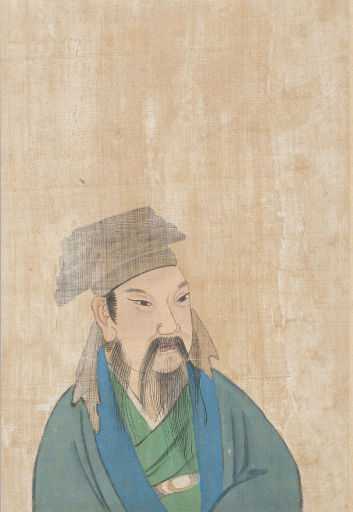
A wry Buddhist essayist who turned courtly memories into timeless reflections on impermanence and human folly.
對話開場白
人生歷程
He was born Urabe no Kaneyoshi, later known as Yoshida Kenko, into a family tied to Shinto ritual and court service. Growing up near Kyoto, he absorbed aristocratic etiquette, poetry, and the tensions of late Kamakura society.
As a youth he studied waka poetry, Chinese-inspired learning, and the refined customs prized by the imperial court. This training later supplied the allusive style and sharp social eye that animate his essays.
He began serving in roles associated with the court and its ritual world, building familiarity with nobles, ceremonies, and patronage networks. The experience gave him firsthand material for later critiques of vanity, rank, and fashion.
In an era when the Kamakura shogunate’s authority coexisted uneasily with the Kyoto court, he watched institutions compete for legitimacy. The instability sharpened his sense that power is temporary and reputation easily overturned.
He participated in poetic exchange and courtly gatherings where taste and precedent mattered as much as talent. These circles taught him how language can flatter, wound, or preserve memory—skills he later used with comic restraint.
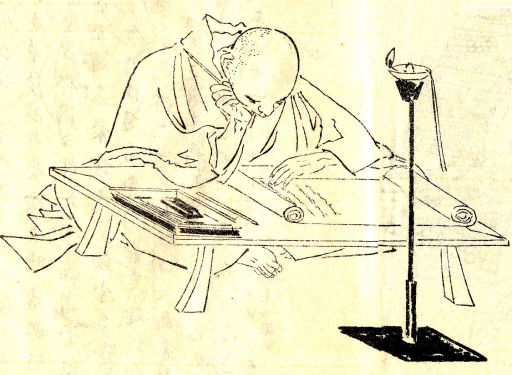
He renounced court service and became a Buddhist monk, adopting the name Kenko, likely influenced by the period’s widespread turn to religious practice. The choice reframed his outlook toward impermanence, simplicity, and moral self-scrutiny.
He pursued a quieter routine of study, contemplation, and occasional travel, balancing solitude with selective contact among literati. This rhythm suited the zuihitsu spirit—writing that follows the mind’s turns rather than a strict argument.
Drawing on memories of the court and scenes from ordinary life, he started shaping brief pieces that mixed humor with ethical reflection. He favored concrete details—tools, rooms, habits—because they reveal character more honestly than slogans.
Kenko moved among cultural figures who valued classical precedent yet faced a changing world of warrior rule. Conversations with poets and clergy helped him test ideas about aesthetics, attachment, and the comic limits of human planning.
He assembled fragments—maxims, stories, and scenes—into what would become Tsurezuregusa, a hallmark of Japanese essay literature. The work treats beauty as inseparable from loss, and wit as a tool for moral clarity rather than cruelty.
The Genko War and Emperor Go-Daigo’s rebellion against the Kamakura shogunate convulsed the country, destabilizing Kyoto’s political life. Kenko’s writing echoes this uncertainty, emphasizing how swiftly institutions and fortunes can collapse.
In 1333 the Kamakura shogunate fell, ending a long political order and ushering in new contests for authority. Such transitions reinforced his belief that clinging to status is foolish, because the world turns without pity or pause.
Ashikaga Takauji’s ascent and the struggles that followed plunged the realm toward the Northern and Southern Courts period. Kenko’s essays do not preach policy, but they capture how public chaos intensifies private anxiety and longing.
He praised the charm of the incomplete, the weathered, and the quietly functional, pushing against flashy displays of wealth. By valuing modest rooms and fleeting seasons, he linked taste to ethics—how one lives, not merely what one owns.
His pieces spread through copying and conversation, reaching readers who admired classical learning yet wanted a voice closer to lived experience. The informal circulation suited the work’s mosaic structure and encouraged additions and rearrangements over time.
In his later years he continued polishing observations, balancing gentle humor with clear-eyed admonition. The result is a voice that can praise elegance, mock pretension, and still end on Buddhist awareness that all delights vanish.
He died in the mid-fourteenth century, leaving a reputation as an essayist who distilled Kamakura anxieties into enduring art. Through Tsurezuregusa, later generations treated him as a master of irony, memory, and impermanence.