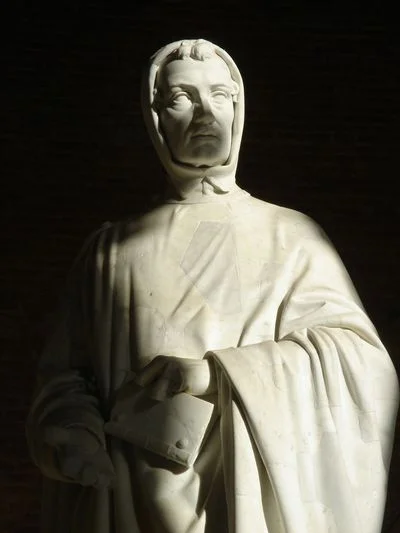
Kurzinfo
0, 1, 1, 2, 3, 5, 8... Brachte arabische Ziffern nach Europa und entdeckte die Lieblingsfolge der Natur.
Gesprächseinstiege
Lebensweg
Leonardo Bonacci, bekannt als Fibonacci, wurde in der wohlhabenden Seerepublik Pisa als Sohn von Guglielmo Bonacci, einem reichen Kaufmann und Zollbeamten, geboren.
Der junge Leonardo begleitete seinen Vater nach Bougie in Nordafrika, wo er das indisch-arabische Zahlensystem kennenlernte, das die Mathematik verändern sollte.
Fibonacci studierte unter der Anleitung arabischer Mathematiker und lernte das Dezimalsystem, Algebra und Rechentechniken, die den römischen Ziffern weit überlegen waren.
Fibonacci reiste ausgiebig im Mittelmeerraum und besuchte Ägypten, Syrien, Griechenland und Sizilien, um verschiedene mathematische Systeme und Handelspraktiken zu studieren.
Durch seine Reisen erkannte Fibonacci, dass das indisch-arabische Zahlensystem revolutionäre Vorteile für Handel und Wissenschaft in Europa bot.
Fibonacci kehrte nach Pisa zurück und begann zu schreiben, entschlossen, das mathematische Wissen zu teilen, das er während seiner Jahre des Reisens und Studierens angesammelt hatte.
Fibonacci veröffentlichte 'Liber Abaci' (Buch der Berechnung), führte indisch-arabische Ziffern in Europa ein und revolutionierte europäische Mathematik und Handel.
Der Liber Abaci verbreitete sich in italienischen Kaufmannsgemeinschaften, da Händler die großen Vorteile des neuen Zahlensystems für Buchhaltung und Handel erkannten.
Fibonacci veröffentlichte seine Geometrieabhandlung, die Algebra auf geometrische Probleme anwandte und europäisches mathematisches Wissen über antike Quellen hinaus voranbrachte.
Fibonacci veröffentlichte sein mathematisch anspruchsvollstes Werk zur Zahlentheorie, das Quadratzahlen, Summen von Quadraten und die später als Fibonacci-Folge bekannte Reihe erforschte.
Der von Mathematik faszinierte Kaiser des Heiligen Römischen Reiches Friedrich II. rief Fibonacci an seinen Hof, wo Hofmathematiker herausfordernde Probleme stellten.
Fibonacci löste erfolgreich komplexe mathematische Probleme der Hofmathematiker Friedrichs II. und festigte seinen Ruf als größter Mathematiker Europas.
Die Republik Pisa gewährte Fibonacci ein Jahresgehalt in Anerkennung seiner Dienste für die Stadt durch Mathematikunterricht und Beratung in Buchhaltung.
Fibonacci verbrachte seine letzten Jahre in Pisa, lehrte und korrespondierte mit Mathematikern; sein Werk hatte europäischen Handel und Mathematik transformiert.
Fibonacci starb um 1250 in Pisa. Seine Einführung indisch-arabischer Ziffern in Europa und die berühmte Fibonacci-Folge bleiben grundlegend für die moderne Mathematik.