Quick Facts
Make me an instrument of peace:" Founded Franciscans, loved nature.
Conversation Starters
Life Journey
Giovanni di Pietro di Bernardone was born to Pietro di Bernardone, a wealthy cloth merchant, and his wife Pica in Assisi. His father, returning from a business trip to France, renamed him Francesco (Francis), meaning 'the Frenchman.' The family's prosperity gave Francis access to education and social privileges, shaping his early carefree lifestyle.
Francis received education at the church of San Giorgio in Assisi, learning reading, writing, Latin, and arithmetic. Though not a scholar, he developed a love for French poetry, troubadour songs, and chivalric romance. He became known for his generous spending, lavish parties, and leadership among the youth of Assisi.
As a young man, Francis was captivated by dreams of becoming a knight and winning glory in battle. He spent freely on fine clothes and entertainment, leading a group of young aristocrats in revelry. His father indulged these ambitions, hoping Francis would bring honor to the family through military achievement.
Francis joined Assisi's army against the rival city of Perugia. In the Battle of Collestrada, Assisi was defeated and Francis was captured. He spent nearly a year as a prisoner of war in harsh conditions. Despite the hardship, he maintained his cheerful spirit, which impressed his fellow captives.
After his release from prison, Francis fell gravely ill for several months. During his recovery, he experienced a profound spiritual restlessness. The pleasures that once delighted him now seemed empty. He began to spend time in solitary reflection, questioning the meaning of his life and sensing a call to something greater.
Setting out to join a military expedition to Apulia, Francis stopped at Spoleto. In a dream, Christ asked him: 'Who can do more for you, the lord or the servant?' Francis replied, 'The lord.' Christ responded: 'Why then do you seek the servant instead of the Lord?' Francis abandoned his military ambitions and returned to Assisi, forever changed.
While riding near Assisi, Francis encountered a leper on the road. Overcoming his natural revulsion, he dismounted, gave the leper money, and kissed his hand. This act of radical compassion marked a turning point in Francis's spiritual journey, teaching him to find Christ in the most marginalized and despised.
While praying before the crucifix in the dilapidated church of San Damiano, Francis heard Christ speak: 'Francis, go and repair my house which, as you see, is falling into ruin.' Taking this literally at first, Francis sold his father's cloth to fund repairs. This led to a dramatic public confrontation with his father.
Before the bishop of Assisi, Francis stripped off his fine clothes and renounced his inheritance, declaring: 'Until now I have called Pietro di Bernardone my father. But now I can say freely, Our Father who art in heaven.' The bishop covered him with his cloak. Francis embraced Lady Poverty as his bride and began his new life.
At the tiny chapel of Porziuncola, Francis heard the Gospel reading about Christ sending out the apostles without money, bag, or sandals. He exclaimed: 'This is what I want! This is what I seek!' He discarded his staff, shoes, and belt, adopting the simple habit that would become the Franciscan garment.
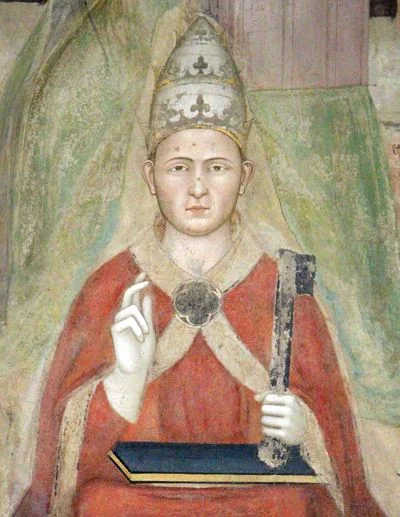
With eleven companions, Francis traveled to Rome to seek approval for their way of life. Despite some cardinals' objections, Pope Innocent III, reportedly warned in a dream, granted verbal approval to the 'Lesser Brothers' (Friars Minor). The Franciscan movement was officially born, committed to radical poverty, preaching, and service.
Inspired by Francis's preaching, the noble Clare of Assisi fled her family on Palm Sunday to join Francis's movement. Francis received her vows at Porziuncola and established her at San Damiano. She founded the Order of Poor Ladies (Poor Clares), the female branch of the Franciscan family, dedicated to contemplative poverty.
At the Pentecost Chapter of 1217, Francis organized the first Franciscan missions beyond Italy. Brothers were sent to Spain, Germany, Hungary, France, and the Holy Land. Though some missions failed initially, this marked the beginning of the Franciscan global expansion that would eventually reach every continent.
During the Fifth Crusade, Francis crossed enemy lines to meet Sultan Al-Kamil of Egypt. In a remarkable dialogue, Francis preached the Gospel while the Sultan listened respectfully. Though the Sultan did not convert, he was deeply impressed and gave Francis safe passage. This encounter pioneered interreligious dialogue and remains iconic today.
Returning from Egypt to find dissension in the rapidly growing Order, Francis resigned as its head. He appointed Peter Catani, then Elias of Cortona, as vicars. Though heartbroken by changes that seemed to compromise his vision of radical poverty, Francis continued to guide the Order spiritually through his example and writings.
Francis created the Third Order (now called Secular Franciscans) for laypeople who wished to follow Franciscan spirituality while remaining in their homes and occupations. This innovation allowed married people, workers, and even rulers to live the Gospel values of simplicity, peace, and charity without taking religious vows.
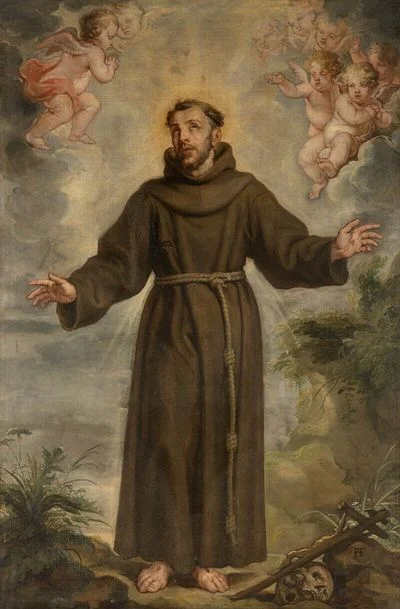
While fasting and praying on Mount La Verna, Francis had a vision of a seraph with six wings bearing the image of the crucified Christ. When the vision ended, Francis bore the wounds of Christ in his hands, feet, and side - the first recorded stigmata in Christian history. He would carry these painful marks until his death.
Nearly blind and in great pain, Francis asked to be carried to his beloved Porziuncola chapel. He blessed his brothers, had the Passion read aloud, and sang Psalm 142. On October 3, 1226, Francis died welcoming 'Sister Death.' He was canonized by Pope Gregory IX in 1228. His Canticle of the Sun remains a treasure of world literature.