Quick Facts
Lost America, gained Ireland, went mad.
Conversation Starters
Life Journey
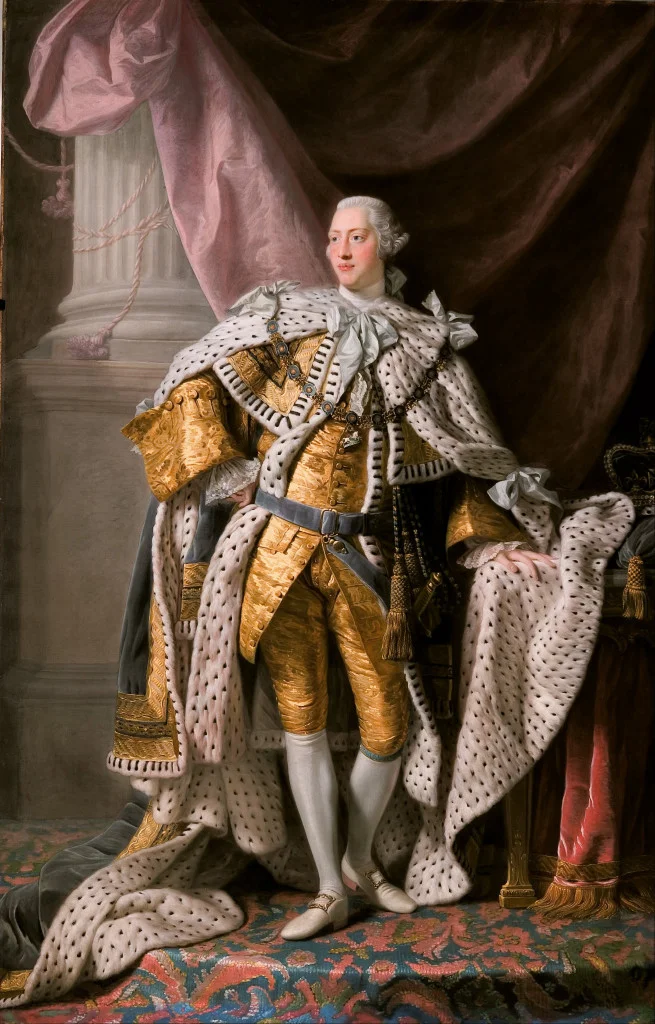
George William Frederick was born as the grandson of King George II. He would become the first Hanoverian monarch born in England.
After his father Frederick's sudden death, young George became heir apparent as Prince of Wales under his grandfather.
Upon George II's death, George III became king, determined to play a more active role in government than his predecessors.
George married Charlotte on their wedding day, having never met before. Their marriage was happy and produced fifteen children.
The Seven Years War ended with Britain gaining vast territories in North America and India, though at great cost.
Parliament passed the Stamp Act to pay war debts, triggering colonial resistance that would lead to revolution.
British soldiers killed five colonists in Boston, further inflaming anti-British sentiment in the American colonies.
Fighting began at Lexington and Concord, starting the American War of Independence that would cost Britain its colonies.
Britain recognized American independence in the Treaty of Paris, losing its most valuable colonies. George was deeply affected.
George suffered his first major bout of apparent madness (likely porphyria), creating a constitutional crisis over regency.
Britain joined the coalition against Revolutionary France, beginning over two decades of warfare against French expansion.
The Act of Union merged Britain and Ireland, creating the United Kingdom of Great Britain and Ireland.
Nelson's victory at Trafalgar, though it cost the admiral's life, confirmed British naval supremacy for a century.
George's madness became permanent, and his son became Prince Regent, effectively ruling in his father's place.
The Duke of Wellington's victory at Waterloo finally ended the Napoleonic Wars, though George was too ill to comprehend it.
George III died at Windsor Castle after years of blindness, deafness, and madness, having reigned for nearly 60 years.