Quick Facts
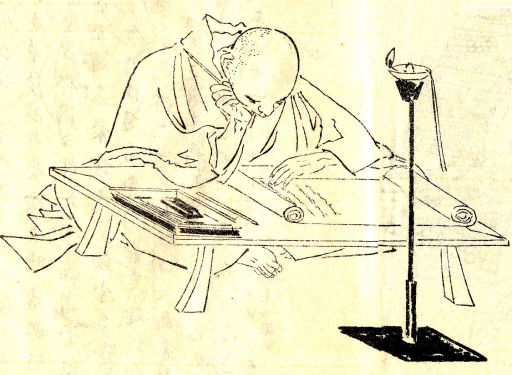
A learned Buddhist monk who preserved Korea’s foundational legends, blending history, folklore, and moral insight into enduring narratives.
Conversation Starters
Life Journey
Iryeon was born in 1206 as the Goryeo kingdom faced military-rule politics and growing external pressures. His formative years unfolded amid intense Buddhist institutional influence and regional monastery networks that shaped elite education.
As a teenager, he entered Buddhist training, learning chanting, disciplinary rules, and classical texts used in Goryeo monasteries. Senior monks introduced him to Chinese characters and historiographical reading that later supported his compilations.
In his early twenties, Iryeon deepened study of sutras, commentaries, and meditation manuals circulating through Goryeo’s temples. He also absorbed local oral traditions, temple origin stories, and regional legends shared by pilgrims and abbots.
The 1231 Mongol incursion disrupted travel, temples, and record-keeping across Goryeo, making cultural loss a visible threat. The violence and dislocation sharpened his awareness that texts, legends, and temple archives could vanish quickly.
When the Goryeo court relocated to Ganghwa Island for defense, monasteries and communities reorganized around wartime logistics. Iryeon saw how political crisis changed what could be taught, copied, and preserved in temple libraries.
By midlife he was recognized for clear exposition of Buddhist doctrine and careful handling of classical sources. Disciples and peers sought his guidance, and he began to collect written fragments and oral accounts from multiple regions.
Iryeon moved between monasteries to consult stele inscriptions, temple registers, and genealogical notes kept by abbots. These journeys let him compare conflicting versions of tales and note how local memory preserved alternative histories.
He cultivated relationships with monks, local officials, and literate patrons who had access to rare manuscripts and regional lore. Through this network, he gathered Buddhist miracle stories and older traditions linked to the Three Kingdoms era.
As wars and negotiations continued, Iryeon focused on cultural endurance rather than partisan politics. He treated legends and Buddhist narratives as a moral archive, preserving identity during a period of tribute demands and instability.
After 1259, Goryeo increasingly moved toward accommodation with the Mongol Empire, changing court priorities and social order. Iryeon interpreted the moment as a warning that old records and local traditions might be rewritten or forgotten.
In his sixties he was treated as a senior monk whose learning bridged doctrine, history, and regional culture. Younger clergy consulted him on temple lineages and origin stories, reinforcing his role as a careful custodian of memory.
When the capital returned from Ganghwa and the long conflict’s structure shifted, new political factions and priorities emerged. Iryeon’s attention turned toward compiling a resilient narrative of Korea’s past that could outlast regime change.
He started arranging notes, excerpts, and oral accounts into a coherent compilation that blended history, myth, and Buddhist exempla. The work aimed to preserve stories not captured in official court chronicles and to teach moral causality.
During the early 1280s, he integrated traditions such as Tan'gun-related founding lore and Silla-era miracle tales with cited sources and commentary. His method balanced reverence with editorial structure, noting variants rather than erasing them.
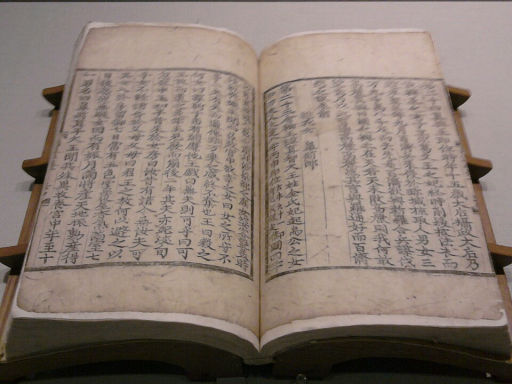
Iryeon finalized Samguk Yusa, preserving legends, biographies, temple origins, and Buddhist episodes across the Three Kingdoms and later periods. The compilation complemented official histories by saving what court-centered annals often excluded.
In his final years, he used his compiled narratives to teach impermanence, karmic consequence, and the power of vows. Students learned to read inscriptions and compare sources, strengthening a scholarly monastic tradition under changing politics.
Iryeon died in 1289, leaving behind a compilation that became essential to Korean cultural memory. Later scholars mined Samguk Yusa for myths, religious history, and early narratives that would otherwise be lost to war and time.