Quick Facts
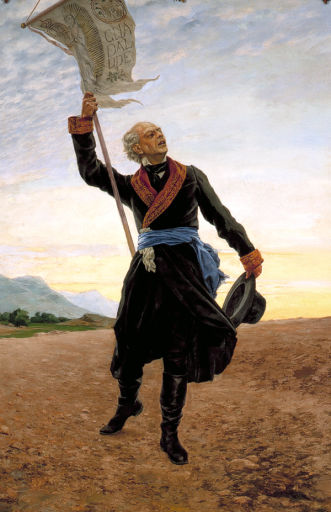
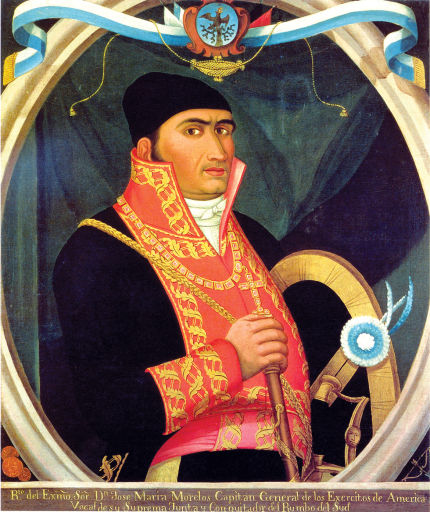
A visionary priest-general who reshaped Mexico's independence struggle with disciplined campaigns, constitutional ideals, and abolitionist convictions.
Conversation Starters
Life Journey
Born on September 30, 1765 in Valladolid, Michoacan, within the Spanish viceroyalty of New Spain. Raised in a working family and colonial caste society, he experienced everyday inequality that later shaped his politics.
As a teenager he worked traveling routes through Michoacan and the hot lowlands, learning local geography and commerce. The experience gave him practical knowledge of roads, villages, and supply lines later vital for insurgent warfare.
He entered the Colegio de San Nicolas in Valladolid for ecclesiastical training and broader studies. The institution's intellectual climate, influenced by reform currents in New Spain, honed his discipline and public-speaking skills.
After years of study he received holy orders and formally entered the Catholic clergy. His parish work placed him close to Indigenous and mixed communities, deepening his concern for social justice under colonial rule.
He held curacies in small towns where poverty and forced labor practices were visible realities of the colonial economy. Managing local disputes and parish finances trained him in administration and negotiation with regional elites.
In October 1810 he met Miguel Hidalgo y Costilla and accepted a mission to raise forces in southern New Spain. Hidalgo's call for rebellion redirected Morelos from parish life into a disciplined, strategic independence campaign.
He organized militias in Guerrero and Michoacan, insisting on training, hierarchy, and restraint toward civilians. Unlike early uprisings, his forces aimed to hold territory and control supply routes along the Pacific corridor.
His troops captured key towns and secured resources, strengthening the insurgency's political credibility. Control of Oaxaca provided weapons, revenue, and a symbolic boost against royalist authority in southern New Spain.
Royalist commander Felix Maria Calleja surrounded Cuautla, attempting to destroy Morelos's core army. After weeks of hunger and bombardment, Morelos broke the siege and escaped, preserving the insurgency's experienced leadership.
He took Acapulco, a strategic port linking New Spain to Pacific trade networks and royalist supply. The victory demonstrated insurgent reach and helped finance operations, even as Spain reinforced its counterinsurgency efforts.
Morelos supported representatives meeting to legitimize the independence movement through institutions, not just arms. The congress sought a sovereign Mexican nation and a framework for laws, taxation, and military authority.
He read or endorsed the manifesto 'Sentimientos de la Nacion,' advocating independence, popular sovereignty, and the end of caste distinctions. It called for abolishing slavery and tribute, linking liberation to social reform.
The congress issued a declaration of independence from Spain, aiming to convert rebellion into a recognized national cause. Morelos remained the movement's military backbone while civilians attempted to build legitimacy and governance.
Insurgent leaders promulgated the Constitution of Apatzingan, inspired by liberal constitutionalism and wartime necessity. Morelos backed a representative government and legal order even as royalist pressure fractured insurgent control.
During a retreat to safeguard congress members and documents, Morelos was cornered by royalist forces. His capture was a severe blow, removing the movement's most effective strategist and unifying public figure.
He faced an ecclesiastical trial and royalist proceedings that condemned him as a rebel and heretic. The Church formally defrocked him, showing how colonial authorities used both religious and legal power to crush dissent.
On December 22, 1815, he was executed after refusing to renounce the independence cause. His death turned him into a martyr of Mexican nationhood, and later governments honored him as a foundational hero of independence.